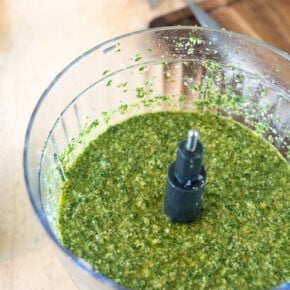
Large Batch Basil Pesto Recipe for Freezing
This easy homemade basil pesto recipe is perfect for preserving an abundant garden harvest. Made with fresh basil, pine nuts, garlic, Parmesan cheese, and extra virgin olive oil, it's a delicious make-ahead sauce you can portion and freeze for easy meals throughout the year.
Servings: 1 batch (about 3–4 cups)
Equipment
Ingredients
- 8 cups fresh basil leaves loosely packed, washed and thoroughly dried
- 1 cup pine nuts lightly toasted (5-6 ounces)
- 8 ounces Parmesan cheese freshly grated
- 8 large cloves fresh garlic peeled
- 1.5 cups extra virgin olive oil or as needed
- 1 medium Lemon, juiced
- Sea salt to taste

Instructions
- Prepare the basil. Remove the basil leaves from the stems and discard any damaged leaves. Rinse thoroughly in cool water and dry completely using a salad spinner and clean kitchen towels.
- Toast the pine nuts. Add the pine nuts to a dry skillet over medium-low heat. Toast for approximately 3–5 minutes, stirring frequently, until lightly golden and fragrant. Remove from the heat and allow to cool completely.
- Process the nuts and garlic. Add the cooled pine nuts and peeled garlic cloves to a food processor. Pulse several times until finely chopped.
- Add the basil. Working in batches as needed, add the fresh basil leaves and pulse until roughly chopped. Scrape down the sides of the food processor between additions.
- Add the Parmesan. Add the freshly grated Parmesan cheese and pulse briefly to combine.
- Incorporate the olive oil. With the food processor running on low or using short pulses, gradually add approximately 1 cup of olive oil. Continue adding more as needed until the pesto reaches your desired consistency.
- Season to taste. Add the freshly squeezed lemon juice gradually, then taste and adjust the garlic, Parmesan, olive oil and salt as desired. Pulse briefly to combine.
- Portion for freezing. Divide the pesto between clean, freezer-safe ½-cup airtight containers, leaving a little room for expansion. Smooth the surface and optionally add a very thin layer of olive oil to limit exposure to air.
- Freeze. Seal tightly, label with the date, and freeze promptly. For the best flavor and quality, use within 3–6 months.
- To serve. Thaw overnight in the refrigerator. Stir well before using, adding extra olive oil or a splash of warm pasta cooking water if desired. Keep refrigerated at 40°F or below and use within four days after thawing.
Notes
Parmesan: I prefer freezing my pesto with the Parmesan already incorporated. While some recipes recommend adding cheese after thawing, I've always been happy with the convenience and results of freezing completely prepared pesto.
Pine nuts: Walnuts, almonds, or sunflower seeds can be substituted if desired. The flavor will be slightly different.
Olive oil: Start with less oil if you're making pesto specifically for freezing. Additional olive oil can always be added after thawing.
Freezing containers: I use Rubbermaid Brilliance ½-cup containers rather than ice cube trays. Choose containers that are freezer-safe and leave appropriate headspace.
Storage: Refrigerate fresh pesto promptly and use within 3–4 days, or freeze for longer storage. Never store homemade pesto containing fresh garlic and herbs in oil at room temperature.