
How Diet Affects Anxiety and Energy Levels
Food does not treat every anxious thought or every flat afternoon, but it does change the body that carries them. The National Institute of Mental Health says healthy, regular meals and enough water can improve energy and focus, while caffeine and alcohol can worsen mood for some people; the same page also notes that 30 minutes of walking every day can lift mood and support health. That sets the frame clearly. Energy is not only about calories, and anxiety is not only about mindset.
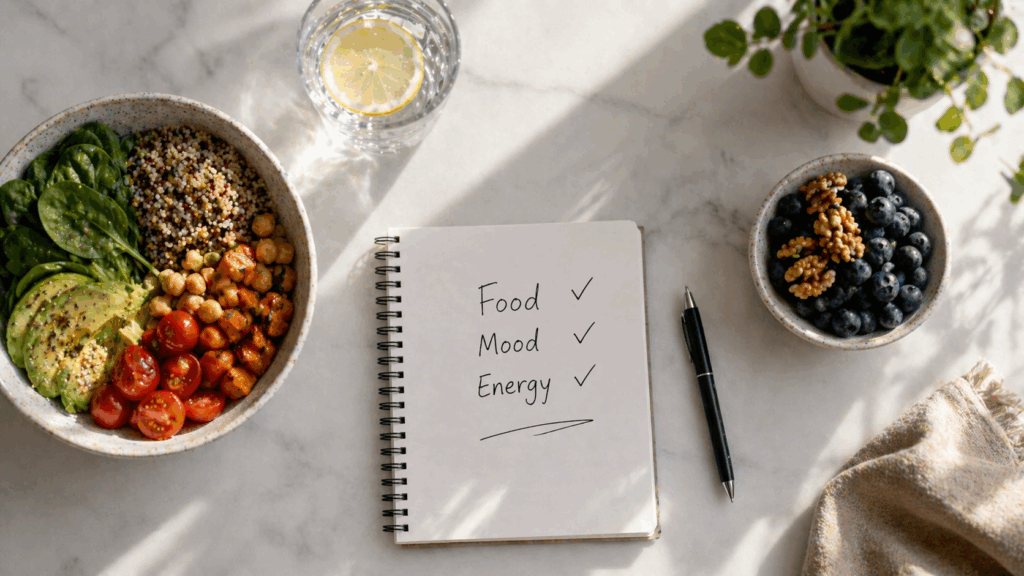
The first wobble starts on the plate
The common pattern is familiar: coffee first, food later, then a sharp dip by early afternoon. A 2025 review of dietary carbohydrates reported that higher-fiber, lower-refined carbohydrate patterns are associated with steadier energy and better cognitive outcomes while reducing fatigue, which aligns with the old practical rule that a breakfast built around fiber usually lands better than a sweet drink and nothing else. The point is less glamorous than most wellness advice. Stable fuel tends to produce steadier afternoons.
Caffeine is not neutral
Caffeine can feel useful at 9:00 and noisy by 15:00. NIMH explicitly advises people to watch how caffeine affects mood and well-being, and current NCBI guidance on insomnia says patients are encouraged to limit caffeine during the day because it can worsen sleep problems; once sleep slips, the next day often brings more irritability, more fatigue, and another heavy pour. That loop is one of the simplest to miss. It also happens fast.
Blood sugar swings rarely stay in the kitchen
A 2025 study on carbohydrate quality linked fiber content and glycemic load with sleep and mental-health outcomes, while a separate 2025 paper found anxiety levels were higher in adolescents who skipped breakfast. That matters because the body reads erratic feeding as noise, not freedom, and the result is often shakier concentration rather than sharper output. In the same digital rhythm that keeps people bouncing between alerts, short clips, and a bangladesh betting site, missed meals and fast sugar can turn a normal restless day into one with more tension than substance. The pattern is not dramatic. It is cumulative.
The gut keeps sending messages upstairs
The stronger research now moves past the old vague talk about “gut health” and gets more specific. A 2025 systematic review synthesized 15 studies on the gut microbiome and mental health, and another 2025 review reported that anxiety disorders are often associated with reduced microbial diversity and lower levels of short-chain-fatty-acid-producing bacteria. That does not mean yogurt is a cure or that every probiotic deserves the label on the bottle. It means diet quality keeps showing up in the same conversation as anxiety biology, inflammation, and stress response.
Meal timing still does quiet work
There is also a timing issue that often hides behind food choice. A 2025 review on chrononutrition argued that aligning eating patterns with circadian biology may improve metabolic regulation and energy balance, while NCBI’s current insomnia guidance states that sleep restriction should not be set below 5 to 6 hours per night and advises against eating before bedtime when sleep is already unstable. That is less about perfection than sequence. In practical use, the Melbet app downlod fits the same modern problem as late-night snacking and one-more-scroll behavior: the body gets another cue to stay switched on when it should be backing off.
What usually helps first
The most reliable first fixes are also the least theatrical: regular meals, enough water, fewer caffeine spikes, and a cleaner sleep window. NIMH says to seek professional help if distressing symptoms last 2 weeks or more, especially when sleep, concentration, appetite, or daily function start to slide, and that is a useful line because diet can support recovery, but should not be asked to do all the work alone. For most people, the first visible sign of progress is boring in the best way. The day stops lurching from wired to drained.