The Healthier Way: How to Cook With Stainless Steel Cookware
When it comes to food, you only want the best for yourself and your loved ones. It’s what nurtures the body and is a huge factor in keeping one’s health in tiptop condition. But the ingredients you put in your dishes shouldn’t be your sole focus; the pots and pans you use matter just as much. Stainless steel cookware reigns supreme in this aspect. Its non-reactive surface means no undesirable chemicals will contaminate your food, a far cry from the usual non-stick pans with coatings that can deteriorate after some time.
So, it’s not surprising that many chefs and home cooks prefer stainless steel. But how do you actually maximize its benefits? Read on for tips on how to cook with stainless steel cookware the right way.
Baking
Stainless steel is ideal for baking, primarily because of its high heat resistance. Plus, it doesn’t have harmful chemical coatings like PTFE, so you can be sure that no toxic fumes will be formed once it comes into contact with high heat. This is good news as you want that golden, crispy crust on your pastry without worrying if it’s achieved safely.
Even heat distribution is of the utmost importance in baking. You don’t want any of those hot spots that can ruin the process. Multi-ply or clad stainless steel bakeware is your best friend in these scenarios.
And if you don’t want your baked goods sticking to the surface, proper prepping is all it takes. Preheat your pan to reduce its porosity. Greasing or flouring the surface lightly also does the trick. You can also use the ever-reliable parchment paper for your delicate cakes and cookies.
It’s also worth highlighting the fact that reputable stainless steel bakeware brands truly make a difference as they use high-quality materials that won’t fail you. How reassuring it is to know that your bakeware is made with surgical-grade stainless steel, so always go for trusted manufacturers.
Semi-Vacuum Cooking
You won’t be needing oil or fat for this cooking method. Get yourself a stainless steel pan with a tight-fitting lid and you’re good to go.
Start by heating the pan over medium heat. After some time, steam will begin to escape from under the lid. A slight spin of the lid will then tell you the formation of a “vapor seal,” which holds heat and moisture inside the pan. Once this happens, immediately reduce the heat for the remainder of the cooking time. No need for stirring or lid lifting, you just have to wait until your food is done.
Since the food is cooked with its own juices, you get to experience more intense flavors. You can ditch additional sauces, which means reduced caloric intake. And you don’t have to worry about your food tasting like chemicals, especially if you use variants like 316Ti grade stainless steel, since they’re non-porous and non-reactive.
High-Heat Searing
You want your meat tender inside and crispy and brown on the outside, don’t you? High-heat searing is key. Stainless steel fry pans or skillets are the perfect partner for this as they don’t contain harmful chemicals that degrade in high temperatures.
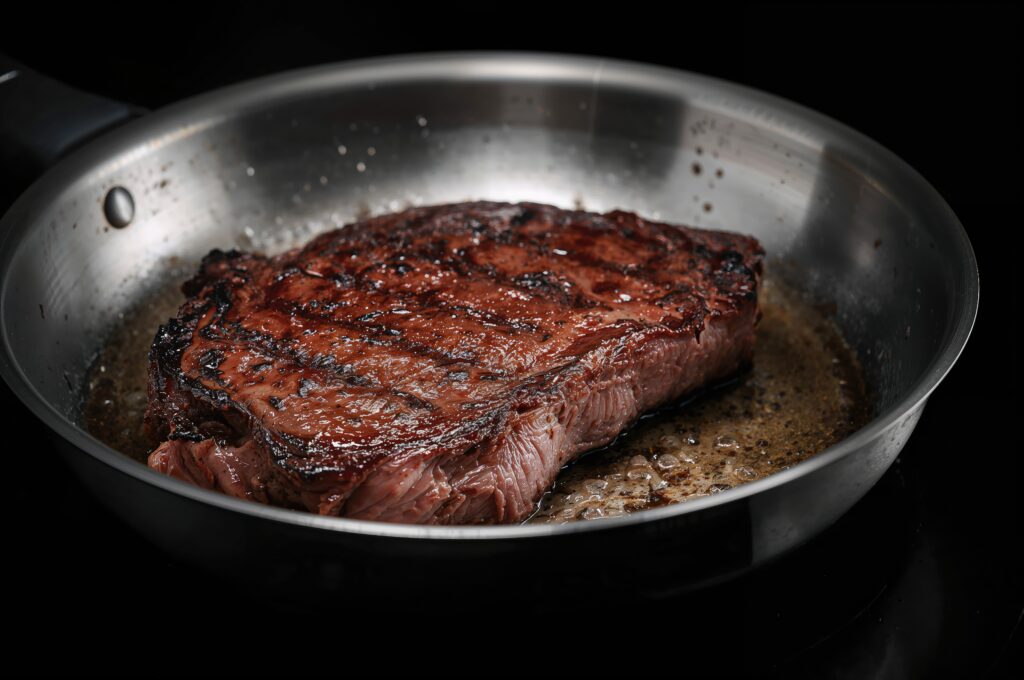
First things first, properly preheat the pan over medium-high heat for a few minutes. Do the water test to know if it’s ready. Add a few drops of water on the pan’s surface. Does it sizzle and evaporate? Not hot enough. You’ll know it’s ready when the water forms into beads and rolls around.
Next, slightly reduce the heat and add a small amount of smoke-point oil (avocado, canola, or extra virgin olive oil). Wait until the oil shimmers before putting your protein that’s been completely patted dry. Be patient and wait until that beautiful crust forms.
You’re not done yet after the meat’s been cooked to perfection. Lift that flavorful caramelized residue off of the pan using your preferred liquid, ideally half to a full cup of wine, water, or broth. This method, called deglazing, creates a scrumptious sauce you can pair with your pan-seared protein.
Slow Braising
If you’re a fan of meals that are tender as they are flavorful, pay attention: slow braising is another method where stainless steel shines. It helps promote that clean flavor you’re craving, and that’s thanks to the material’s non-reactive nature. No chemical taste. No chances of ingesting harmful substances. Another plus is that the process preserves the ingredients’ vitamins and minerals, allowing you to create healthy meals for yourself and your family.
Searing your meat properly (already discussed in the previous section) is the first part of the process. After taking the protein out of your stainless steel pot or Dutch oven, it’s time to saute onions and garlic for that leveled up aroma. Then, add broth or wine so you can scrape up that flavorful fond from the surface.
After that, return the seared meat and add the rest of the liquid until it’s halfway up the sides of the meat, enough to gently braise it. Bring the liquid to a simmer, then tightly cover with the lid and allow to cook over the lowest possible heat. You know it’s done when the meat is finally fork-tender.
Final Thoughts
So, your goal is to be more mindful of the food you eat from now on. Stainless steel cookware is worthy of your consideration. It’s a great investment for your palate’s and tummy’s satisfaction, and especially your health. So, if you’re in the hunt for pots and pans that won’t let you down, high-grade stainless steel might just be the material you’re looking for.