The Power of the Reveal: Why Anticipation Can Make an Experience More Memorable

There is something about the stillness in the kitchen in the moments before things are finished cooking that is unique. There’s a smell building in the background that grows as the timer counts down. Still though, the only option is to stay there, which is part of the reason why I think there is this strange physical presence built into that stillness. Anticipation actually causes a person’s brain to release dopamine, and in many cases that release is stronger than the dopamine response at the moment of reward, and thus the real enjoyment of something is usually built before something is experienced. What I think anticipation builds is the ability to enjoy something, even if it only exists in your head, which is what I think people do in those final moments of stillness.
This is actually an aspect of life that goes well beyond the kitchen. This phenomenon actually describes the last minutes of a game decided by a goal, which makes those final moments feel especially intense. This describes the moment when you are tempted to start the last episode of a show you have been binge-watching, even though it can feel almost “unbearable to start.” It also describes opening an envelope containing an important result you cannot control: the result can feel more significant before it is revealed, while the suspense itself sharpens attention and helps make the experience more memorable.
The Reel Keeps Spinning
The same architectural principles of tension, delay, and reveal are also present in modern online slots. The principles of sequential storytelling; slow-burn builds; satisfying reveals… they’re all employed in slot games. From the moment the player presses the spin button to the moment the reels come to rest, the outcome is determined, but the slot game is designed to withhold that outcome for a brief interval. It uses techniques like mechanical pauses to land the last symbols. It even sequences the reels in a specific order: the first reel comes to rest, with the third reel landing last. This technique is also employed in good recipe writing where every step is explained until the final reveal, “how it tastes.” Sites offering online slots ontario have built entire libraries around this single fraction of a second between motion and rest: the moment of possibility.
That little pause right before the last reel comes to rest is a deliberate part of the design. There are two matching reel symbols at rest and one reel that is moving slowly. You could say design like this commands focused and almost expectant attention that the result alone could not generate. Game designers, particularly of slots games, intuitively understand this phenomenon. As such, they have adopted appropriate design techniques. The sound of the game shifts, and the animation lingers, then, at the end, comes to rest with a ceremonial flair, win or lose. The structure of the experience is what matters most. A slot that reveals its outcome almost instantaneously would feel like almost nothing – like a recipe that offered a fully prepared dish without describing how to get there. The wait is not a detriment to the experience; it is the framework to which the rest of the experience is connected.
A Platform Built for That Feeling
Swiper Ontario operates within Ontario’s regulated online casino market and offers an experience and selection that caters to players of all anticipation appetites. It includes classic three reel slots, as well as newer video slots that have cascading reels, bonus rounds, and other features that prolong the anticipation of the ultimate slot outcome.
Beyond slots, the other offerings, table games and live dealer, share a different structure but still generate the same feeling. Anticipation with a live dealer builds as you watch the dealer turn a card or wait to see the result of the spin on the roulette wheel. Swiper Ontario provides several ways to experience this anticipation-and-reveal structure across different time preferences and different moods.
The Slow Burn and the Quick Rush
One interesting phenomenon about anticipation is its different dynamics at different time scales, and what it leaves in memory.
A slot reel takes about two seconds. A roulette spin can take about fifteen seconds. An in-play sports bet, where you wait for the next goal to be scored, can take up to an hour for a resolution. A soufflé takes thirty minutes. During that time you’re advised to leave the oven door closed. A season finale’s cliffhanger can remain unresolved for over a year. Each creates anticipation, but the overall feeling of each changes a lot with the difference in time.
According to Daniel Kahneman and Barbara Fredrickson, people use the “peak-end rule” to decide how they will remember an experience. The rule states that an experience is not judged on the average of the entire experience, but rather on how it was at its highest point and how it ended. From this rule, we can see the importance of how an experience will be remembered. A slow-cooked short rib that took eight hours and arrived perfectly tender is remembered differently from the same dish made quickly, because the investment of time becomes part of the memory. An emotionally charged experience will be remembered due to the peak of the experience, but also because of how it ended. Binge series are remembered as being good if the finale lands well. The reveal carries disproportionate weight in a series of events. The longer the anticipation of the event, the more importance the reveal holds.
Why Uncertainty Matters
Research by Robert Sapolsky of Stanford showed that dopamine levels in monkeys rose when they received a food treat every time they performed a task. This result was like what one would expect. Something rather interesting happened when the treat was randomly awarded 50% of the time. Dopamine levels doubled. The uncertainty was the active ingredient. Sapolsky, therefore, argued that the anticipation of reward and pleasure is what matters, rather than the pleasure of the reward itself.
This serves to explain how certain activities in life are more stimulating than other activities. For example, making a meal from a recipe that you have made numerous times before evokes a comfortable feeling. Conversely, attempting a new method of cooking a meal for the first time, like making custard or baking a crusty loaf, is much more interesting. Sitting back and watching a match your team is expected to win easily is pleasant. A match that could go either way is a much more engrossing experience. The anticipation of the outcome is what matters most.
In card games, it is structural. Blackjack has the dealer keep their second card face-down until the player makes their move, creating a mechanical element of suspense. Roulette has the purest version of this. After the ball gets released, the outcome is completely out of the player’s control and all you can do is wait and feel the suspense while watching the ball slowly approach the pocket. Sports betting has this as well, but extends the suspense over a much longer period of time. One single moment can change the entire outcome, for better or for worse. Each one captures the 50/50 charge that Sapolsky talks about, but each has its own rhythm.
The Moment the Lid Comes Off
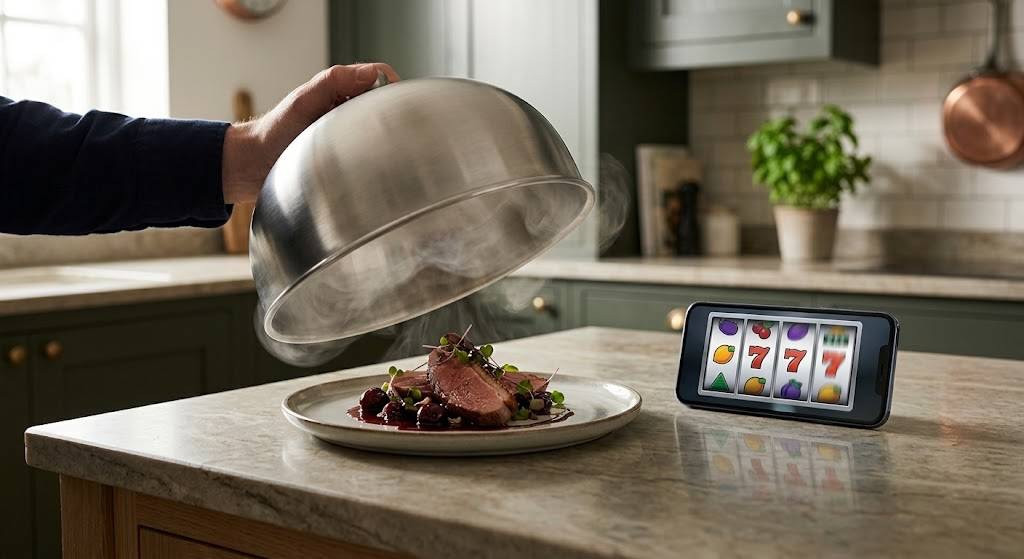
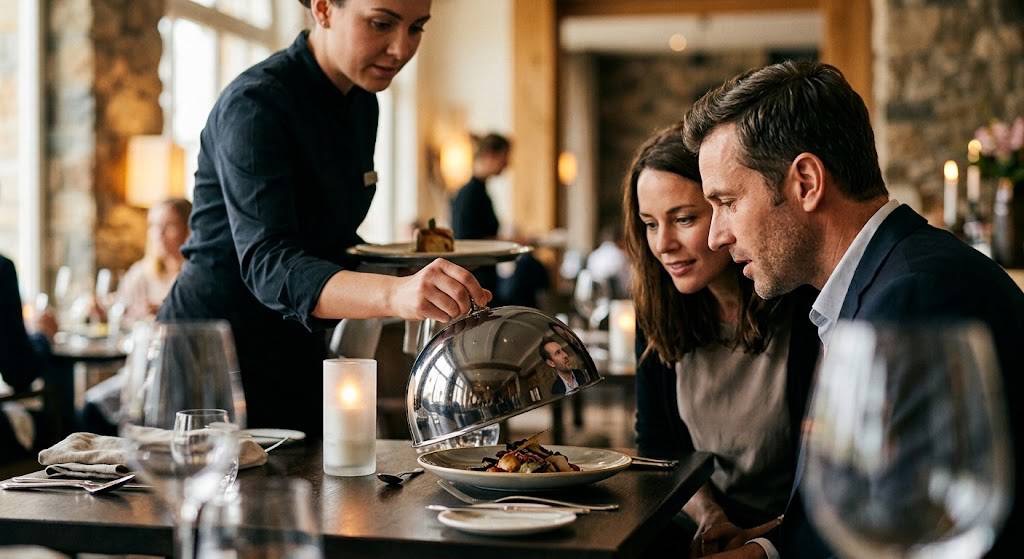
There is a particular phenomenon that occurs when the lid is lifted, regardless of the situation. A cloche being lifted at a restaurant. A match ending by a single goal. A card being flipped. A reel landing on its final symbol. A season finale. A competition winner being revealed in an envelope. All of these examples occur at the culmination of a period of time during which anticipation is built, but they also define the moment when the anticipation converts to a memory.
Designing a reveal is as critical as the reveal itself. A beautifully plated dish can have its moment as the server describes it, letting the diners’ anticipation peak while they wait to take the first bite. The design of a slot machine is similar. So is the pause a live dealer takes before turning the card. The broadcast delay before announcing the winner works the same way. These designs are not random. These are all moments used to build anticipation and heighten the emotional reaction to the final reveal. Chefs, game creators, TV producers and event producers understand these peak emotional reactions and how to design these reveals. They understand that memory is strongly shaped by peak moments.
Using Anticipation
Designing great ‘reveals’ helps us understand emotional anticipation. When we are waiting for something, it is an opportunity for anticipation to build deep engagement and prepare the mind for the potential outcomes. Designing a great experience can mean using anticipation as a way to heighten emotion around what comes next.
In the kitchen, let this sit for a minute. Resist the urge to rush the reveal and let a finished dish rest. Keep the lid on for an extra minute. Bring it to the table with a little deliberateness. That small delay changes how the meal lands.
The same goes for how you watch a match, play a game, or sit down to the last episode of a series you have been saving. Anticipation is at least as much a part of the experience as the resolution. Researchers who study how people remember restaurants they’ve looked forward to visiting often say that the planning, the build-up, and the imagined meal can be among the most enjoyable parts of the experience, and in some cases the peak of the evening. A long-awaited dish has already been eaten several times in the imagination before it arrives, and the real version carries all of that anticipation and prior investment into the first bite.
The reveal is the punctuation mark. The anticipation is the sentence.