
What Are the Best NSF-Certified Water Filters?
Tap water is often not as clean as many people think. A high-quality filter will improve your water’s taste and quality. You can pinpoint reliable options by looking for filters with National Sanitation Foundation (NSF) certification.
The ideal filter depends on your needs and budget, but here are 10 of the best NSF-certified systems to consider.
1. Multipure Aqualuxe
Source: https://www.multipure.com/products/drinking-water-systems/aqualuxe/
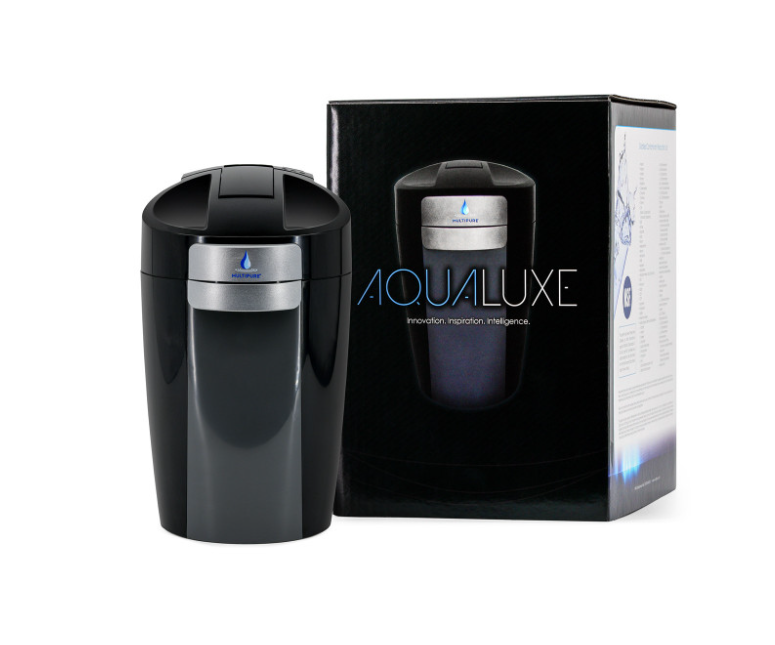
The Multipure Aqualuxe is the best all-around NSF-certified water filter. It is a countertop system, so there is no complex setup required, and it meets four different NSF specifications. The secret behind its industry-leading purification is the combination of multiple methods — it uses an advanced charcoal filter, mechanical filtration and chemical adsorption to remove as many contaminants as possible.
The Aqualuxe is also easy to use, taking just 30 seconds to change filter cartridges. A built-in leak detector and lifetime warranty make it even more practical, especially when such features are not common among other water filters.
2. Brita Elite Filter
Source: https://www.brita.com/products/elite-replacement-filters/
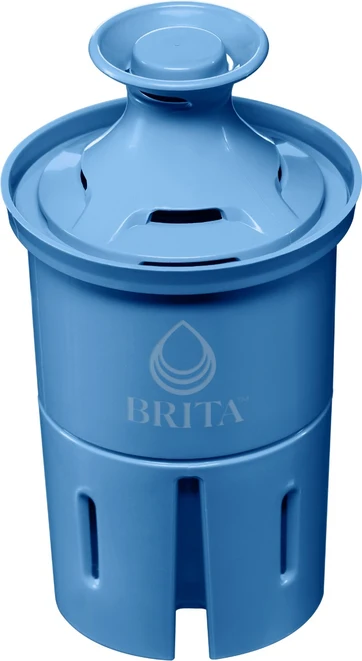
As one of the most recognizable names in this space, Brita also deserves attention. Its Elite Filter is particularly noteworthy, as it removes five times more contaminants than the company’s standard cartridge. It also fits in all Brita pitchers and dispensers, so you can use the same type of replacement for multiple systems.
The Elite cartridge lasts an impressive 120 gallons before needing replacement, which is considerably longer than many other pitcher filters. It may not have as many certifications as some alternatives and requires the purchase of a larger system to use it in, but its low cost and convenience make it a leading option.
3. Aquasana Clean Water Machine
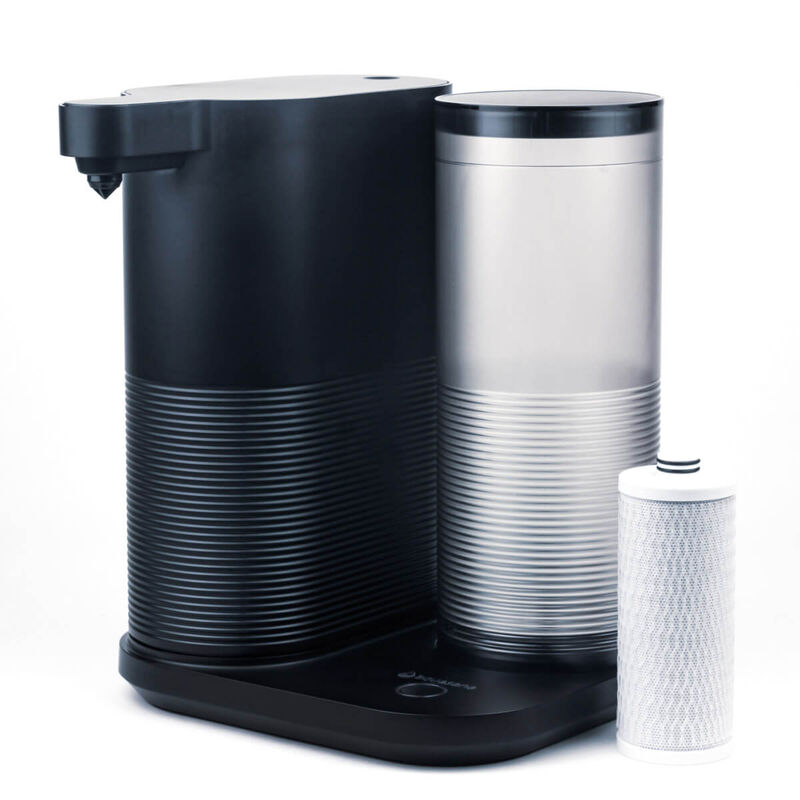
The Aquasana Clean Water Machine is another one of the best NSF-certified water filters. Like Multipure’s Aqualuxe system, it is a countertop dispenser, making installation easy. It also meets at least three NSF certifications and claims to remove 15 times more contaminants than the leading pitcher filter.
Four different filtration methods lend the Clean Water Machine its impressive removal efficiencies. Despite such thorough cleaning, it can purify water at a rate of one ounce per second, which is faster than many simpler options. It may cost more than a pitcher, but the added health benefits and longer-lasting equipment compensate for that.
4. iSpring RCC7
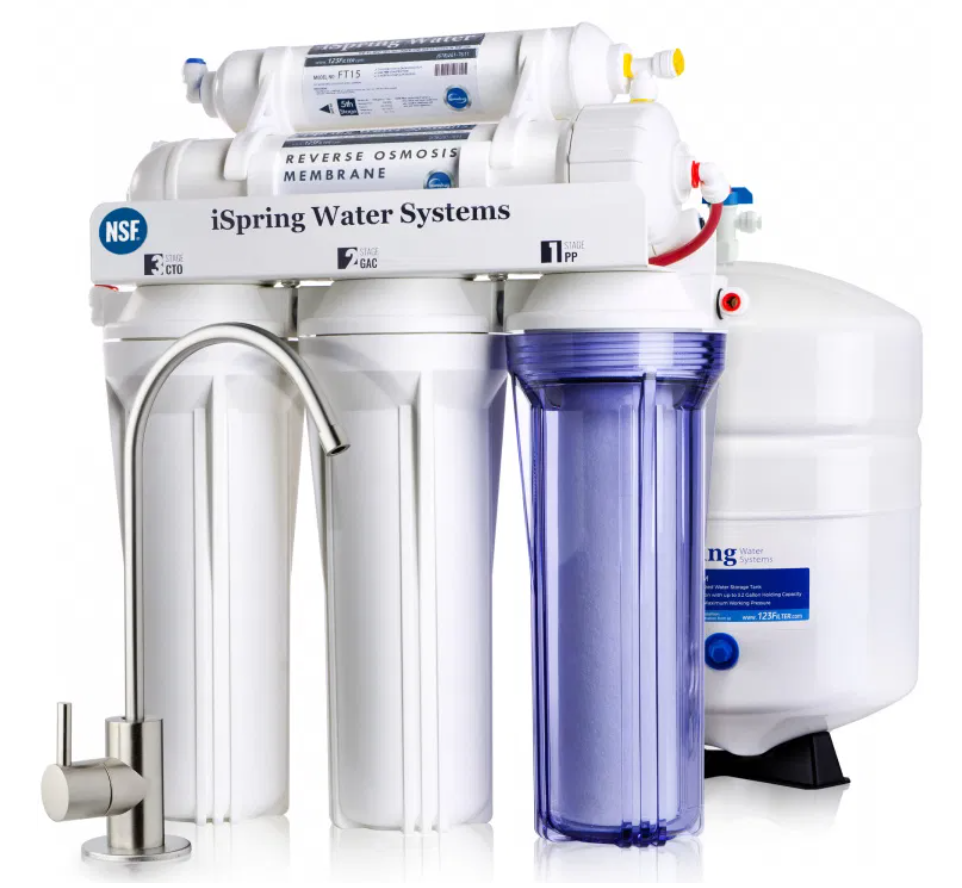
Pitchers and countertop dispensers are some of the most popular filter options, but some users prefer under-sink options to save counter space. The iSpring RCC7 is one of the best of these solutions. It is a five-stage reverse osmosis system that claims to remove up to 99% of 1,000% different pollutants.
Unlike many under-sink filtration systems, the RCC7 does not require a power source and is relatively compact. All of its components last at least six months, making it easier to operate and maintain, even if under-sink systems are inherently more complex than others.
5. Cyclopure Purefast
Source: https://cyclopure.com/product/purefast-filter-cartridge/
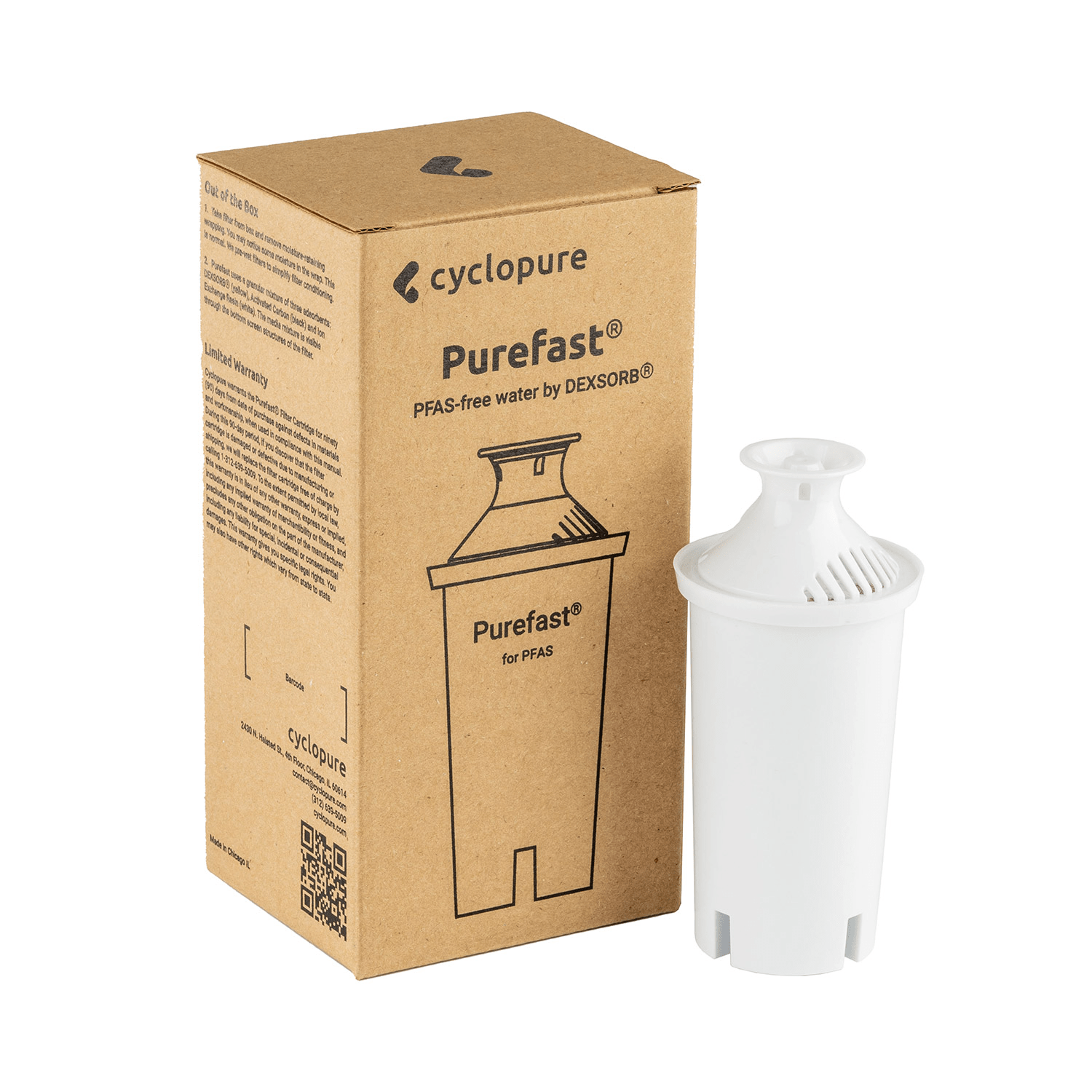
Those who prefer the ease of a pitcher may consider Cyclopure for their next cartridge replacement. Cyclopure’s Purefast filter can fit in any Brita pitcher or dispenser, but unlike first-party Brita filters, it comes with an envelope for shipping back to the company after use. That way, Cyclopure can dispose of the expired cartridge in a way that does not leak chemicals back into the environment.
Cyclopure’s Purefast replacement is more expensive than Brita’s in-house option. However, you may find that the added NSF certification and environmental benefits of its disposal process are worth the extra investment.
6. AquaCera HIS InLine
Source: https://www.aquaceradirect.com/products/his-inline
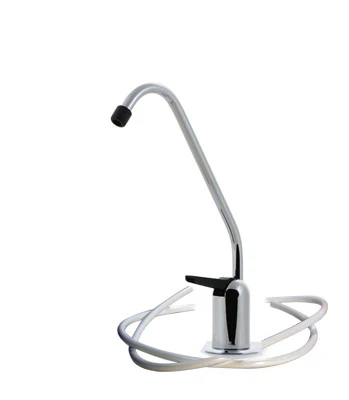
Another relatively easy-to-use option is the AquaCera HIS InLine under-sink system. The HIS InLine is far smaller than most under-sink options, which is great for those working with tight quarters and comes with various replacement filter options so you can choose which best suits your needs at different times.
The most basic HIS InLine options remove chloramines, chlorine, lead, fluoride and heavy metals, while higher-end options also manage microscopic contaminants and mercury. Installation may be more involved than some other options, but it is possible to install on your own.
7. Multipure Aquamini
Source: https://www.multipure.com/products/drinking-water-systems/aquamini/
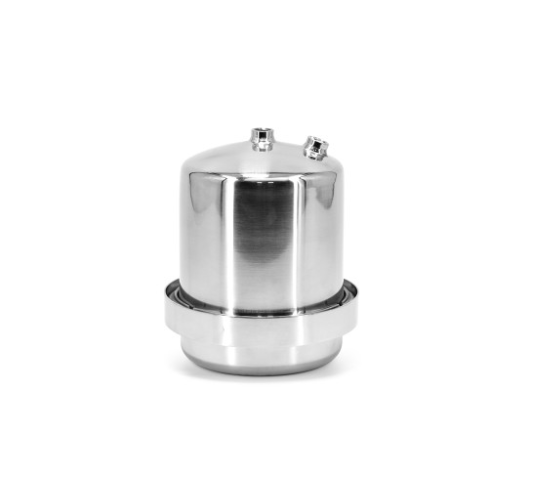
Multipure’s Aquamini is an even more streamlined option. The system is just six inches tall and attaches to the end of any faucet, so you can take it with you for clean water while traveling.
As convenient as the Aquamini is, Multipure did not sacrifice reliability for convenience in the design of this product. The filter still meets three NSF standards and can become a countertop or under-sink system if you combine it with some optional equipment. Like the Aqualuxe, it also comes with a lifetime warranty.
8. Bluevua ROPOT
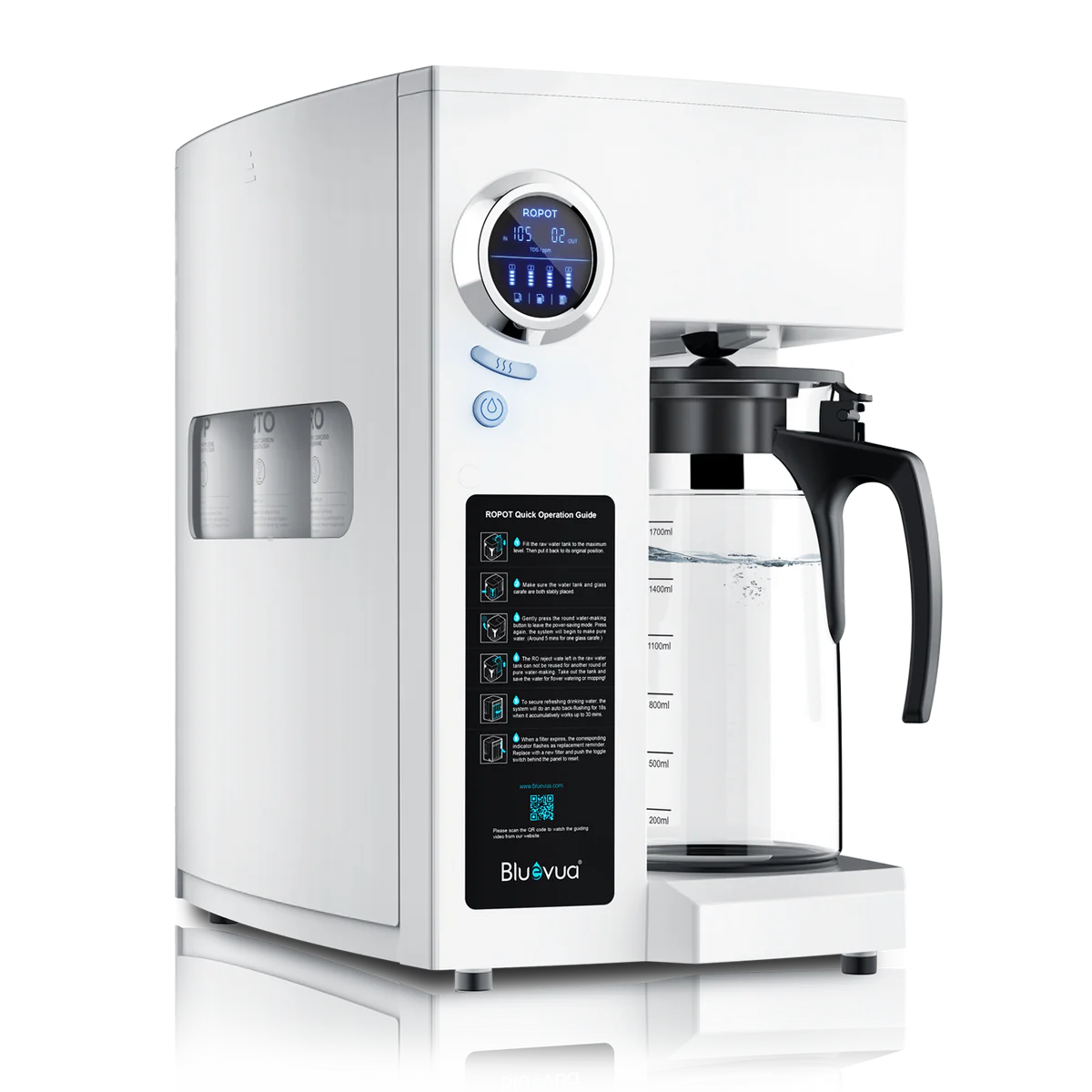
For those in need of an at-home solution rather than a travel-sized filter, Bluevua has an excellent option in its ROPOT reverse osmosis system. This countertop dispenser uses the same technology as many under-sink alternatives but in a more compact and easy-to-set-up package.
All you need to do to start using the ROPOT is plug it in. A filter lifespan indicator on its screen tells you when to replace the five-stage filtration unit. It also carries a one-year warranty to back up its price.
9. Culligan 10 Cup Pitcher
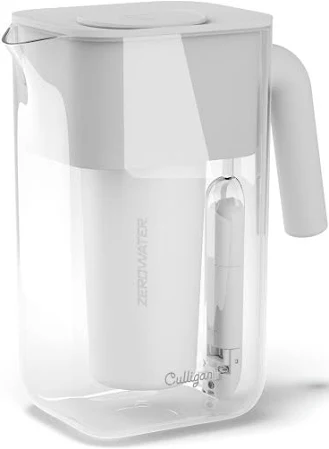
More budget-conscious consumers may consider the ZeroWater line of filtration products from Culligan. The company’s 10 Cup Pitcher is its most practical, offering a reliable alternative to popular options from Brita and Pur.
Culligan’s ZeroWater filtration technology uses a five-stage filter, with each component focusing on a different type of contaminant. It also comes with a total dissolved solids meter so you can verify exactly when you will need to replace the filter. The pitcher and its components are not as easy to come across as some of its more popular competition, but it is worth considering.
10. Bluewater Cleone Purifier
Source: https://www.bluewatergroup.com/bluewater-purifiers/cleone-purifier
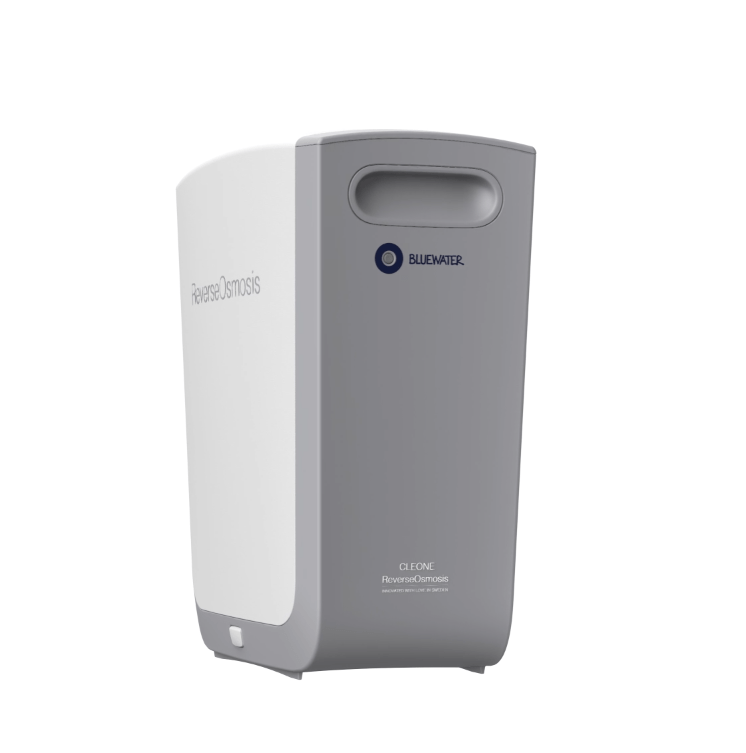
On the opposite end of the spectrum is the Bluewater Cleone Purifier. The Cleone system is more targeted toward commercial users rather than consumers, so while it is the most expensive solution on this list, its performance is impressive.
The Cleone Purifier is a multi-stage under-sink system that combines reverse osmosis with several filter technologies. Some options come with a UV lamp for added protection against microbial contamination. The system also lasts long and requires minimal maintenance, although its low recovery rate does mean some water waste.
Comparing the Best NSF-Certified Water Filters
Choosing the right filter for your needs starts with understanding how each option compares along several key factors. Here’s a side-by-side look at the 10 best NSF-certified water filters to help with that decision.
| Water Filter | Type | NSF Standards Met | Price |
| Multipure Aqualuxe | Countertop | NSF 42, 53, 401 and P231 | $1,250 |
| Brita Elite Filter | Replacement filter with multiple applications | NSF 53 | $19.99 for the cartridge only — pitchers and dispensers sold separately |
| Aquasana Clean Water Machine | Countertop | NSF 42, 53 and 401 | $399.99 |
| iSpring RCC7 | Under-sink | NSF 58 | $230.99 |
| Cyclopure Purefast | Replacement filter with multiple applications | NSF 42 and 53 | $45 for the cartridge only — pitchers and dispensers sold separately |
| AquaCera HIS InLine | Under-sink | NSF 42 | $199 |
| Multipure Aquamini | Portable | NSF 42, 53 and 401 | $395 |
| Bluevua ROPOT | Countertop | NSF 58 and 372 | $434 |
| Culligan 10 Cup Pitcher | Pitcher | NSF 42, 53 and 401 | $34.99 |
| Bluewater Cleone Purifier | Under-sink | NSF 58 | $1,499 |
Understanding NSF Standards
While many water filters are NSF-certified, the specific certifications vary. Consequently, you must understand what these standards mean to know what each product offers.
All NSF certifications are voluntary and reflect a system’s ability to filter out various contaminants. You can find a complete breakdown on NSF’s website, but here’s a look at some of the most common standards you will come across.
NSF 53
NSF 53 is arguably the most important standard for a water filter to meet. This certification shows that a product can reliably remove contaminants that cause health effects, as defined by the Environmental Protection Agency (EPA). It applies to both mechanical filtration and adsorption.
NSF 42
NSF 42 covers the same types of products as NSF 53 but also concerns aesthetic impurities. These are contaminants that may not have health consequences but can affect water’s taste or smell, such as chlorine. Look for this standard when water in your area tastes off or if you are using tap water for cooking or coffee.
NSF 401
Many of the best NSF-certified water filters also meet the benchmark for NSF 401, which covers “emerging contaminants.” This refers to currently unregulated pollutants, either because they’re new or because regulatory bodies do not know enough about their consequences. Microplastics and many pharmaceuticals fall under this umbrella, making NSF 401 important for health-conscious users.
NSF 58
NSF 58 deals with reverse osmosis systems. These products use pressure differentials to move water through multiple filters, trapping dissolved solids in the process. Because the process differs from conventional filtration methods, it has its own standard. However, NSF 58 is not a higher-level certification than NSF 53 or vice versa. Both suggest a high removal efficiency but cover different technologies.
Other NSF Standards
Reverse osmosis is not the only purification method with a unique NSF standard. You may also see NSF 55 for ultraviolet treatment systems or NSF 62 for water distillation equipment. NSF P231 covers microbiological water purification methods, as approved by the EPA’s recommendations.
Some NSF standards cover specific contaminants. For example, NSF 372 refers to a filter’s ability to remove lead. NSF 244 means a product can reduce the presence of some microbes, but it only applies to water systems that already have reliable microbiological controls in place.
Some filters list American National Standards Institute (ANSI) certifications. Because the NSF’s standards are ANSI-accredited, ANSI 53 and NSF 53 are the same certification.
Why Should You Look for NSF-Certified Water Filters?
In general, NSF-certified water filters are preferable to non-certified options because they carry proof of meeting high standards. Without certification, you must take companies’ claims of filtering out contaminants at face value. Meeting NSF codes means undergoing third-party testing, so an unbiased party has confirmed the cleanliness claims a company is trying to make.
Third-party verification of a filter’s efficacy is important because tap water may not be as clean as it initially seems. While the EPA limits and tests for many contaminants, millions of Americans are still exposed to such pollutants each year.
Contamination can occur between testing periods, presenting health risks before officials know about it. Local water purification plants may also fail to meet federal or state guidelines, and it can take a while before a larger agency finds or responds to the issue. Updating legal regulations is also a slow process, so sometimes the law is late to account for things that may present threats.
“Forever chemicals” are a good example. Per- and polyfluorinated alkyl substances are present in at least 45% of tap water in the U.S., and EPA guidelines have only adapted to limit them fairly recently. However, a filter meeting NSF 401 will remove these substances, protecting you from potential adverse health effects before local water infrastructure catches up to new regulations.
What Makes a Good Water Filter?
NSF certification aside, you should look for a few common characteristics to find the best water filters. Meeting a larger number of standards is always good, but you should also consider whether the specific type of system meets your needs. Pitchers are great for convenience but are often less thorough. Under-sink options can be more expensive and difficult to install but typically use more sophisticated sanitation methods.
The best NSF-certified water filters also last a long time between replacements and require minimal maintenance. Shorter component lifespans can counteract initial cost savings and put a greater burden on you to ensure your filter remains in good condition.
Ease of installation and use are also worth considering, as the harder it is to get a filter running, the greater the risk of human error. Warranties are not strictly necessary but can be helpful, especially when buying higher-end products.
Find the Best NSF-Certified Water Filter for Your Needs
The 10 systems ranked above are among the best NSF-certified water filters available today. Once you know what you need and set a budget, turn to this list to find a solution that works for you. You should be able to identify an optimal filter for any situation.