
3 Gentle Ways to Support Your Child’s Gut Health
A child’s gut bacteria settle into their adult pattern during the first few years of life, and daily food choices play a large part in how that pattern forms. Parents hear a great deal about probiotics and elimination diets, but most families need something simpler. If you are in a similar situation, the following approaches will help support your child’s gut health and prevent issues like constipation, tummy pain, or allergies.
Introduce Daily Prebiotics and Plant Fibers
Gut microbes live on the parts of plants your child can’t digest, which puts fiber at the center of any gut-friendly diet. You will find prebiotic fibers in oats, bananas, apples, beans, onions, and chicory root, all of which feed healthy bacteria in the gut.
However, you may struggle to get those foods into a child’s diet, especially if your child is a picky eater who refuses anything green, mushy, or unfamiliar. A good way to bridge that gap is with comprehensive children multivitamin gummies, particularly those formulated with whole-food ingredients. The better options combine fruit and vegetable concentrates, with greens, such as kale, spinach and spirulina. They often include prebiotic fiber from inulin.
The best part is that most children have no issues eating these gummies, especially when they are available in different flavors. While gummies are great, you should still encourage your child to eat the vegetables they enjoy.
Add Fermented Foods in Small Amounts
Live cultures are beneficial because they reach the gut directly, and children usually show less resistance to them. Plain yogurt and kefir are the easiest starting points, as both can be mixed with fruit or blended into a smoothie that hides the tang.
Start with a single spoonful, as a sudden increase can cause bloating or loose stools during the first week. A small daily amount avoids that problem, and building up over a couple of weeks gives you time to see how your child responds.
However, it’s important to check the sugar content before you pick a product. Many children’s yogurts contain as much sugar as a dessert, and high sugar content actually feeds the bad bacteria, resulting in all sorts of gut issues. A better option is to choose plain yogurt with fresh fruit stirred through, and you can also switch to a coconut or oat version with live cultures if your child can’t tolerate dairy.
Let Them Play Outside
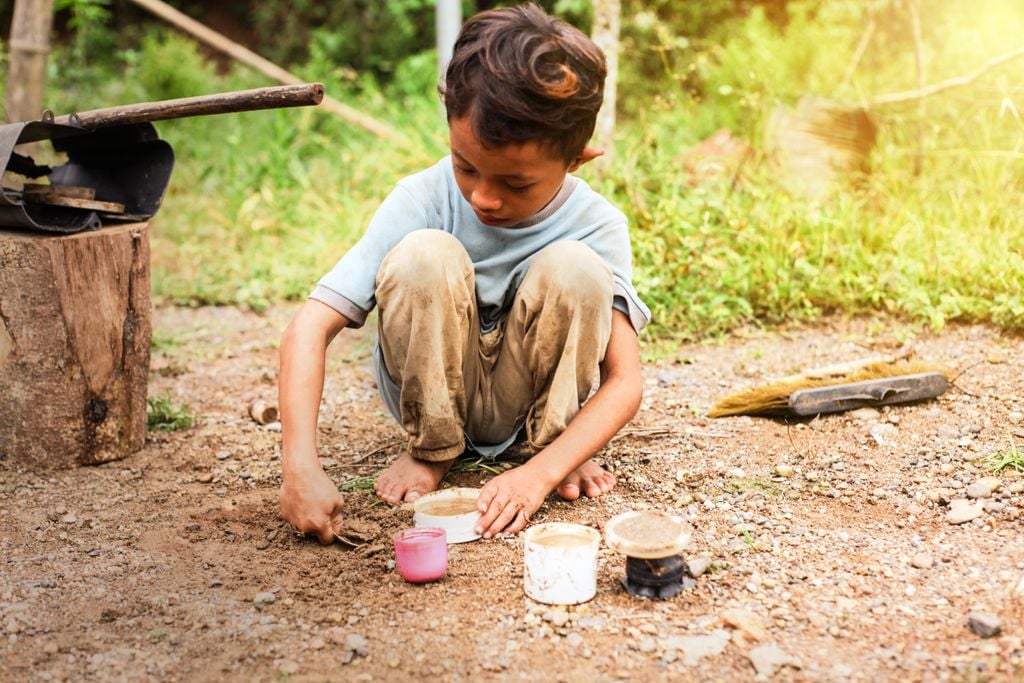
Children who spend time outdoors, handle soil and live with pets carry a more varied mix of gut bacteria than children who do not. Your child gets the same exposure from gardening, digging, a farm visit, or an hour in the park.
Your child will receive most of the benefits if they spend half an hour a day outdoors. However, the type of ground matters more than the length of the visit. You will find a far richer mix of healthy bacteria in grass, woodland, allotments, and vegetable patches than on a tarmac playground or in an indoor soft play center.
You must teach your child to wash their hands before meals and after using the toilet, as your goal is to expose them to ordinary outdoor life, not to genuine sources of infection.
Endnote
A healthy gut is essential for a stronger immune system and determines how well your child absorbs the nutrients they need to grow. You don’t always need a strict regime to support a healthy gut, but you need to be consistent with your efforts. Pick one of the three approaches above, give it a month, and add the next once the first has become routine.