
Why I Cook with Algae Oil: 5 Healthy Benefits + The Best High-Heat Oil for Stainless Steel Pans
If you’ve ever stood in the cooking oil aisle staring at 47 different bottles thinking, “Wait… which oil is actually the healthiest?” — same.
Between olive oil, avocado oil, coconut oil, ghee, tallow, and every trendy seed oil in between, it can feel like you need a nutrition degree just to sauté a chicken breast.
But lately, I’ve been reaching for one oil over and over again, and it’s officially earned permanent space in my kitchen:
Not only does it check the “healthy cooking oil” box, but it’s also been the best high-heat cooking oil I’ve used in a long time — especially for stainless steel pans (and yes, I have thoughts on that!).
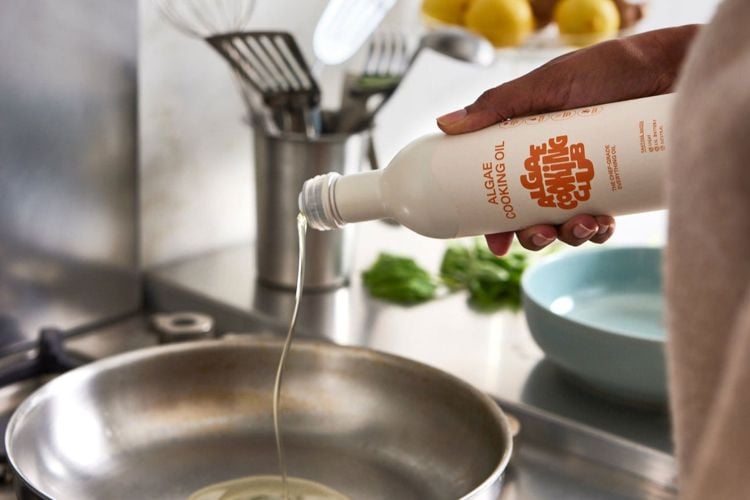
And as a bonus? It’s the first oil I’ve cooked with that doesn’t leave my kitchen smelling smoky… which matters a LOT in our house because our dog Argos is extremely sensitive to smoke and even the tiniest hint of “pan too hot” sends him into full drama mode.
So today I’m breaking down exactly why I cook with algae oil, including:
- 5 healthy benefits of algae oil
- Why it’s amazing for high heat cooking
- How it compares to olive oil, avocado oil, coconut oil, ghee, and tallow
- Why algae oil is a game-changer for stainless steel pans
- And why I’m buying mine from Algae Cooking Club
Let’s get into it.
What Is Algae Oil (and Why Are People Cooking With It)?
Algae oil is exactly what it sounds like: oil made from algae (specifically microalgae). While algae has been used for years as a source of omega-3s in supplements, algae oil has now become a seriously impressive everyday cooking oiloption too.
Algae oil known for being:
- Neutral tasting
- High in monounsaturated fats (omega-9)
- Very heat stable
- High smoke point
- More sustainable than many traditional oils
And the best part? It performs beautifully in real life cooking — not just in health articles.
5 Healthy algae oil benefits (Why I Switched)
1. Algae Oil Has an Extremely High Smoke Point (Perfect for High-Heat Cooking)
If you take one thing away from this post, let it be this:
Algae oil has one of the highest smoke points of any cooking oil.
Most algae cooking oils have a smoke point around 535°F, which is higher than many of the oils people usually consider “healthy.” That makes it an ideal choice for:
- Searing steaks or burgers
- Pan-frying chicken cutlets
- Stir-frying veggies
- High-heat roasting
- Cooking in stainless steel or cast iron
- Any recipe where you want browning without burning
According to Allrecipes, algae oil is known for its high smoke point (around 535°F), making it great for high heat cooking.
And listen… I don’t know about you, but I’m not always cooking gently over medium-low heat like I’m filming a fancy cooking show. Sometimes I’m hungry and I want crispy edges and I want them now.
Algae oil can handle that heat without immediately smoking up the kitchen.
Which brings me to the most important “health benefit” in my house…
Argos-approved cooking (aka less smoke, less chaos)
Our dog Argos is ridiculously sensitive to smoke — not even just the smoke detector going off, but the smell and irritation in the air.
When I first used Algae oil, I immediately noticed NO-SMOKE, even when I’m cooking hot and fast. No smoke alarm screaming. No dog panicking. No me waving a dish towel at the ceiling like a lunatic!
Just… dinner. Like a normal person with a happy, relaxed dog <3
2. Algae Oil Is High in Heart-Healthy Monounsaturated Fats
When people talk about “healthy fats,” they’re usually referring to monounsaturated fats, which are linked to heart health when used in place of saturated fats.
Algae oil is naturally rich in omega-9 monounsaturated fats, similar to what you get in olive oil and avocado oil.
Monounsaturated fats are widely recognized as a healthier fat choice, especially when replacing saturated fats in the diet.
That’s one reason algae oil is such a strong everyday option: it’s not just “high heat safe,” it’s also a better-for-you fat profile than many traditional high-heat choices.
3. It’s Neutral Tasting (So It Works With Everything)
I love olive oil. I really do. But olive oil has a distinct flavor, and sometimes you want that… and sometimes you really, really don’t.
Algae oil has a neutral, clean taste, which makes it perfect for recipes where you want the ingredients to shine, like:
- eggs
- sautéed veggies
- homemade salad dressings
- marinades
- baked goods
- stir fries
Food Network describes Algae oil as having a mild flavor and being useful as a cooking oil.
So whether you’re making something savory or sweet, algae oil doesn’t fight you.
4. Algae Oil Is More Sustainable Than Many Common Cooking Oils
I’m not here to guilt anyone into “perfect” choices, because honestly… feeding yourself is already a lot some days.
But if you care about sustainability even a little, algae oil is pretty amazing.
Algae can be grown without needing the same land resources as many traditional crops, and it can be produced in a more environmentally friendly way than some oils that require massive farmland or contribute to deforestation.
Allrecipes notes algae oil’s sustainability advantages compared with other oils.
So you’re getting a high-performance cooking oil that’s also a win for the planet. Love that.
5. It’s the Best Oil I’ve Used for Stainless Steel Pans (Yes, Really)
Let’s talk stainless steel. Stainless steel pans are my favorite because they:
- last forever
- cook evenly
- give you the best browning
- can go from stovetop to oven
- don’t have nonstick coatings to worry about
BUT…
They can be dramatic if you don’t use the right technique. The trick is heating the pan properly, then adding oil, then adding your food at the right time.
And Algae oil has been the best oil for stainless steel pans that I’ve personally used.
Why?
Because it handles high heat so well, and it creates a gorgeous slick surface when used correctly — almost like a “natural nonstick” effect.
Once dinner’s done, there’s still the oil left in the pan. Instead of pouring it down the drain, try FryAway®, a plant-based cooking oil solidifier: sprinkle and stir it into the hot oil, let it cool, then toss the solid block in the trash.
✨ Full blog post coming soon on exactly how I make stainless steel pans behave like nonstick (without weird hacks or frustration), because once you learn it, you’ll never fear stainless steel again.
How does Algae Oil Compare to other Healthy Cooking Oils?
Here’s the honest breakdown of how Algae oil compares to other popular “healthy cooking oils.”
Algae Oil vs Olive Oil
Olive oil is a classic for good reason — it’s rich in monounsaturated fats and great for salad dressings and lower-heat cooking.
But extra virgin olive oil has a lower smoke point than algae oil, making algae oil the better choice for high heat cooking and searing.
EatingWell discusses olive oil use and heat considerations.
Best use:
- Olive oil = dressings, drizzling, gentle sautéing
- Algae oil = searing, frying, stainless steel cooking, roasting
Algae Oil vs Avocado Oil
Avocado oil is often the go-to “high smoke point healthy oil,” and it’s a great option.
But Algae oil still competes hard here with an even higher smoke point and a lighter flavor.
Avocado oil is commonly cited as having a high smoke point, but algae oil is also among the highest smoke point oils.
Algae Oil vs Coconut Oil
Coconut oil is trendy and delicious, but it’s higher in saturated fat and has a strong coconut flavor (which can be great… or not).
Also, coconut oil’s smoke point is much lower than Algae oil, making it less ideal for high heat cooking.
Algae Oil vs Ghee
Ghee is a solid high-heat fat with a buttery flavor, but it’s still a saturated fat-heavy option compared to algae oil’s monounsaturated profile.
Ghee is great sometimes — but Algae oil is the one I reach for daily.
Algae Oil vs Tallow
Tallow is old-school and very stable for frying, but it’s an animal fat, higher in saturated fat, and not always the flavor you want in every recipe.
Algae oil is more neutral, lighter, and (in my opinion) more versatile for everyday cooking.
Why I Buy This Algae Oil: Algae Cooking Club (Affordable + Delivered)
There are a few algae oils out there now, but the one I keep coming back to is from Algae Cooking Club.
Here’s why it’s my top pick:
1. It’s Chef-Grade (and You Can Tell)
This isn’t one of those “healthy oils” that’s technically nutritious but disappointing to cook with.
It performs like a pro kitchen oil: high heat, clean taste, reliable results.
2. It’s One of the Highest Smoke Point Oils You Can Buy
That high smoke point is the whole reason I use it — especially with stainless steel pans.
3. Affordable Enough for Everyday Use
Some specialty oils are so expensive you end up “saving” them and never actually using them.
This one feels realistic for daily cooking — not just a fancy bottle you stare at.
4. Convenient Home Delivery (My Favorite Feature, Honestly)
If you’re busy, the last thing you need is another item to track down at the store.
Having it delivered means:
- I never run out
- I always have a high-heat oil ready
- I don’t impulse buy something random just because it’s on the shelf
Final Thoughts: Should You Try Algae Oil?
If you’re looking for the best oil for high heat cooking, I truly think algae oil is one of the best choices you can make.
Reasons you’ll love Algae Oil:
- high smoke point
- neutral flavor
- rich in monounsaturated fats
- great for stainless steel pans
- less smoky (Argos-approved!)
- sustainable
And once you cook with it a few times, you’ll probably find yourself reaching for it the same way I do — automatically.
If you try it, come back and tell me what you cooked first! And keep an eye out because my full post on how to make stainless steel pans nonstick is coming soon.
🔎 For More Reading — Peer-Reviewed Studies & Scientific Resources
- Dietary Lipid Oxidation and Health Risks — A critical review examining how lipid oxidation products formed during high-heat cooking can affect health, highlighting why choosing more stable cooking fats is important.https://www.frontiersin.org/journals/nutrition/articles/10.3389/fnut.2021.711640/full
- Mechanisms and Health Impacts of Oil Oxidation — A comprehensive review on how oxidation changes oil quality and can produce compounds with health risks, emphasizing the importance of stability in cooking oils.https://www.sciencedirect.com/science/article/pii/S2590157525003888
- Thermally-Oxidized Oils & Toxic Compounds — A peer-reviewed overview of how repeatedly heated oils generate breakdown products (like reactive oxygen species) that may be linked to health issues, supporting the case for high-stability oils.https://sciencepublishinggroup.com/article/10.11648/j.ab.20241201.11/pdf
- Secondary Lipid Oxidation Products in Heated Oils — High-resolution analysis identifying oxidative products formed in common culinary oils under heat, underscoring why oxidative stability matters for food safety and health.https://pubs.rsc.org/en/content/articlehtml/2019/fo/c9fo02065a
- Lipid Oxidation & Nutritional Health — A scientific review summarizing the science of lipid oxidation, including how cooking practices and oil stability influence oxidation in food science and nutritional outcomes.https://www.sciencedirect.com/science/article/pii/S209624282300009X
For the practical side—flavor, smoke point, substitutions and the best cooking methods—see my guide to cooking with algae oil.