GLP-1 Tracker App: A Simpler Way to Keep Food, Hydration, and Daily Notes Together
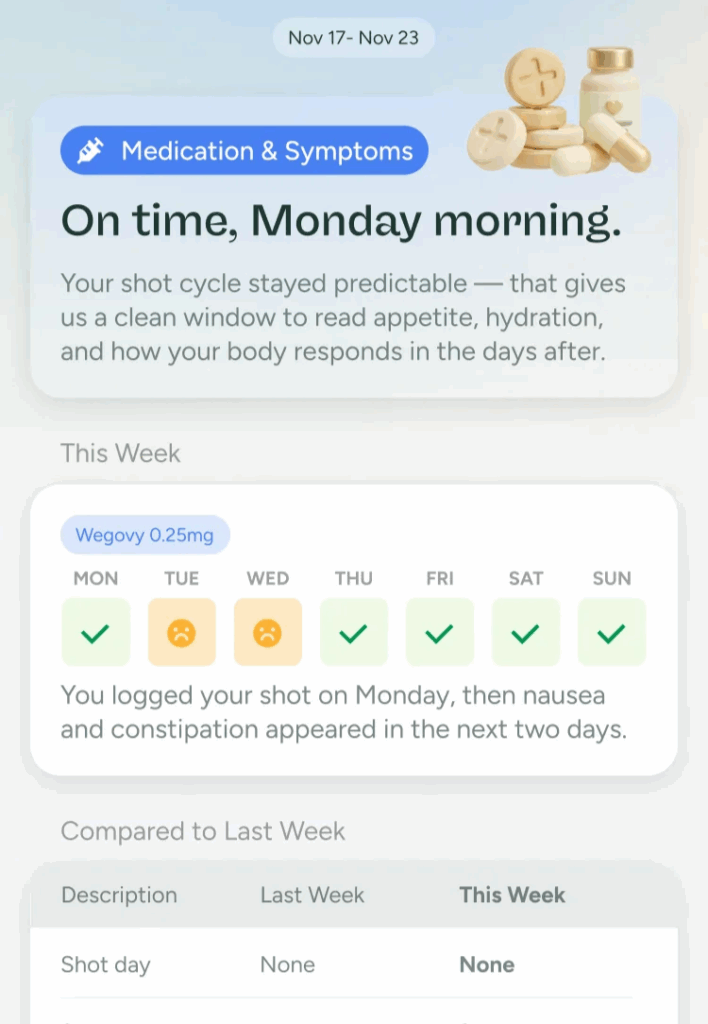
Starting a GLP-1 routine can introduce a lot of small details to keep track of.
There may be medication information, meals, water, weight changes, activity, questions for your healthcare professional, and notes about how you felt on a particular day. None of these records is especially complicated on its own. The problem begins when they are scattered across several apps, phone notes, calendars, and memory.
A GLP-1 tracker app can give those details one place to live. The goal is not to turn every meal or weigh-in into a score. It is to make your own routine easier to look back on and discuss when useful.
Tracking Should Create Context, Not More Pressure
Food tracking is often associated with calories, targets, and daily numbers.
That can be useful for some people, but a GLP-1 routine may involve a broader set of questions.
You might want to remember:
- what you ate;
- when you ate;
- how much water you logged;
- whether your appetite felt different;
- how a meal fit into the rest of the day;
- when you recorded your medication;
- how your weight has changed over time;
- what you want to ask at your next appointment.
A useful tracker should help preserve that context without making every entry feel like another task to complete perfectly.
Missing a meal log or forgetting to record water one afternoon does not make the rest of your information useless.
Patterns often matter more than a perfect streak.
Keep Meals in Their Daily Context
A food log tells you more when it is connected to the rest of the day.
For example, instead of simply recording lunch, you might also want to remember whether it was a smaller meal than usual, whether you ate later than normal, or whether you felt particularly full afterward.
Those notes can make the record easier to understand when you review it days or weeks later.
The point is not to diagnose why something happened.
A tracking app cannot determine the medical cause of appetite changes, discomfort, or other symptoms.
It can simply help you retain details that may otherwise be forgotten.
Protein Is Useful to Track Without Turning It Into the Only Number
Protein often receives attention in conversations about nutrition and weight management, but individual needs vary.
That is why tracking can be more useful than following a generic number from the internet.
If you and your healthcare professional or dietitian have discussed a nutrition goal, a tracker can help you see how your own meals fit around that plan.
The record might include protein alongside other parts of the meal rather than treating it as the only thing that matters.
That keeps the focus on the full eating pattern rather than chasing a single daily number.
Hydration Is Easier to Understand When It Is Logged With Everything Else
Water is another detail people frequently track separately.
One app may contain food. Another holds water reminders. Medication dates may be in the calendar, while weight is recorded somewhere else.
The result is a collection of isolated numbers.
Keeping hydration near meals and other daily notes makes the record easier to review as a whole.
There is no single hydration target that is appropriate for every person. Needs can differ depending on health, activity, climate, medications, and other factors.
If you have questions about how much fluid is appropriate for you, that is something to discuss with a qualified healthcare professional.
The tracker simply helps you record what happened.
Record Medication Without Using the App to Make Medication Decisions
Medication tracking is useful for a different reason.
It creates a personal history.
You may want to keep track of when a medication was taken, what was prescribed, or what questions came up between appointments.
That record can make it easier to explain your routine later rather than reconstructing it from memory.
However, a tracking app should not tell you to increase, decrease, skip, or stop a prescription medication.
Medication decisions belong with the healthcare professional responsible for your care.
A good distinction is simple:
Tracking records what happened. Medical care decides what should happen next.
Side-Effect Notes Can Help You Remember What to Discuss
People sometimes notice changes in how they feel while taking prescription medications.
If something feels different, it can be useful to make a brief note about:
- what you noticed;
- when it occurred;
- how long it lasted;
- whether it changed later.
This can create a clearer history for a future conversation with a healthcare professional.
It should not be used to diagnose the cause of the symptom.
If a symptom is severe, persistent, worsening, or concerning, contact an appropriate healthcare professional rather than waiting for an app to interpret it.
Do Not Let Daily Weight Become the Whole Story
Weight is another common part of GLP-1 tracking, but daily measurements can move for many reasons.
A single number rarely tells the whole story of a person’s routine.
Looking at longer-term records alongside meals, hydration, activity, and other notes can provide more context than reacting to one weigh-in.
This is also why a tracker can be more useful as a history than as a daily judgment system.
The record is there to help you see what has happened over time.
It does not need to label every day as successful or unsuccessful.
Make Tracking Easy Enough to Continue
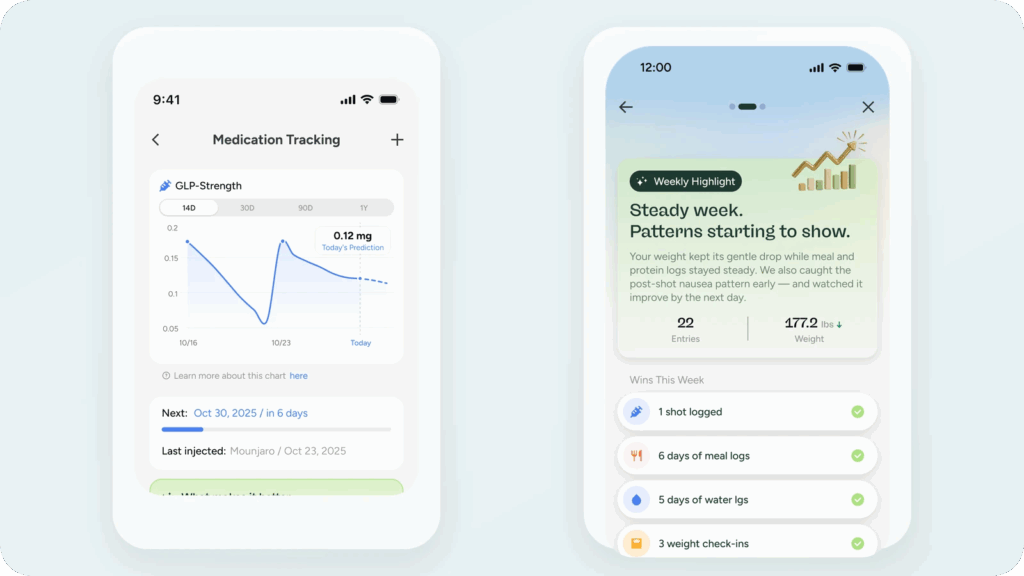
A health log only becomes useful if you can realistically maintain it.
That means the best tracking method is not always the one with the most fields.
Low-effort input matters.
Glowise, for example, brings medication, food, hydration, weight, activity, side-effect notes, and progress into the same GLP-1 companion app. Its food logging options include tools such as voice input, food photos, barcode or nutrition-label scanning, and menu scanning, which are designed to reduce some of the manual entry involved in keeping a daily record.
The practical goal is not to create the most detailed health database possible.
It is to make the information you personally want to remember easier to capture consistently.
A Simple Daily Tracking Routine
Tracking does not need to take over your day.
A lightweight routine can focus on a few useful moments.
Around Meals
Record what you ate at the level of detail that is useful to you.
If relevant, add protein, water, appetite, fullness, or a short note.
Around Medication
Keep the medication entry with the rest of your routine so you do not have to search another app later.
When Something Feels Different
Add a brief note rather than relying on yourself to remember the detail several days later.
During a Weekly Review
Look back at your entries as a group.
You may notice that some information is useful and other fields are not worth continuing to track.
The system can become simpler over time.
Weekly Reviews Can Be More Useful Than Constant Checking
Tracking becomes more meaningful when there is a reason to look back at the information.
A weekly review can help you notice things such as:
- which meals you recorded most consistently;
- whether your routine changed during busy days;
- questions you want to raise with your care team;
- information you keep forgetting to record;
- which parts of the tracker are actually useful.
The purpose is observation.
You do not need to draw a medical conclusion from every pattern.
Sometimes the useful outcome is simply recognizing a question worth asking.
Keep Questions for Your Healthcare Professional in the Same Place
One overlooked benefit of tracking is remembering what you wanted to ask.
A question may feel important on Tuesday and disappear from memory by an appointment two weeks later.
Keeping short notes alongside your daily records can make those conversations easier.
Questions might relate to nutrition, medication instructions, symptoms, activity, or changes in your routine.
The tracker helps preserve the question.
Your healthcare professional provides the medical interpretation.
What a GLP-1 Tracker Should Not Do
Tracking tools can organize information, but there are clear boundaries.
A tracker should not be treated as a replacement for a clinician or registered dietitian.
It should not:
- diagnose symptoms;
- determine whether a medication is appropriate for you;
- tell you to alter a prescription dose;
- promise a particular amount of weight loss;
- prescribe one protein, calorie, or hydration target for everyone;
- replace personalized medical or nutritional advice.
Those limits are important because the same log can mean different things for different people.
Tracking creates a record. It does not create a diagnosis.
Choose a Tracker Around What You Actually Need to Remember
Before choosing an app, think about what currently gets lost.
If medication information is already organized but your meal notes are scattered, food tracking may be the priority.
If you are using separate apps for meals, water, weight, and medication, an all-in-one approach may be more convenient.
Useful questions include:
- Can I record meals without excessive manual entry?
- Can I keep medication information in the same place?
- Can I log water and weight?
- Can I add notes about how I felt?
- Can I review information across several days?
- Will I realistically keep using this?
The best system is one that fits into your routine without demanding more attention than the information is worth.
FAQ
What should I track while using a GLP-1 medication?
That depends on your individual needs and care plan. Some people choose to record medication, meals, hydration, weight, activity, appetite, and daily notes. Your healthcare professional can help determine which information is most relevant to your care.
Do I need to track every meal?
Not necessarily. A tracking system should be useful rather than burdensome. Even partial records can help you remember your routine and prepare questions for future conversations with your healthcare professional.
Should a GLP-1 tracker tell me how much protein or water I need?
A tracker can record goals you have chosen or discussed with a qualified professional, but individual nutrition and hydration needs vary. Generic targets should not replace personalized advice.
Can I use a tracker to monitor side effects?
You can use a tracker to record what you notice and when it happens. The app should not diagnose the cause or severity of a symptom. Contact a healthcare professional about symptoms that are severe, persistent, worsening, or otherwise concerning.
Can a tracking app replace my healthcare provider?
No. A tracking app can organize personal information and help you review your routine, but diagnosis, treatment, medication decisions, and individualized medical advice belong with qualified healthcare professionals.
Final Thoughts
The most useful GLP-1 tracking routine is not necessarily the one that records the most data.
It is the one that helps you remember the information that matters without making daily life feel like a spreadsheet.
Keeping meals, hydration, medication records, weight, and personal notes together can make it easier to review your own routine and prepare more specific questions when you speak with your healthcare professional.
The goal is not perfect tracking.
It is having enough context to understand your own record without trying to reconstruct the past from memory.