A Plastic-Free Kitchen: How to Gradually Replace Containers, Cling Film and Bags With Safer Materials
Open almost any kitchen cupboard and plastic is everywhere: food boxes, freezer bags, cling film, bottles and lids. Getting rid of it all at once is expensive and wasteful. A slower approach works better, swapping items one by one as they wear out. Here’s how to build a plastic-free kitchen step by step without throwing away things that still do their job.
Why People Are Moving Towards a Plastic-Free Kitchen
Interest in a plastic-free kitchen has grown alongside research into microplastics. In 2023, engineers at the University of Nebraska-Lincoln found that microwaving plastic baby food containers released as many as 4.22 million microplastic and 2.11 billion nanoplastic particles from just one square centimetre of plastic within three minutes. Health advice now spreads quickly through cooking blogs, recipe apps and the same phones people use for streaming and entertainment platforms such as https://parimatch.com/en/crypto-casino, so findings like this reach home cooks within days. Scientists are still studying what these particles mean for long-term health, but heat clearly speeds up the release.
Concerns about chemicals such as BPA add to the picture. Several countries, including Canada, have restricted its use in baby bottles.
Start Where Heat and Fat Meet Plastic
The most important changes are the ones involving heat, acidic food or oily dishes, because these conditions make plastic more likely to break down. Good first steps:
- Never microwave food in plastic containers, even those labelled microwave-safe.
- Let hot food cool before storing it, or use glass from the start.
- Replace scratched, cloudy or warped containers first.
Easy Swaps at a Glance
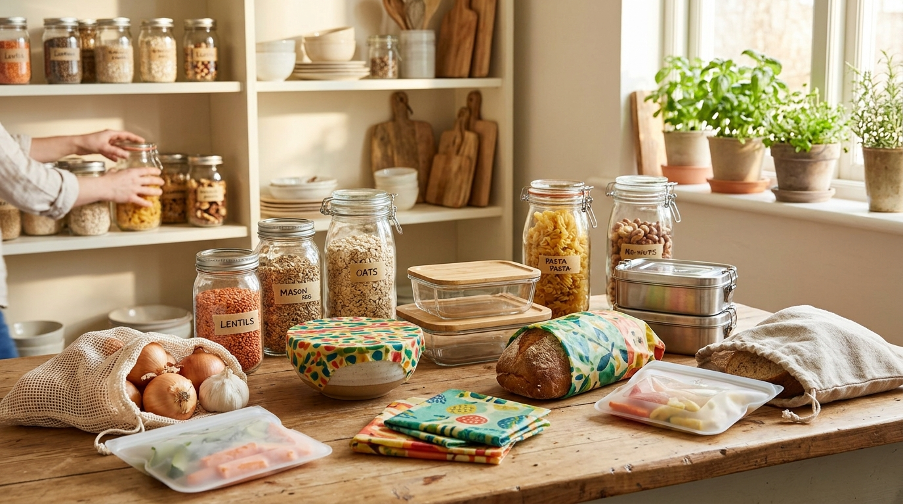
- Food containers → glass or stainless steel. Heat-safe and doesn’t absorb smells.
- Cling film → beeswax wraps or a plate on top of the bowl. Reusable for months.
- Zip bags → silicone bags or glass jars. Washable and long-lasting.
- Water bottles → stainless steel or glass. Keeps drinks free of plastic taste.
- Plastic utensils → wood or stainless steel. Safer with hot food.
Tip: Glass jars from sauces and jams are free storage containers. Clean them well and use them for dry goods, leftovers or homemade dressings.
Do Swaps Gradually and Smartly
Throwing away usable plastic just creates more waste. Keep old containers for non-food uses like storing screws, craft supplies or garden seeds, and replace them in the kitchen only when they wear out. Buying a few versatile glass containers in standard sizes usually covers most needs.
Shopping habits matter too. Reusable cotton bags, buying loose fruit and vegetables and choosing products in glass or paper all reduce how much plastic enters the kitchen in the first place.
Conclusion
A plastic-free kitchen doesn’t happen in one weekend. Starting with anything that touches heat, swapping items as they wear out and building small habits makes the change affordable and sustainable. Within a year or two, most kitchens can cut their plastic use dramatically.