Best Low-Acid Coffee: Top Brands in 2026
Coffee acidity is not one fixed trait. It depends on factors such as bean varietal, roast level, growing altitude, processing, and the water used to brew it. Also, some stomachs feel those differences more than others. This review compares five of the best low-acid coffee brands against the same parameters: how each one lowers acid, what it costs, and where the claims run thin.
Methodology: How We Compared Low-Acid Coffee Brands
For each brand below, we check the same key criteria:
- Low-acid method: Roast profile, processing, origin, or a mix of the three.
- Certifications: USDA Organic status, fair trade certificates, and any other certification held.
- Quality control: Independent lab testing for acidity and toxins.
- Price: Range per 12 oz of whole-bean coffee, converted where bags are larger.
Low-Acid Coffee Brands at a Glance
The table below lines up all five brands on method, certification, and price.
| Brand | How It Lowers Acid | Certifications | Price range per 12 oz |
| Fabula Coffee | Roast built around varietal, altitude, and roast method | USDA Organic | $19.49–$29.99 |
| Lifeboost Coffee | High-altitude, shade-grown beans, spring-water washed, then pH-tested in a lab | USDA Organic | $19–$29.99 |
| Alex’s Low-Acid Organic Coffee | Proprietary air convection roasting; beans never touch hot metal | USDA Organic | $15.99–$19.99 |
| Puroast | Patented slow roast in a biomass furnace; UC Davis-verified pH 5.7–5.9 | LACCSA low-acid credential (not an independently audited certification) | $14.55–$17.70 |
| Purity Coffee | Roast tuned for antioxidant retention; targets pH 4.95–5.05 | USDA Organic, Bird Friendly | $16.70–$29 |
Fabula Coffee
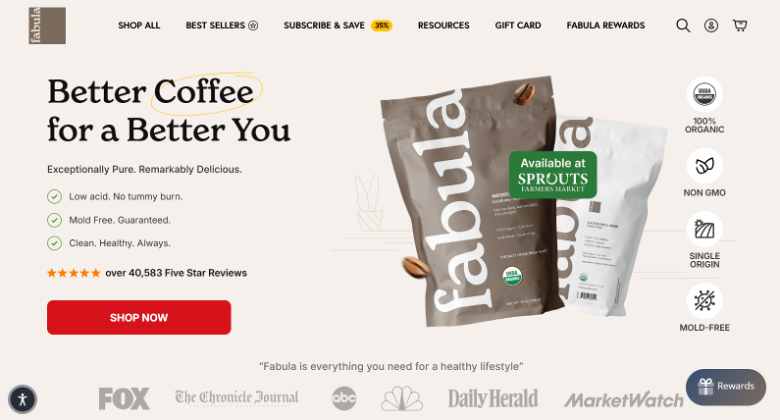
Fabula Coffee built its lineup around a specific customer: someone who loves coffee but whose stomach stopped cooperating with it. Acid reflux, mold sensitivity, and stomach issues bring in most buyers, and Fabula’s low-acid coffee answers with a single-origin lineup, not a broad blend.
Each roast traces to an origin: Peru for the medium roast and dark roast, Mexico for the light roast and decaf coffee, and Colombia for the espresso, plus a rotating Sip of the Month from various countries all over the world. Beans are graded in the top 2% of Arabica, grown in the shade at high altitude on remote farms. The coffee arrives freshly roasted for each order — the company roasts beans daily.
Low acidity here comes from bean varietal, microclimate, and altitude as the starting points. The roast pulls acidity down while keeping the flavor and balance of the bean intact. Fabula Coffee does not publish a specific pH number to verify that, however, Fabula Coffee offers detailed contaminant data. Independent laboratories test the beans for more than 350 compounds, including aflatoxins, ochratoxin, herbicides, and pesticides. Plus, the catalog is certified USDA Organic.
A 12-oz bag runs $19.49 to $29.99 depending on quantity. First orders of up to three bags come with a money-back guarantee.
Lifeboost Coffee
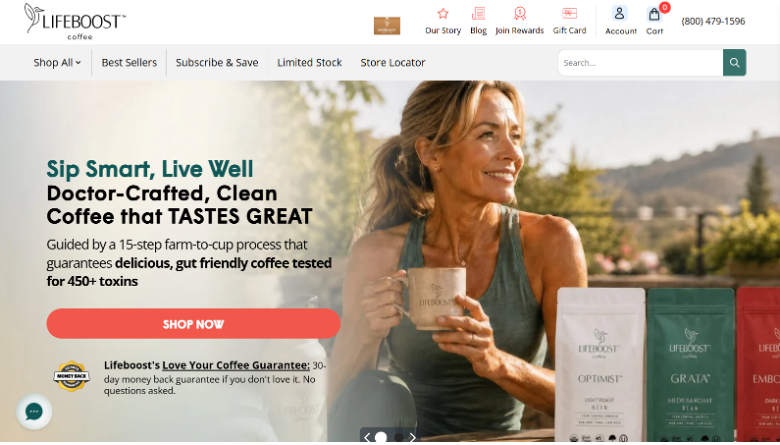
Lifeboost has spent close to a decade on one idea: coffee that will not fight back against sensitive stomachs. Dr. Charles Livingston, a chiropractic physician, started the brand, which leads with a gut-friendly pitch on flavor as much as on acid.
Sourcing stays narrow. Single-origin beans come from small farms in Nicaragua, grown at altitudes of more than 5,700 feet, then washed in spring water and sun dried. The higher altitude can mean brighter, more acidic beans to start, so Lifeboost leans on processing and roasting to bring acidity down.
The company backs the claim with its own numbers: regular coffee has a pH of 4.85 to 5.13, while its low-acid coffee is closer to pH 6 (the smaller the pH, the more acidic – 7 is neutral), measured with a lab-grade meter. Beans are USDA Organic on the main roasts, and third-party labs screen the coffee for more than 450 toxins.
The lineup runs light to dark, including an Embolden dark roast, plus espresso, cold brew, and flavored options. A 12-oz bag runs $19 to $29.99 depending on subscription and quantity, and is backed by a 30-day return window.
Alex’s Low-Acid Organic Coffee
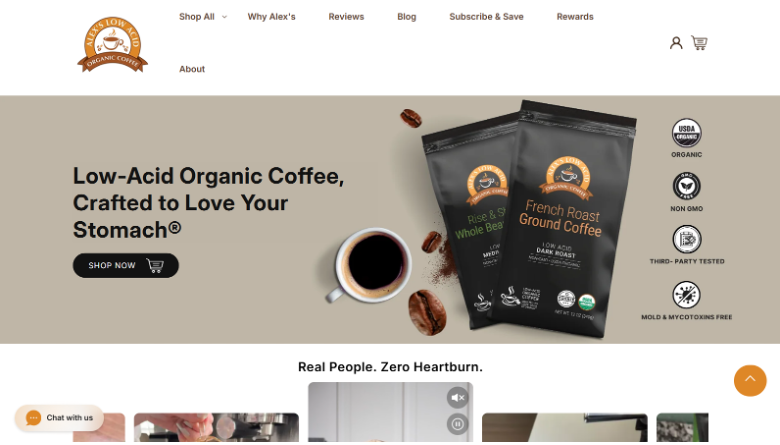
Alex’s started with one person’s problem: acid reflux that would not let him continue enjoying his favorite coffee. Alex built the brand around a stomach-friendly roast and, in 2025, acquired Sonoma Roasters in California, controlling beans from farm to roaster.
The coffee beans come from three countries: about half of the blend is from Chiapas, Mexico, and Nicaragua and Honduras split the rest. Chiapas beans lean mild, with brown sugar and pear notes, while Honduras adds tropical fruit and chocolate. They are all grown under USDA organic certification.
Acid reduction happens in the roaster. Beans go through a proprietary air convection method, heated from the inside, not off hot metal, which the brand says targets chlorogenic acid and overall acidity while protecting flavor. We were unable to find a published pH figure or a percent reduction to confirm the acidity.
Roast options run from medium to French roast, alongside a Swiss Water Process decaf and a half-caff blend. A 12 oz bag costs $19.99, or $15.99 on subscription, making it one of the cheaper options here, and it is backed by a 30-day satisfaction guarantee.
Puroast
Puroast has run the same idea since 1994: roast the beans slower and cooler, so less acid ends up in the cup without flattening flavor. A patent granted in April 2026 covers that unique roasting process, traced back to coffee traditions in the Andes.
Roasting happens in a biomass furnace rated above 95% efficient, with no alkaline additives. Puroast is the only coffee brand in the category to cooperate with universities and publish detailed research into its acidity levels. UC Davis testing puts Puroast’s pH between 5.7 and 5.9. Because pH sits on a logarithmic scale, that gap works out to roughly five times less acid.
Certification is where Puroast can be lacking a bit: no USDA Organic certification. It does have LACCSA, a low-acid credential, from Latin American Coffee Certification & Standards Authority. Origins remain unnamed for most blends.
The lineup runs from a medium roast house blend built for robust flavor to a French roast and an Italian espresso roast, with decaf, half-caff, and flavored options rounding it out. Bags cost $29.50 for 20 oz, close to $17.70 on a 12 oz basis; the 2.5 lb bag at $48.50 brings that to about $14.55.
Purity Coffee
Purity Coffee takes a different angle here: acid is one factor among several, not the headline. Andrew Salisbury started the company in 2016 after a health scare sent him looking into what ends up in a cup of coffee, and Jon Butcher joined him to build it out.
The coffee goes through independent testing across 310 pesticide chemicals, mold, mycotoxins such as ochratoxin A, and heavy metals. That same testing tracks chlorogenic acids and trigonelline, tied to flavor and antioxidant levels.
On acidity, Purity aims for a pH between 4.95 and 5.05, within the typical range for coffee, about 4.7 to 5.3. That is a real move toward low acidity, but a modest one, smaller than the reduction brands built around low-acid coffee tend to claim.
Certifications include USDA Organic and Smithsonian Bird Friendly. The lineup stays narrow: a medium roast called Flow, a dark roast called Ease (created specifically for easier digestion), and a decaf called Calm, sold as whole bean, ground coffee, or pods. A 12-oz bag costs $29, or $23.20 on subscription, and the 5 lb bag works out to about $20.85 per 12 oz.
What Makes Coffee Low-Acid?
Roast does the heaviest lifting. A dark roast (meaning a longer roasting process at higher temperatures) breaks down more chlorogenic acid than lighter roasts do, which is why a dark roast blend is standard advice for anyone dealing with acid reflux or sensitive stomachs, and a medium roast coffee splits the difference.
Growing conditions also play a part: coffee grown at lower altitudes, including much of Brazil’s crop in South America, starts less acidic than high-grown coffee beans, but sacrifices flavor development. A roaster can still pull a bright bean’s acid down with a longer, careful roast, but may also push too far and turn the flavor bitter. Plenty of dark roasts still deliver great flavor, just less brightness than lighter roasts keep. Milk helps too by binding some of the acids.
Note: Low-acid coffee is not the same thing as decaf. Caffeine and acid are separate compounds, and a fully caffeinated cup can carry less acid than a decaf coffee made from the wrong beans.
Does Low-Acid Coffee Help With Acid Reflux?
Low-acid coffee brands don’t claim to cure acid reflux. What they offer is a cup less likely to add to the problem, which is worth it if you are not ready to drop coffee over an upset stomach.
Coffee can trigger heartburn through more than acidity alone. A highly acidic coffee brings a bitter taste along with the burn, since caffeine relaxes the muscle that keeps stomach acid in place, and a large hot cup asks a lot of an empty stomach. The Cleveland Clinic suggests a few fixes for people who still want to drink coffee: eat something first, keep milk light, and lean toward a dark roast.
Brewing Methods and Acid Levels
The beans set a baseline, but brewing methods also affect the number. Cold brew contains fewer acidic compounds than a hot brew does. A cold brew coffee made from an already low-acid coffee bean combines two factors instead of one.
Espresso works differently: the brew time is under 30 seconds, which limits how much acid and how much flavor dissolve into the cup. A French press sits in the middle, since its metal filter lets more oils through than a paper one does.
High temperatures pull acid out faster regardless of the method, and a coffee maker set to a lower brew temperature almost always produces a milder cup. Using water that is too hot can lead to bitter coffee and a burnt flavor even with quality beans.
How to Choose a Low-Acid Coffee
Start with what you already drink. Someone switching from a dark roast blend will barely notice the change, since dark roast already runs low acid; someone attached to a light-roast morning cup faces a bigger adjustment, since most low-acid coffee beans skew toward a medium or dark roast.
A traditional coffee habit does not need to compromise with the body of the coffee; plenty of low-acid options come as a dark roast or French roast. Coffee lovers who prefer the dark chocolate notes can mostly find them in many low-acid options.
Roast names vary by brand, so read past the label for the actual flavor profile. A medium roast blend from one company can taste nothing like another’s. It’s important to run your own taste tests at home.
Certification tells you about farming, not acidity. A brand can be GMO-free and USDA Organic and still sit mid-range on acidity.
If you drink black coffee, acidity is easier to notice than if you always add whole milk, since dairy softens the sharper edges. That comes down to personal preference and flavor more than chemistry.
Red Flags to Watch For
A few phrases are worth pausing on. “Acid-free” is one: no coffee can be completely free of acidity, so using this claim without a number mostly describes a feeling about flavor, not a measurement. Reliable brands lead with “low acid” instead. It’s even better if a company publishes pH testing to support the statement. Many coffees claim to be gentle on the stomach with no test behind it.
Watch for vague sourcing too. “Sourced from the finest regions” doesn’t tell you as much as a specific country name and elevation would, and can signal low-quality beans dressed up nicely.
Check whether a health claim points to a source, too. Acidity claims should hold up against independent testing data, not a company’s description alone, and a brand willing to provide testing results or name its lab is usually one of the low-acid coffee brands worth trusting.
Which Low-Acid Coffee Should You Try?
Fabula Coffee suits anyone who wants a tested, single-origin low-acid coffee. Lifeboost fits a similar buyer but requires some time to understand its catalog. Alex’s is the value pick, with the widest roast range at the lowest price here.
Puroast suits anyone who wants a lab-verified pH number over an organic seal or a familiar flavor. Consider Purity if you valueantioxidants and contaminant testing most, and acid reduction is a secondary concern for you.
Your own coffee taste test will still tell you more than any label. Give a new bag a week and try different brewing methods at different times of the day to truly explore the flavor and the way the coffee impacts your stomach.