Best Games to Play at Home: Fun Ideas for Families, Friends and Adults
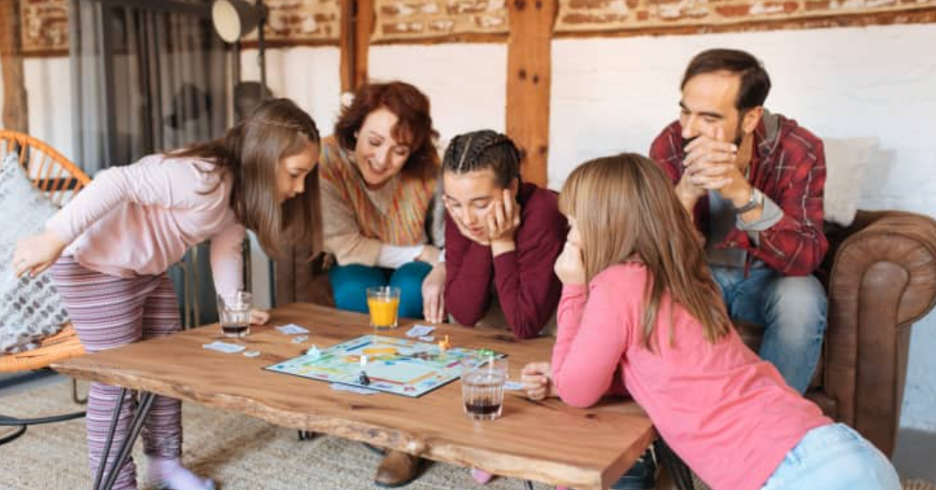
You do not need expensive equipment or a large group to have a good game night. Some of the best games can be played with a deck of cards, paper and pencils, a board game you already own, or simply a few people willing to join in.
People searching for games to play in home usually want something easy to start, suitable for the people available and entertaining for more than a few minutes. The right choice depends on the group. A family with young children may prefer Pictionary or a scavenger hunt, while adults may enjoy Codenames, a murder mystery or a longer board game.
There are also good options for two players and even for people spending an evening alone.
The games below cover different styles, from drawing and guessing to strategy, cards and digital entertainment such as crazy 777 game.
How to Choose Games to Play at Home
Start with the number of people.
Chess works perfectly with two players. Charades becomes more interesting with a larger group. Codenames is usually better when enough people are available to form teams.
Next, consider how much time you have.
Twenty Questions can fill ten minutes. Monopoly can occupy an entire evening.
Age also matters. Younger children usually enjoy games with clear visual actions and short turns, while older players may prefer strategy, trivia or social deduction.
Finally, think about how competitive the group wants to be.
Not every home game needs a serious winner. Charades, drawing games and scavenger hunts can work just as well as casual group activities.
Charades
Charades is one of the easiest home games because no special equipment is required.
One player silently acts out a word, phrase, film, person, object or activity. Everyone else tries to guess the answer before time runs out.
The main rule is simple: the person acting cannot speak.
You can divide the group into teams or let everyone guess together.
A good way to prepare is to write ideas on small pieces of paper and place them in a bowl. Players then select one at random.
Categories can include movies, animals, jobs, sports, famous characters and everyday activities.
Charades works particularly well for mixed-age groups because the difficulty can be changed easily.
For children, use simple words such as elephant, football or sleeping.
For adults, use film titles, famous people or longer phrases.
Best for: four or more players.
Pictionary
Pictionary uses drawing instead of acting.
One player receives a word and must draw clues while the other players try to identify it.
Letters, numbers and spoken clues are normally not allowed.
You do not need the official board game to play a simple home version. Paper, pens and a list of words are enough.
For a larger group, create two teams. Give each artist 60 seconds to make the drawing while teammates guess.
The drawings do not need to be good.
In fact, bad drawings often make the game funnier.
Useful categories include household objects, food, animals, places, films and actions.
Pictionary is also easy to adapt for children because you control the vocabulary.
Best for: four to eight players.
Trivia Quiz
A home trivia night is easy to customize.
One person prepares questions and acts as the quiz host. Everyone else plays individually or in teams.
The biggest advantage is that you can build the quiz around the interests of your group.
Possible rounds include geography, movies, sports, music, science, history and general knowledge.
You can also add a picture round or a short audio round.
Avoid making every question extremely difficult. A good quiz usually mixes easy, medium and challenging questions so that everyone has a chance to score.
For a longer evening, prepare five rounds with ten questions in each.
For a quick game, 15 to 20 questions are enough.
Best for: three or more players.
Scavenger Hunt
A scavenger hunt turns the whole home into the playing area.
Create a list of objects that players need to find.
For example, you might ask them to bring back something blue, something older than five years, an object beginning with the letter B, a spoon, a book with more than 300 pages or an item that fits in one hand.
You can also hide clues around the house.
Each solved clue leads to the next location until the final prize or message is found.
Children usually enjoy simple searches, while adults can play a more complicated puzzle-based version.
A photo scavenger hunt is another option. Instead of collecting objects, players must photograph each item on the list.
Best for: families and groups of three or more.
UNO
UNO is one of the easiest card games for a casual home evening.
Players try to get rid of all the cards in their hand by matching the color or number of the card on top of the discard pile.
Action cards change the game.
Skip removes the next player’s turn. Reverse changes direction. Draw cards force another player to take additional cards.
Wild cards allow a player to choose the next color.
The rules are simple enough for new players to understand quickly, but the action cards keep each round unpredictable.
UNO also works well because rounds are normally much shorter than traditional board games.
Best for: two to ten players.
Monopoly
Monopoly is a better choice when the group wants a longer board game.
Players move around the board, buy properties and collect rent when other players land on them.
The main objective is to remain financially active while other players run out of money.
The game involves some luck because movement depends on dice, but property choices, trades and cash management also matter.
One problem with home Monopoly games is that groups often use unofficial house rules that make the game last much longer.
For a faster game, follow the official auction rule when somebody lands on an available property but does not buy it.
Monopoly is not ideal for a ten-minute break, but it works well when an evening is set aside for one longer game.
Best for: three to six players.
Chess
Chess is one of the best games to play at home with two people.
There is no random element once the pieces are placed on the board. Every move is chosen by the players.
Each piece moves differently.
Pawns move forward, bishops move diagonally, rooks move in straight lines and knights move in an L shape. The Queen combines rook and bishop movement, while the King must be protected.
The goal is checkmate: place the opponent’s King under attack so that no legal move can save it.
Beginners do not need to learn complicated openings immediately.
Start by learning legal moves, basic checkmates and three simple principles: control the center, develop pieces and protect the King.
Chess can last five minutes or several hours depending on the time rules.
Best for: two players.
Jenga
Jenga combines simple rules with physical tension.
A tower is built from wooden blocks.
Players take turns removing one block from below the highest completed level and placing it on top.
The tower becomes less stable after every move.
The player who causes it to fall loses.
Jenga works well at home because a new player can understand the rules almost immediately.
There is also plenty of room for variations.
You can write questions, challenges or mini-tasks on the blocks. When someone removes a marked block, they must complete the task before adding it to the top.
Best for: two or more players.
Codenames
Codenames is a word association game usually played in two teams.
A grid of words is placed on the table. Each team has a spymaster who knows which words belong to their side.
The spymaster gives a one-word clue followed by a number.
For example:
“Ocean, 2.”
The team then tries to identify two words on the table connected with the idea of an ocean.
The difficulty is giving a clue that connects several correct words without accidentally pointing toward the opponent’s words or the dangerous assassin card.
Codenames works especially well with adults because it creates discussion without requiring complicated rules.
Different players can interpret the same clue in completely different ways, which is often where the fun comes from.
Best for: four to eight players.
Twenty Questions
Twenty Questions requires no equipment.
One person secretly thinks of a person, place, animal or object.
The other players have up to 20 yes-or-no questions to identify it.
Good questions reduce the possible answers quickly.
Instead of immediately asking, “Is it a dog?” start with broader questions such as:
“Is it alive?”
“Can it fit inside a house?”
“Is it made by humans?”
Each answer narrows the possibilities.
The game works anywhere in the home and is useful when you need an activity without preparing anything.
It can also be played with only two people.
Best for: two or more players.
Murder Mystery Game
A murder mystery game is a good option when you want an entire evening built around one activity.
Each participant receives a character.
One fictional crime has taken place, and players must investigate clues, question one another and work out who is responsible.
Some games give players hidden information that they reveal only when certain questions are asked.
Others use several rounds where new clues appear gradually.
You can buy a ready-made mystery or create a simple version yourself.
The experience becomes more entertaining if everyone stays in character.
Costumes are optional, but even simple name cards and themed food can make the evening more memorable.
Unlike a quick card game, a murder mystery works best when the group has enough time to complete the full story.
Best for: six or more players.
Crazy 777 Casino Game
The final option is different from the family and party games above.
Crazy 777 is a digital casino slot intended for adults of legal gambling age where online casino play is permitted.
The game keeps the format very simple. Its current official JILI listing describes Crazy 777 as a low-to-medium volatility slot with one payline, a maximum win of 3,333× and a Special Wheel. The game uses a classic style built around familiar slot symbols, while its bonus mechanic can add multipliers and other effects. The highest extra bonus listed by JILI reaches 10×.
The layout is deliberately different from complicated modern slots. The core game uses three main reels and one fixed winning line.
When a qualifying win appears, the special feature can modify the result. Official TaDa information also describes a Special Reel that can add a multiplier, an extra payout or up to five respins.
Crazy 777 is therefore best understood as short-form digital entertainment rather than a strategy game.
There is no skill-based method that makes the next reel result predictable. Previous wins or losses do not show what will happen on the next spin.
If a free demo is available, it can be used to understand the single payline and Special Wheel before money is involved.
Best for: adults who specifically want a simple digital casino game rather than a family or party activity.
Best Games for Different Group Sizes
The right choice becomes easier when you know how many people are available.
For one person, chess puzzles, solo card games or digital games can work well.
With two players, chess, UNO and Twenty Questions are simple choices.
Three or four players can use UNO, Monopoly, trivia, Pictionary or a scavenger hunt.
Larger groups are ideal for Charades, Codenames and murder mysteries because more people create more ideas and interaction.
Children usually benefit from games with short turns.
Adults may prefer longer strategic or social games.
There is no single best home game for everyone. The group matters more than the popularity of the game.
How to Make a Home Game Night Better
Choose two or three games before everyone arrives rather than spending the first hour deciding what to play.
A good evening can mix different styles.
Start with something short such as Twenty Questions or Charades. Move to a main game such as Codenames, Monopoly or a murder mystery later.
Keep the rules simple when people are playing for the first time.
A five-minute explanation is usually better than reading an entire rulebook aloud.
Also make sure everyone can participate. A game can become boring if one experienced player dominates every round.
Teams can solve this problem by mixing stronger and newer players.
Snacks, drinks and short breaks also help during longer sessions.
The goal is entertainment, not completing as many games as possible.
Frequently Asked Questions About Games to Play at Home
What are the best games to play at home?
Charades, Pictionary, trivia, UNO, Monopoly, chess, Jenga and Codenames are strong choices because they cover different group sizes and styles.
What can two people play at home?
Chess, UNO and Twenty Questions all work with two players.
What games can you play without equipment?
Charades and Twenty Questions require no special equipment. You can also create a simple trivia game using questions you write yourself.
What are good games for a family?
Pictionary, UNO, Jenga, Charades and scavenger hunts are easy to adapt for different ages.
What game is good for a large group?
Charades, Codenames, trivia and murder mystery games become more interesting with larger groups.
What can adults play at home?
Codenames, chess, trivia, murder mysteries and longer board games are good options. Adults in jurisdictions where gambling is legal may also choose digital casino games such as Crazy 777, but these involve financial risk and are not suitable for children.
What is a good game for a short evening?
Twenty Questions, UNO, Jenga and Charades can all be played in short rounds.
What game can last several hours?
Monopoly and full murder mystery games can fill an entire evening.
Is Crazy 777 a board game?
No. Crazy 777 is a digital casino slot. JILI lists it with one payline, low-to-medium volatility, a Special Wheel and a 3,333× maximum win.
Conclusion
There are many games to play in home, and the best choice depends on the people, time and equipment available.
Charades and Twenty Questions are ideal when you want something that needs almost no preparation.
Pictionary and scavenger hunts work especially well for families.
UNO provides quick card-game rounds, while Monopoly is better for a longer evening.
Chess is an excellent two-player option for people who prefer strategy.
Jenga adds a physical challenge, while Codenames combines teamwork and word association.
A murder mystery is a stronger choice when the whole evening can be built around one activity.
For adults looking for digital casino entertainment, Crazy 777 provides a completely different option at the end of the list. It uses a simple one-payline slot format with a Special Wheel and a listed maximum win of 3,333×, but it involves gambling risk and should not be treated like a skill-based family game.
The easiest way to plan a good evening is to have several different options ready. Start with a quick game, move to something longer if the group is enjoying itself, and choose games that allow everyone in the room to take part.