
Best Water Filters for Removing Lead
In This Article
Lead contamination in drinking water remains a serious concern for families across the country, with trace amounts posing significant health risks to children. Choosing the right lead water filter requires a clear understanding of certifications, filtration capabilities and performance standards.
This article includes:
- Multipure
- AquaTru
- Hydroviv
- Aquasana
- Clearly Filtered
- Culligan
- Comparing the Best Lead Water Filters
- How This List of Lead Water Filters Was Assembled
- Understanding the Dangers of Lead in Water
- Frequently Asked Questions
With so many options available, determining which systems truly protect against lead exposure can be difficult. This guide evaluates the best water filters for removing lead, comparing certified systems based on technology, effectiveness and value to help families make informed decisions about their drinking water safety.
- Multipure
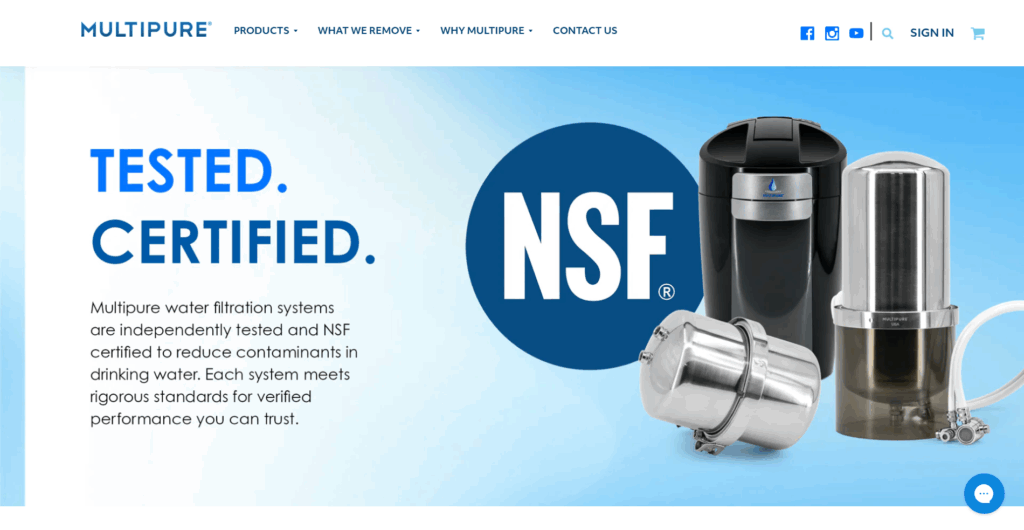
Multipure stands out as a premier choice for lead removal, offering drinking water systems certified by NSF International (NSF) to reduce lead and other contaminants. The company’s Aquaperform system uses solid carbon block technology, which provides superior filtration compared to granular activated carbon.
The system forces water through millions of microscopic pores, trapping lead particles and harmful substances while allowing beneficial minerals to pass through. The NSF-certified lead filter technology removes up to 99% of lead from drinking water, reducing it from 150 parts per billion (ppb) to well below the federal standards.
Multipure systems are tested and certified under NSF/American National Standards Institute (ANSI) Standard 53 for health effects, ensuring reliable performance in reducing lead, cysts, mercury, and other contaminants. Beyond lead removal, Multipure systems treat contaminants including chlorine, volatile organic compounds, polychlorinated biphenyls, and emerging compounds like perfluorooctanoic acid (PFOA) and perfluorooctanesulfonic acid (PFOS).
Key Features
- Verifies lead reduction from 150 ppb to safe levels
- Dense carbon structure delivers superior removal compared to granular filters with consistent performance
- 90-day satisfaction guarantee and lifetime warranty on housing ensure long-term reliability
- Removes chlorine, volatile organic compounds, polychlorinated biphenyls, PFOA, PFOS and aesthetic contaminants while retaining minerals
- AquaTru
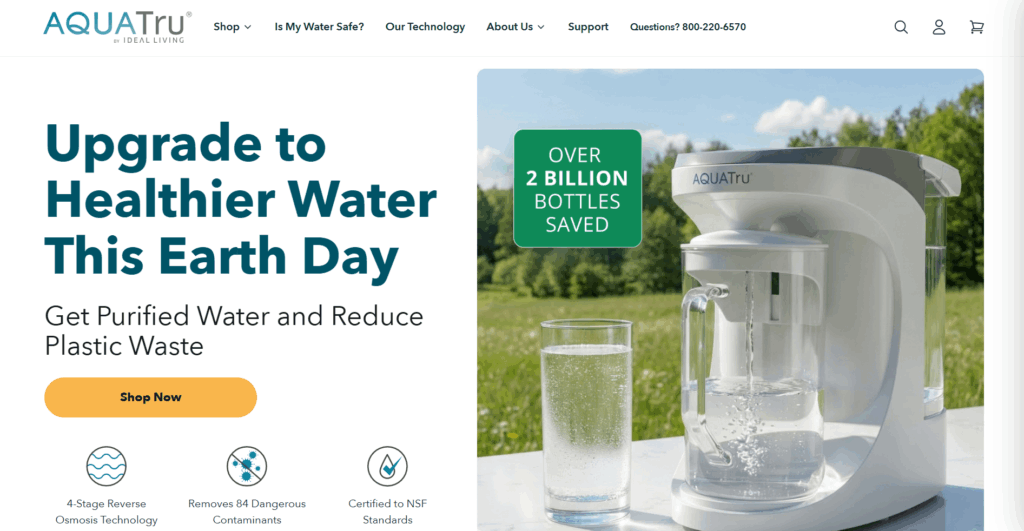
AquaTru offers countertop reverse osmosis systems for lead removal that require no permanent installation. Its four-stage filtration process combines mechanical filtration, activated carbon, reverse osmosis membrane technology and final polishing to achieve comprehensive contaminant reduction. For optimal safety, this system removes up to 99.9% of lead from drinking water, along with hundreds of other contaminants.
Operating without plumbing connections, AquaTru provides accessible filtration for renters and homeowners who prefer portable solutions. Each stage targets different contaminant categories, from sediment and chlorine to dissolved solids and trace pharmaceuticals, with the reverse osmosis membrane certified to NSF/ANSI standards.
The countertop design allows easy relocation between residences or recreational vehicles, while tool-free filter replacements take just minutes. Filter subscriptions also allow for automatic shipments based on usage, eliminating manual tracking. The compact footprint fits comfortably on kitchen counters, and the integrated storage tank provides filtered water on demand.
Key Features
- Four-stage process removes 99.9% of lead and other contaminants
- Countertop design operates independently of plumbing systems
- Replacement filters ship automatically based on usage patterns
- Reverse osmosis membrane meets NSF/ANSI standards for contaminant reduction
- Hydroviv
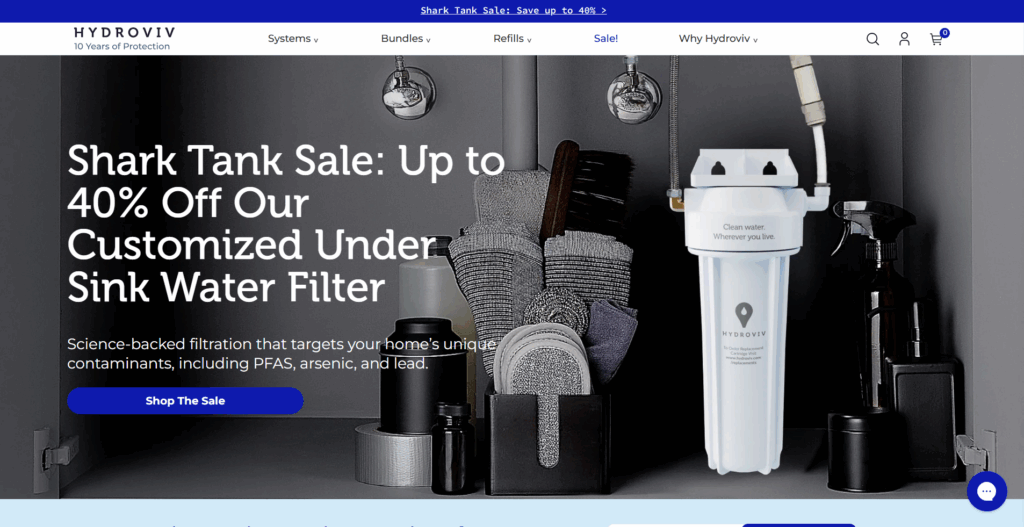
Hydroviv takes a customized approach to water filtration by analyzing local water quality data and designing filters for each customer’s specific area. The company examines municipal water reports and regional contamination patterns to determine which contaminants pose the greatest risk, including lead from aging infrastructure.
Each under-sink system addresses the threats identified in that analysis. In regions with known lead issues, Hydroviv increases lead-reduction capacity while maintaining strong flow rates. The company also provides detailed explanations of what contaminants are present and how the filter manages them.
Installation requires basic plumbing skills, with the mechanism connecting directly to existing cold-water lines. Customers can also subscribe to its filter replacement service based on household water usage. Its support team can guide individuals in selecting the appropriate size based on usage patterns and help them interpret their water-quality test results.
Key Features
- Filters formulated based on local water quality data and contamination patterns
- Systems connect to cold water lines for point-of-use kitchen filtration
- Replacement filters ship automatically based on usage rates
- Custom filtration materials target contaminants prevalent in specific geographic areas
- Aquasana
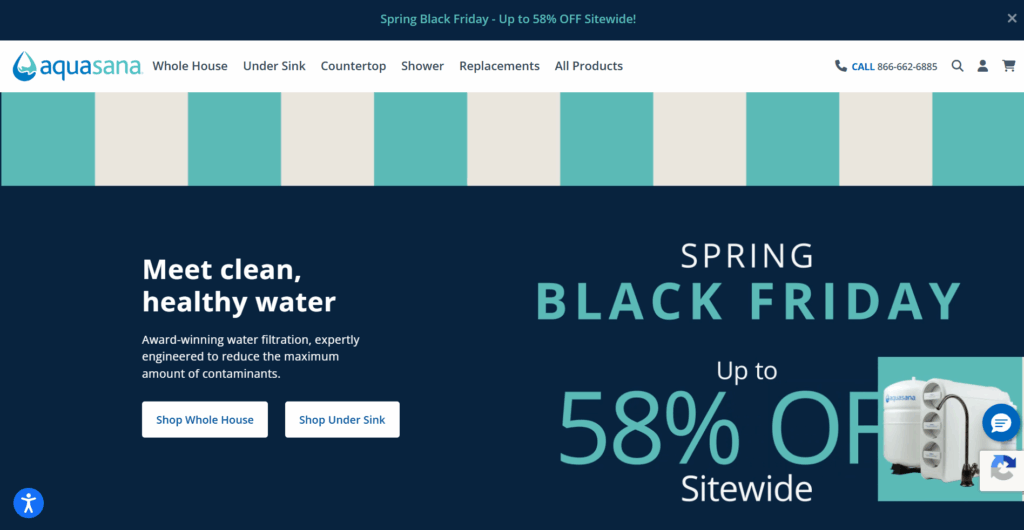
Aquasana manufactures multiple lead-removal water systems certified for lead reduction, including under-sink filters, countertop units and whole-house systems. The company’s lead water filter options use a dual-filtration approach, combining activated carbon to trap organic compounds with ion-exchange media to target heavy metals like lead.
Under-sink systems are certified to NSF/ANSI Standard 53, removing up to 99% of lead from drinking water while addressing chlorine, volatile organic compounds and other common contaminants. This combination ensures comprehensive treatment without sacrificing flow rate, maintaining practical water delivery for cooking and drinking needs.
Aquasana’s Claryum technology uses selective filtration to remove harmful substances while preserving healthy minerals, such as calcium and magnesium. Its Clean Water Machine subscription service delivers scheduled filter replacements at pricing options for different usage levels, while simple installation kits include all necessary components and detailed instructions for do-it-yourself setup.
Key Features
- Under-sink, countertop and whole-house systems accommodate different household needs
- Third-party testing confirms 99% lead reduction with other health-related contaminants
- The Clean Water Machine program delivers replacement filters automatically
- Activated carbon and ion exchange media remove lead and dissolved contaminants
- Clearly Filtered
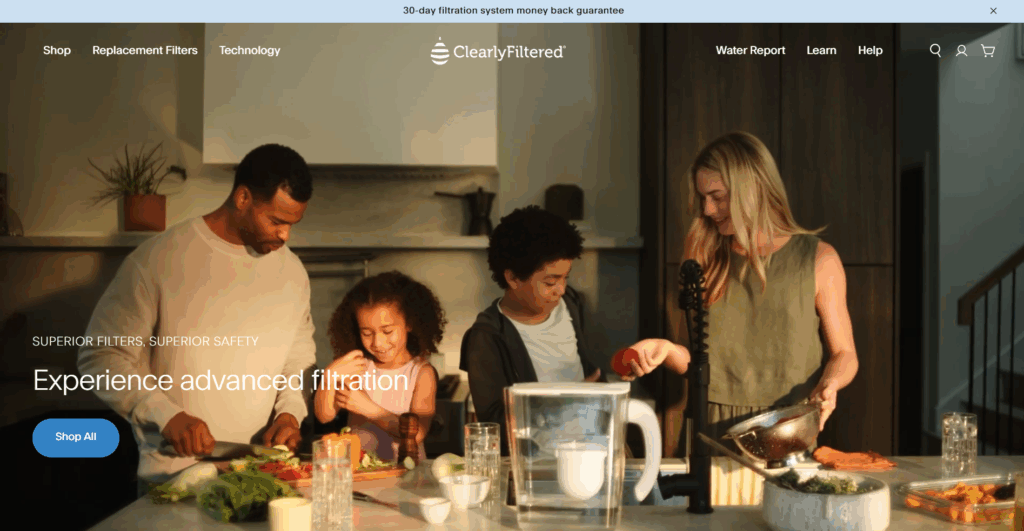
Clearly Filtered specializes in pitcher and under-sink systems engineered for lead removal. The company’s filtration technology is tested to reduce lead by 99.9% according to EPA protocols, along with hundreds of other contaminants, including fluoride, chromium-6 and pharmaceutical residues.
The pitcher design provides accessible filtration without installation and fits standard refrigerator doors, though it filters more slowly than conventional pitchers due to thorough processing. Each pitcher filter lasts approximately 100 gallons, depending on source water quality. Additionally, under-sink models deliver faster flow rates for filling pots and water bottles while offering greater capacity.
Both formats use Affinity filtration technology, combining multiple media types to address dissolved metals, organic compounds and pesticides in a single filter. The company publishes detailed laboratory test results showing removal percentages for each contaminant, providing transparency about system performance.
Key Features
- Independent testing confirms 99.9% lead removal with over 230 contaminants
- Multiple formats accommodate different household needs and budgets
- Automatic filter replacement shipments prevent gaps in protection
- Single filter removes lead, fluoride, chromium-6, glyphosate and pharmaceutical compounds
- Culligan
Culligan brings decades of water treatment experience to residential lead filtration, offering both point-of-use and whole-home solutions. Its NSF-certified lead filter products meet stringent Standard 53 requirements, removing up to 99% of lead while addressing sediment, chlorine taste and odor.
The product line spans reverse osmosis systems, carbon block options and specialty cartridges engineered for heavy metal reduction. Whole-home configurations, in particular, treat water at the point of entry, protecting every tap in the house from showers and laundry to outdoor faucets and drinking water.
Through a network of local dealers, Culligan provides professional installation paired with comprehensive water quality testing that identifies specific household contaminants. This diagnostic approach matches filtration technology to actual contamination levels rather than relying on one-size-fits-all solutions.
Local service technicians handle ongoing maintenance and troubleshooting, providing support beyond initial setup. Customers can also opt for replacement subscriptions to ensure timely cartridge changes for consistent performance. Whole-home configurations treat water at the point of entry, protecting every tap in the house from showers and laundry to outdoor faucets and drinking water.
Key Features
- Systems range from single-faucet filters to whole-house treatment solutions
- Third-party verification confirms 99% lead reduction and health-related contaminant removal
- Trained technicians handle setup and ongoing maintenance
- Automatic replacement cartridge shipments maintain effectiveness
Comparing the Best Lead Water Filters
Each filtration lead-removal water system offers distinct advantages for contaminant-free drinking water. The table below summarizes key specifications to help compare options.
| Company | Filter Type | NSF Certification | Filter Replacement Subscription | Filter Lifespan |
| Multipure | Solid carbon block | NSF/ANSI 53 | Yes | Varies by model |
| AquaTru | Reverse osmosis | NSF-certified components | Yes | 6 to 24 months |
| Hydroviv | Custom carbon blend | NSF/ANSI 42, 53 and 372 | Yes | 6 to 12 months |
| Aquasana | Carbon plus ion exchange | NSF/ANSI 53 | Yes | 6 months |
| Clearly Filtered | Advanced filtration | EPA tested to meet or exceed NSF/ANSI standards 42, 53, 401 and 473 | Yes | 3 to 4 months |
| Culligan | Multiple technologies | NSF/ANSI 53 | Yes | Varies by system |
How This List of Lead Water Filters Was Assembled
The list of water filtration companies prioritizes systems with independent third-party verification to ensure verified performance against lead contamination. NSF International certification under Standard 53 represents the gold standard for health-related contaminant reduction, requiring filters to reduce lead from 150 ppb to 10 ppb or lower through rigorous testing protocols.
While laboratory evaluations are conducted under controlled conditions, field studies show that properly maintained filters deliver consistent results in typical households. In fact, research confirms that 99% of filters remove lead effectively in real-world settings, validating their reliability in protecting families from exposure.
The featured options represent diverse technologies, including solid carbon block, reverse osmosis, ion exchange and customized filter media. This variety ensures consumers can select systems that match their installation preferences, household size and budget while maintaining a focus on verified lead-reduction capabilities. Each technology offers distinct advantages depending on water chemistry and contamination levels.
Understanding the Dangers of Lead in Water
The Safe Drinking Water Act establishes that the maximum contaminant level goal for lead is zero because any amount of lead is harmful, particularly to developing bodies and brains. Lead enters drinking water primarily through corrosion of service lines, solder in plumbing and brass fixtures.
Despite regulatory efforts, this contamination remains widespread, with Chicago still having 400,000 lead service lines connecting homes to the municipal system, illustrating aging infrastructure challenges nationwide.
Health consequences are severe and disproportionately affect children. Even low-level exposure causes irreversible neurological damage, reduced IQ and behavioral problems. Currently, 500,000 children in the U.S. have elevated blood lead levels, according to the Centers for Disease Control and Prevention.
While exposure occurs through multiple pathways, including paint and soil, drinking water represents a controllable source. Installing an nsf certified lead filter provides critical protection against waterborne contamination in homes with vulnerable plumbing.
Frequently Asked Questions
Common questions about lead filtration systems help clarify purchasing decisions and maintenance requirements.
How much do the best lead water filters cost?
Among the systems featured in this guide, pitcher filters start around $30 while advanced under-sink and reverse osmosis units range from $200 to $500. Whole-home systems may cost $2,000 or more, including installation, with initial cost correlating to filtration capacity, flow rate and system complexity.
Higher-end systems typically offer a longer filter life and greater convenience through features like automatic shut-off valves and leak detection. For under-sink models requiring professional plumbing services, individuals should expect installation costs of $300 to $1,250, depending on the project and location. In contrast, countertop and pitcher systems eliminate installation expenses.
What is the annual maintenance cost for a lead-rated filter?
Filter replacement costs for the mentioned systems vary from $50 annually for pitcher models to $300 for reverse osmosis and whole-house units. Subscription services often provide modest discounts compared to individual purchases, while buying during promotional periods can also reduce costs.
Bundle pricing from some manufacturers lowers per-filter prices when purchasing multiple replacement cartridges. Carefully tracking filter lifespan prevents premature replacements while ensuring protection remains effective. To assist with timing, most systems include indicator lights or timers that signal when replacement is required, based on gallons filtered or months elapsed.
Are under-sink water filters certified for lead reduction?
Many under-sink systems are certified to NSF/ANSI Standard 53 for lead reduction. This certification requires independent testing to verify that filters reduce lead from 150 ppb to 10 ppb or lower. When selecting under-sink filters, verify NSF 53 certification specifically for lead, not general NSF certification.
Certified systems display the NSF mark along with the specific contaminants they remove. Not all under-sink filters include lead-reduction capability, so checking certification documentation before purchase ensures the system meets lead-removal needs.
Can boiling water remove lead?
Boiling water does not remove lead, and it can actually worsen concentrations as water evaporates. This is because hot water is more corrosive to pipes than cold water, potentially increasing lead leaching from plumbing materials.
For drinking and cooking, people should use cold water and let the tap run for 30 seconds to two minutes if it hasn’t been used recently. It is the best way to flush out water that may have absorbed lead while sitting in pipes. Of course, filtration systems that are certified for lead reduction remain the most reliable protection method.
What’s the difference between NSF 53 and NSF 42 certification?
NSF/ANSI Standard 42 addresses aesthetic concerns like taste, odor and chlorine, while NSF/ANSI Standard 53 focuses on health-related contaminants. Filters certified under Standard 53 are tested to remove over 50 contaminants, including lead, mercury, cysts and volatile organic compounds.
When selecting filters for lead removal, verify that they are specifically NSF 53-certified. Many filters carry both certifications, addressing aesthetic and health concerns simultaneously. The certification mark should list specific contaminants the filter is tested to remove, rather than general certification claims.
The Final Word on Water Filtration for Lead
Protecting families from lead exposure begins with selecting filtration systems certified by independent testing organizations for lead reduction. NSF/ANSI Standard 53 certification assures that systems meet rigorous performance requirements under real-world conditions. Whether choosing pitcher filters, under-sink units or whole-home systems, third-party verification ensures reliable protection against this persistent health threat.