E-Bike Maintenance Checklist for New Owners
An e-bike maintenance checklist breaks the work into four habits: a quick check before every ride, weekly chain and tire upkeep, a monthly inspection, and an annual trip to a shop. Use this as a starting routine alongside the service intervals and checks in your bike’s own manual.
New to E-Biking? Start Here
Explore my e-bike guides, real-life bike reviews, favorite accessories, and riding adventures for women over 40.
Key takeaways:
- Check tires, brakes and the battery lock before every ride; it takes under a minute.
- Clean and lube the chain weekly, or every week or two of regular riding.
- Run a fuller inspection monthly: brake pads, bolts, cables and chain wear.
- Leave the battery and motor internals to professionals; never open either one.
- Book a professional tune-up once a year, or sooner if you ride often.
What Belongs on a Pre-Ride E-Bike Maintenance Checklist?
Before every ride, squeeze both brake levers and glance at your tires. A soft lever, poor braking or a lever pulling too close to the grip needs attention; the cause can include pad wear, cable adjustment or a hydraulic-system problem. Do not ride until the brakes work correctly. Make sure the battery is seated and locked. Then turn on the display and lights to confirm they work.
Walk the bike a few feet if anything felt off during the squeeze test. Look at the tire sidewalls for cuts or low pressure. Listen for rubbing near the wheels. New e-bike owner tips almost always start here, because a short check can reveal a problem before you set off.
Stop and resolve a brake problem or an unsecured battery before riding.
What Are the Best E-Bike Upkeep Tips for a Weekly Routine?
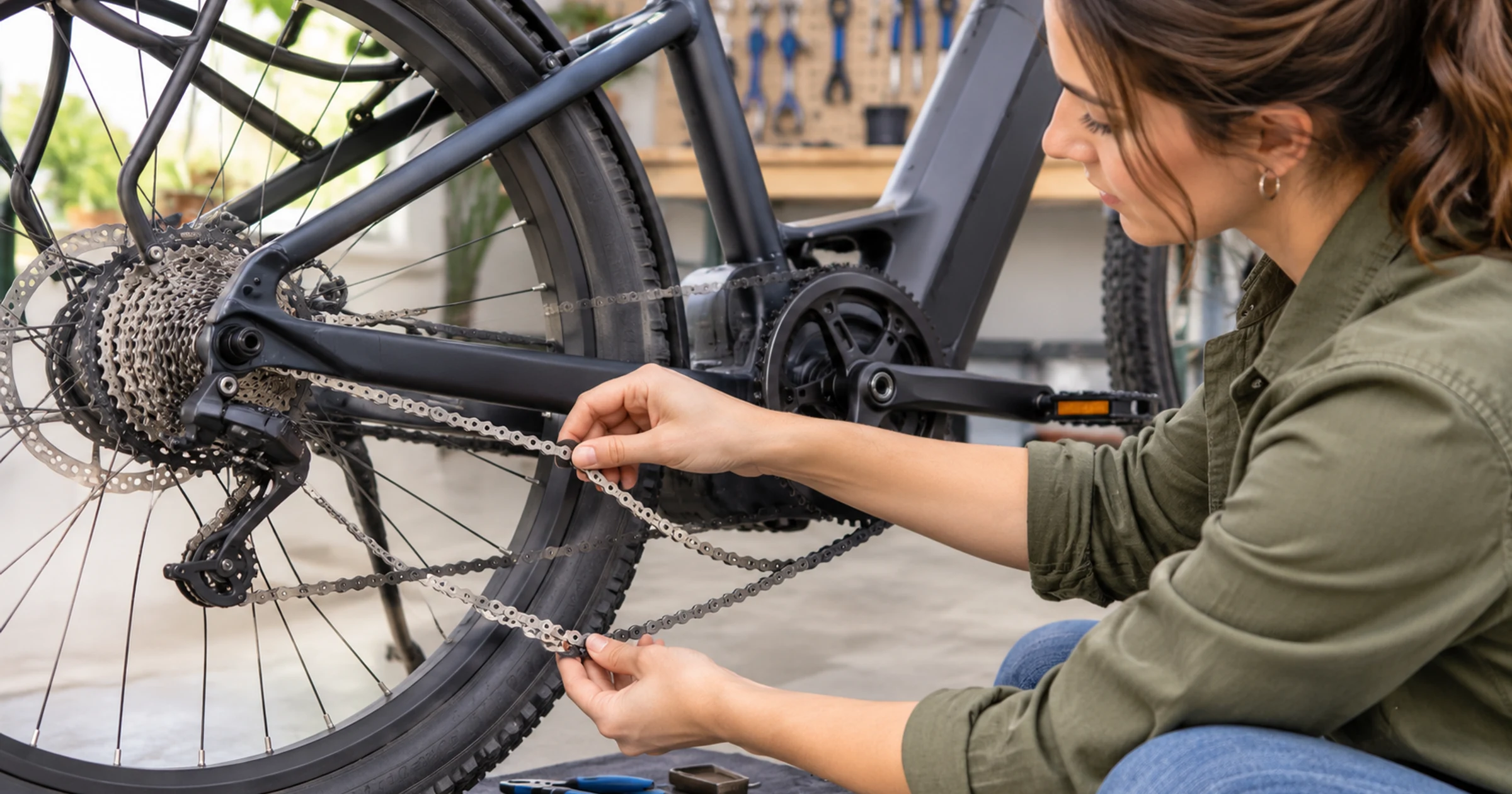
A weekly routine centers on the chain, tire pressure and a quick wipe-down. Wipe the chain with a rag to remove grit. Apply a bike-specific chain lubricant, let it sit a few minutes, then wipe off the excess. A dry, dirty chain is a common cause of early drivetrain wear on any bike, electric or not.
Check pressure with a gauge against your bike and tire guidance, staying within both the tire and rim limits. The sidewall maximum is not automatically your target pressure. Underinflated tires increase rolling resistance, drain the battery faster, and wear out sooner themselves. While you’re there, spin each wheel to confirm nothing rubs. Check rack bolts, fenders and pedals for anything working loose.
These checks can help spot wear early. Tighten fasteners only to the manufacturer’s specified torque; do not guess, especially on safety-critical parts. Avoid household oil on the chain; it attracts dust and grit, which does the opposite of what you want.
What Belongs on a Monthly E-Bike Maintenance Schedule?
Monthly maintenance means a closer look at brake pads, cables, fasteners and the battery contacts. Start with the brakes: check pad thickness, and make sure the cables aren’t fraying. Inspect the frame, fork and any suspension parts for dents, cracks or loose mounts.
Switch the system off and follow the manufacturer’s removal and cleaning instructions before touching accessible contacts. Use only the recommended cleaning method. Look for swelling, corrosion or damage. If you notice unusual heat or a burning smell, stop using the battery. Have it checked by a qualified technician rather than troubleshooting it yourself. Electrical diagnostics and battery repair call for proper training, so this is one area where DIY is the wrong move.
Visible checks cannot rule out internal battery faults. Stop using or charging a damaged, swollen, unusually hot or leaking battery and contact the manufacturer. Do not open the pack.
How Often to Service an E-Bike: What New Owners Should Know
Follow your manufacturer’s service schedule, including any early inspection after buying a new bike. Annual service can be a useful planning point for casual riding, but high mileage, wet conditions or a fault may require attention sooner. Canyon’s maintenance guide explains the extra demands on e-bike brakes, tires and drivetrains.
Riders who commute daily or climb a lot of hills wear through brake pads and chains faster. Riding in rain and mud adds to that wear too. Either pattern can mean a shop visit every six months instead of once a year.
A shop visit is also right for hydraulic brake bleeding, gear alignment, headset adjustment and bearing checks. These jobs need specific tools and training. At home, you can handle tire pressure, chain lubrication and basic bolt checks. Leave the motor, battery pack and wiring to someone who services e-bikes for a living.
How Do You Care for an E-Bike Battery?
Use only the charger approved for your exact battery. Follow its temperature, charging and storage instructions, including the recommended charge level and how often to check it during storage. Those details vary between systems. My e-bike battery care guide explains the checks to make in your own manual.
Never pressure wash the bike. Keep water away from the charging port and battery contacts when you wipe it down. Most e-bike batteries last around 3 to 5 years, or 500 to 1,000 full charge cycles, before range starts to drop off noticeably, per Bike Adventurous. A sudden drop in range is worth a service check, not just a sign of an aging battery.
If you’re curious what an e-bike actually costs to keep running year to year, our E-Bike Cost of Ownership guide breaks that down.
Building Your First Maintenance Habit
This e-bike maintenance checklist works best once it becomes a habit rather than a one-time read. Start small. Pick one day a week to run the tire-and-chain routine, and set a monthly reminder for the brake and battery check. A basic kit covers nearly everything you need: a tire gauge, bike-specific chain lubricant, a rag and the tools your manual specifies. For punctures, see the e-bike flat tire repair guide.
Don’t skip the before-ride check, even on short trips. It’s the step that saves you from a dead display or a soft brake lever a mile from home. Riding in rain or on muddy trails wears chains and pads faster than dry commuting does, so shift your weekly check to twice a week if your conditions are rough.
FAQ
How often should you lube an e-bike chain?
Lube the chain every week or two of regular riding, and after any wet or muddy ride. Wipe off excess lubricant so it doesn’t collect grit, which wears the chain faster than riding it dry for a day or two would.
Can you wash an e-bike with a hose?
Avoid pressure washing. Use a damp cloth or a gentle stream, keep the charging port closed, and dry the battery contacts and display afterward. Water forced into electrical connections can cause faults that are expensive to diagnose.
How should you store an e-bike battery over winter?
Follow your exact battery’s storage instructions for charge level, temperature and rechecking intervals. Store it in an appropriate dry location and never charge a battery outside its permitted temperature range.
What’s the biggest mistake new e-bike owners make?
Skipping the manual and pre-ride checks can leave important problems unnoticed. Check brakes, tires, wheel security and battery attachment, and resolve faults before setting off.
This article is for general informational purposes only and is not medical advice.