Grain-Free Flour Substitutes: How to Pick the Right One
Grain-free flour substitutes replace wheat, rice or other grain flours with nut, seed, root or legume flours such as almond, coconut, cassava and tapioca. Each one absorbs liquid, binds and browns differently, so picking the right grain-free flour for baking means matching the flour to the recipe, not swapping cup for cup. Below is how each major option behaves and how to adjust a recipe when you swap one in.
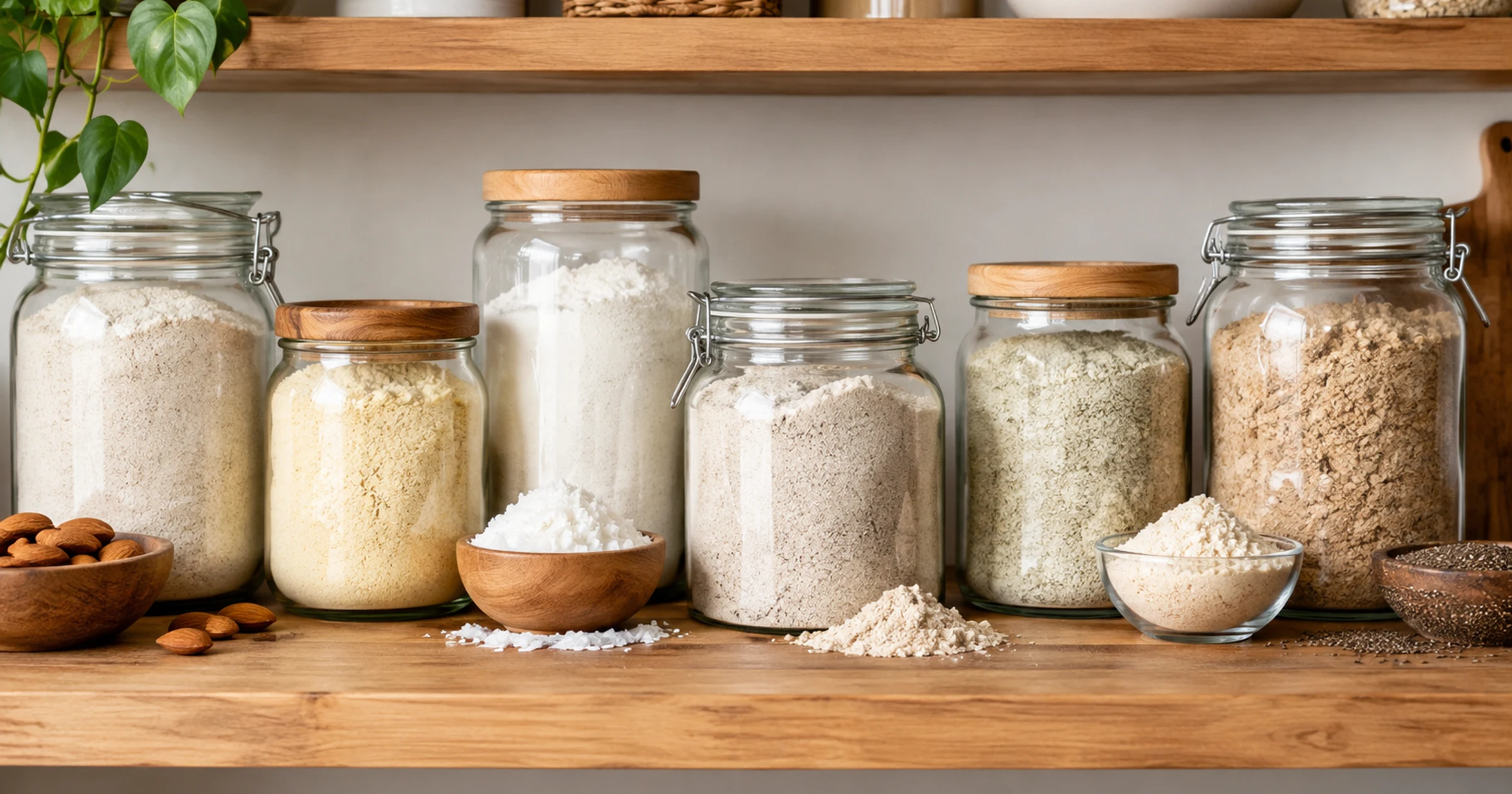
Key takeaways:
- Almond flour adds moisture and tenderness, but it does not reliably replace wheat flour cup for cup.
- Coconut flour is extremely absorbent and never swaps 1:1 for almond or wheat flour.
- Cassava flour is the closest grain-free match to all-purpose flour in texture.
- Blends of two or three grain-free flours usually outperform any single flour alone.
What Are Grain-Free Flour Substitutes?
Grain-free flour substitutes are flours made from something other than wheat, rice, corn, oats or other cereal grains. They come from nuts, seeds, roots and rhizomes such as cassava and arrowroot, or coconut meat. People reach for them for celiac disease, a grain-free or paleo diet, or a keto carb target. These ingredients are naturally gluten-free, but check labels for cross-contact if you have celiac disease. Grain-free does not automatically mean low-carb: cassava and tapioca are starch-rich. They cannot stretch or trap air the way wheat flour does. That single fact drives almost every adjustment you will make when baking with them.
Best Grain-Free Flour for Baking by Recipe Type
The best grain-free flour for baking depends on what you are making, not on a single “healthiest” flour. Almond flour works well in cakes, muffins, pancakes and cookies that need a tender, moist crumb. Coconut flour suits recipes already built around it. Its high fiber content means it absorbs roughly four times the liquid of a grain flour. Cassava flour is often called the closest grain-free stand-in for all-purpose flour, and it works well in breads, tortillas and pie crusts. Tapioca and arrowroot starches rarely carry a whole recipe alone. They add chew and lightness when blended with a heavier flour like almond or coconut.
| Flour | Best For | How to Use It |
|---|---|---|
| Almond flour | Cookies, cakes, pancakes | Use a recipe developed for this flour; no universal 1:1 swap |
| Coconut flour | Already-grain-free recipes | Use a coconut-flour recipe with its specified eggs and liquid |
| Cassava flour | Breads, tortillas, pie crust | Use a recipe developed for this flour; no universal 1:1 swap |
| Tapioca/arrowroot | Binding, lightening a blend | Used as part of a blend, not alone |
Almond Flour vs Coconut Flour: What Changes When You Swap
Almond flour and coconut flour differ in fat, fiber and absorbency. Almond flour adds fat and tenderness; coconut flour absorbs much more liquid. A fixed flour ratio plus one extra egg will not work for every recipe. King Arthur Baking’s keto baking guide explains why almond flour is not a simple all-purpose flour replacement. Start with a recipe developed for the flour you have.
Keep the flour’s job in mind: coconut flour is highly absorbent, while almond flour contributes fat and a tender texture. Changing either one can require changes to eggs, liquid, fat and baking time.
How to Substitute Grain-Free Flour in a Recipe You Already Love?
Knowing how to substitute grain-free flour into a wheat-flour recipe takes a few deliberate steps, not a straight swap.
- Identify the flour’s job in the original recipe: structure, binding, or just bulk.
- Pick a flour with a similar protein and fat profile. Almond flour or cassava flour are the safest starting points for most baked goods.
- Follow a tested formula. Egg and liquid adjustments depend on the specific flour, brand and recipe. Do not assume one fixed liquid adjustment works for every substitution.
- Choose a grain-free recipe when grains must be excluded. A partial swap in a wheat recipe still contains wheat and gluten. Test substitutions only when that meets your needs.
- Expect a different texture, not an identical one. Grain-free flours create their own good results; they rarely clone wheat exactly.
Finding a Cassava Flour Substitute or Other Swap
Cassava flour and tapioca starch come from the same plant but behave differently. A tapioca-and-coconut blend is not a predictable replacement for cassava. Look for a recipe written for the ingredients you have rather than replacing half the flour and judging safety or structure by batter thickness.
Common Mistakes and Trade-Offs With Grain-Free Flours
The biggest trade-off is texture. Grain-free baked goods are often denser, moister or more delicate than their wheat counterparts, and that is normal, not a failed recipe. A common mistake is treating any two grain-free flours as equivalent just because both are labeled “grain-free.” Coconut and almond flour are not interchangeable at a 1:1 ratio. One is far more absorbent than the other.
Another mistake is skipping a binder. Without gluten, many grain-free bakes lean on eggs, psyllium husk or a starch like tapioca to hold together. Cutting eggs from a grain-free recipe usually costs you structure. Storage matters too. Nut-based flour baked goods tend to hold more moisture. They can mold faster than wheat bakes left uncovered at room temperature for several days.
For two real examples, the acorn flour guide and grain-free tortillas recipe on this site show different grain-free flours at work. Acorns need proper tannin removal before use. The tortilla recipe combines almond flour and arrowroot starch for pliability. Follow its ingredient list rather than assuming a single-flour swap. For a broader keto-specific swap list, the keto baking substitutes guide covers more pantry staples beyond flour.
Choosing Your Next Grain-Free Bake
Start with almond flour for the most forgiving entry point into grain-free baking. Reach for cassava flour when a recipe needs real structure, like bread or tortillas. Save coconut flour for recipes written specifically for it, or add it in small amounts alongside a more forgiving flour. Keep notes on what ratio worked in your kitchen, since humidity, egg size and oven behavior all shift the numbers above.
FAQ
Can I substitute almond flour for coconut flour 1:1?
No. Coconut flour absorbs far more liquid. Replacing almond flour with coconut flour can make a batter too dry; doing the reverse can leave too much liquid. Use a recipe developed for your flour rather than a universal conversion.
What is the best grain-free flour for bread?
Cassava flour is generally considered the closest grain-free match to all-purpose flour for bread and flatbreads, because its texture and behavior resemble wheat flour more closely than nut or coconut flours do.
Why did my grain-free baked good turn out dense or crumbly?
Grain-free flours lack gluten, so they need help binding. Not enough eggs, starch or psyllium husk, or using an absorbent flour like coconut without enough liquid, are the most common causes.
Can I mix two grain-free flours together?
Yes. Blending almond flour with a starch like tapioca or arrowroot often gives a lighter texture than either flour alone. The starch adds lift that a dense nut flour cannot provide by itself.
Is cassava flour the same as tapioca flour?
No. Cassava flour is made from the whole dried and ground root, while tapioca flour is the starch extracted from that root. That gives tapioca a finer texture and less fiber.
This article is general information, not medical advice, and is not a substitute for guidance from a qualified health professional.