
How to Choose and Use Dietary Supplements Safely
Why Supplement Decisions Require Care
Walk into any pharmacy or scroll through an online store, and you’ll find shelves packed with capsules, powders, and tinctures promising better sleep, sharper focus, or improved circulation. Many of these products come from plants, and because they’re labeled “natural,” people often assume they’re automatically safe. A botanical supplement like french grape seed extract is a good example of the kind of ingredient people frequently look into—plant-derived, widely available, and surrounded by a range of claims about what it can do. This article isn’t meant to endorse or dismiss any particular product. Rather, it’s meant to help you weigh evidence, read labels with a critical eye, understand safety considerations, and make informed decisions. Supplements should complement—not replace—a balanced diet or treatment prescribed by a healthcare professional.
Understand What Dietary Supplements Are
Dietary supplements are products intended to add nutritional value to your diet. They may include vitamins, minerals, herbs, botanical extracts, amino acids, or enzymes. Unlike prescription or over-the-counter medications, supplements follow a different regulatory path—manufacturers aren’t required to prove effectiveness before a product ever reaches store shelves.
This distinction matters. “Natural” does not automatically mean safe, and the fact that something is widely sold doesn’t confirm it works as advertised. A handful of terms are worth knowing: an “active ingredient” is the substance believed to produce an effect; a “standardized extract” contains a guaranteed percentage of a specific compound; “serving size” refers to the recommended amount per use; and a “proprietary blend” is a mixture whose individual ingredient amounts aren’t disclosed.
Start With the Health Goal, Not the Product
Before you even consider a supplement, get clear on what you’re actually trying to accomplish. Are you correcting a diagnosed nutrient deficiency, supporting general nutrition, managing a specific symptom, or hoping to treat a medical condition? Each scenario calls for a different level of scrutiny. If symptoms are persistent, severe, or unexplained, that’s a conversation for a qualified healthcare professional—not a project for self-directed supplementation. Supplements should never delay diagnosis or stand in for recommended medical care. When you’re researching claims, lean on reputable medical and public-health sources rather than testimonials or social media endorsements.
How to Assess Evidence and Health Claims
Look Beyond Testimonials
Personal stories are fundamentally different from randomized controlled trials, systematic reviews, and clinical guidelines. A testimonial reflects one person’s experience, not a general effect. Be wary of guaranteed results, overnight transformations, or claims that a single ingredient treats a laundry list of unrelated conditions.
Consider the Quality of the Research
When you’re reviewing studies, pay attention to participant numbers, study duration, dosage, and whether the outcomes were clinically meaningful and replicated elsewhere. Evidence for an ingredient doesn’t automatically apply to every branded product, since formulations and concentrations vary widely. Grape seed extract illustrates this well: research has explored areas like blood pressure and cholesterol, but authoritative reviews point out limitations including small sample sizes and inconsistency across products.[2] For deeper research, consult resources from the NIH, NCCIH, FDA, and peer-reviewed systematic reviews.
Read the Supplement Label Carefully
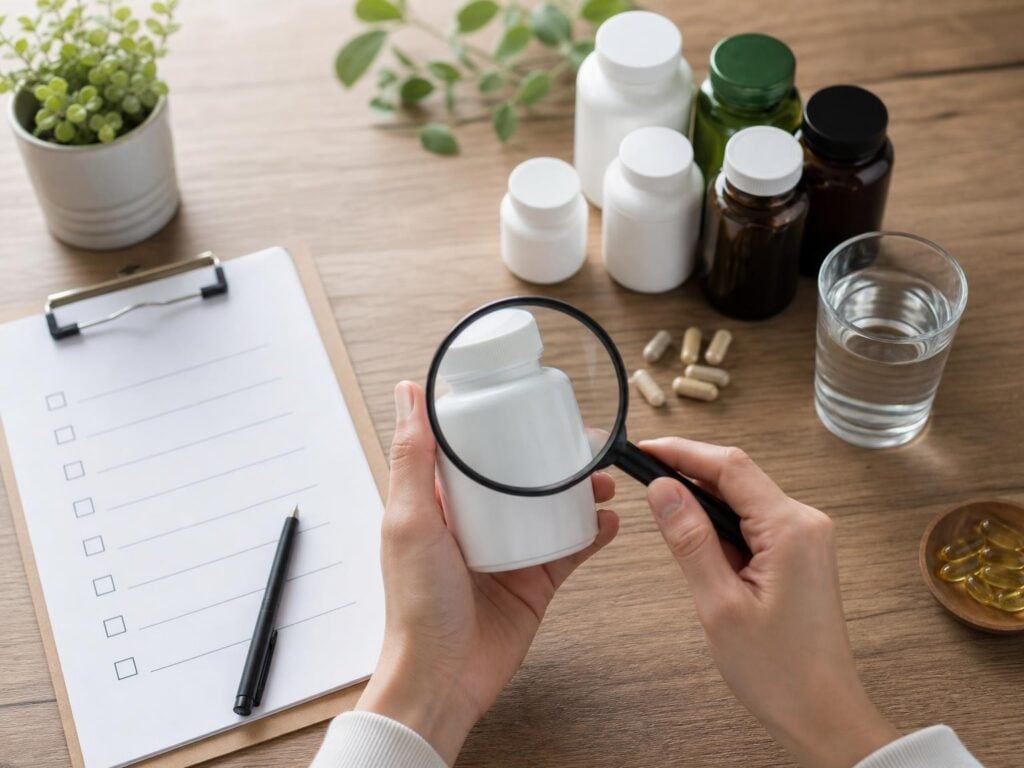
Labels are required to include product identity, serving size, the amount of each dietary ingredient, other ingredients, manufacturer information, suggested use, warnings, and domestic contact information for reporting adverse events.[1] A transparent ingredient list is always preferable to a vague “proprietary blend” when you’re comparing products. Third-party certification can speak to manufacturing quality, but it doesn’t prove a product is effective for any health condition.
Label checklist:
– What is the exact amount per serving, not just per bottle?
– Are all ingredients individually listed?
– Is there a standardized percentage of active compound?
– Does the label include manufacturer contact information?
– Are warnings or contraindications listed?
Consider Safety, Interactions, and Personal Circumstances
Always talk to a doctor or pharmacist about supplement use, especially if you’re taking medication. Extra caution is warranted during pregnancy or breastfeeding, in children or older adults, with liver or kidney disease, bleeding disorders, upcoming surgery, or when combining multiple products at once. Certain supplements can affect bleeding risk, anesthesia response, blood pressure, blood sugar, or even laboratory test results.[3][4] With grape seed extract specifically, anyone taking medications should check with a healthcare professional first, since herbal products can interact with drugs, and its safety during pregnancy or breastfeeding hasn’t been well established.[2] It’s worth giving your healthcare provider a complete list of what you’re taking, including doses and brand names.
Use Supplements Responsibly
Follow label instructions unless a clinician advises otherwise. Avoid stacking multiple products with overlapping ingredients, and resist the temptation to bump up the dose just because results seem slow to appear. Do not replace prescribed treatment without medical advice. Consider this scenario: someone taking a multivitamin, a joint-support formula, and a separate antioxidant supplement discovers—after reviewing labels with a pharmacist—that all three contain overlapping plant extracts, unintentionally multiplying their intake. Simply reviewing the full ingredient list prevented an unnecessary interaction. Keep track of what you take, when you started, and any effects you notice, and stop use if concerning symptoms appear.
How to Recognize Unreliable Marketing
Watch for red flags: “cure” or “detox” claims, pressure to buy right now, heavy reliance on celebrity endorsement, missing ingredient amounts, unverifiable studies, or promises that a product is entirely risk-free. Polished packaging and a flood of glowing reviews don’t establish safety or efficacy. Learn to tell genuine educational content apart from advertising dressed up to look like it.
Practical Decision Framework
- Define the health goal.
- Check reliable evidence for the ingredient.
- Review the complete label and serving size.
- Check possible interactions and contraindications.
- Discuss use with a qualified healthcare professional when appropriate.
- Monitor effects and reassess whether continued use is justified.
Before you buy checklist: Have you identified a clear goal, reviewed credible evidence, read the full label, checked for interactions, and consulted a professional if needed? Choosing not to use a supplement can be just as reasonable a decision as choosing to use one.
Final Perspective: Make Supplement Choices Deliberately
Responsible supplement use starts with a defined purpose, realistic expectations, and reliable information. Before you buy anything, you should be able to explain what it’s meant to do, what evidence backs it up, how much you’re taking, and whether it genuinely fits your individual health circumstances.