How to pack kitchen for moving in 48 hours
Moving can feel like trying to cook a holiday dinner with the power flickering. You have a dozen tasks simmering at once, the clock is racing, and you just want a calm first morning in your new place with a working coffee setup and a table to sit at. This guide shows you how to keep your kitchen running until the last evening and then snap it back to life within two days. Think of it as your forty eight hour moving plan that respects your time, your budget, and your favorite tools.
The secret is to plan by zones, protect the heavy hitters, and stage your first morning and first night so you do not burn energy on hunting for basics. You will do a gentle inventory, create a few high priority boxes, and prep furniture so it lands in the right rooms without drama. By the end, you will have a clear path from packed to cooking.
Day One Inventory And Zones
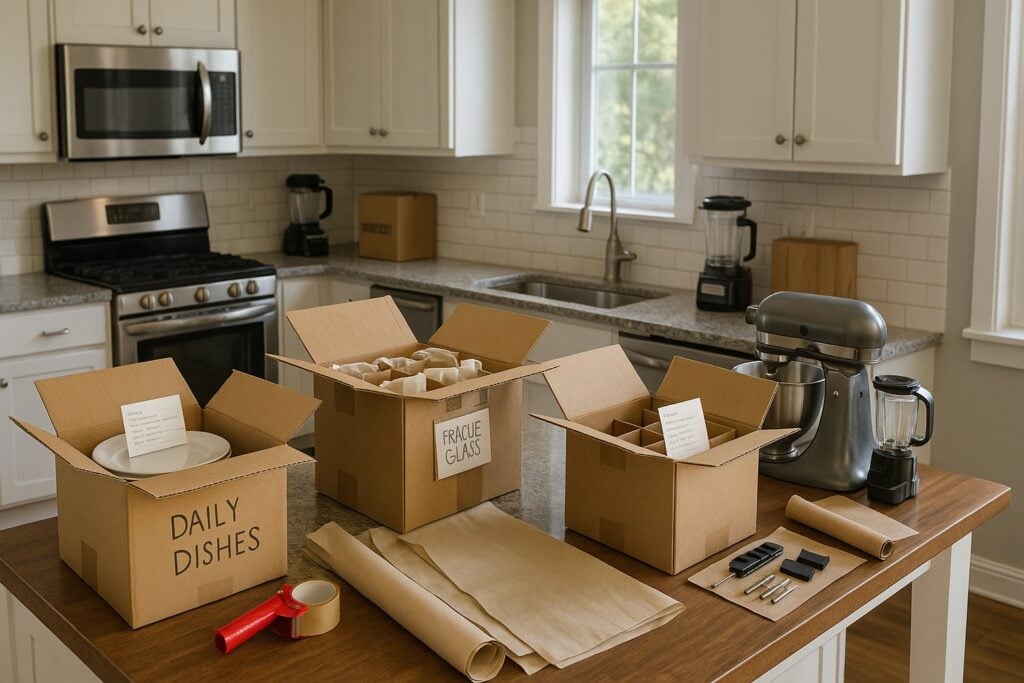
Start with a slow lap through your kitchen. Open every cabinet and drawer and say out loud what lives there. This quick talk through prevents mindless packing and helps you see what you actually use. Set up three staging spots on a clear counter or table. One for daily dishes and utensils you touch every single day. One for fragile glass and anything that clinks. One for appliances and heavy items that need structure. A fourth optional spot can be for pantry goods that will travel well.
You are not packing yet. You are editing. If a gadget has not done a job in the last three months, it does not deserve premium box space. Donate it or bundle it with a friend who is setting up a first apartment. Wipe what you keep so you are not boxing crumbs.
Daily Dishes Versus Fragile Glass: Different Boxes And Labels
Daily dishes deserve quick access and simple protection. Wrap plates in packing paper, stack them vertically like records, and slide in cardboard dividers if you have them. Label both the top and the side of the box with the room and the zone so it can be read on a shelf and on the floor.
Fragile glass needs its own rhythm. Use individual sleeves or paper, add a cushion at the bottom of the box, and stand glasses upright in rows with soft filler between each row. Mark the box as fragile on two sides, then add the word top so no one flips it.
As you sort, drop a notecard into each open box listing the first five things inside. That tiny index card will save you time when you are scanning for the tea strainer at midnight.
Once you’ve taped up the last box, your empty kitchen needs one final cleaning before you hand over the keys. If you’re short on time, a professional move-out service like Bear Brothers Cleaning can handle the cabinets, appliances, and floors so you can focus on the move.
Day Two Your First Forty Eight Hours In The New Home
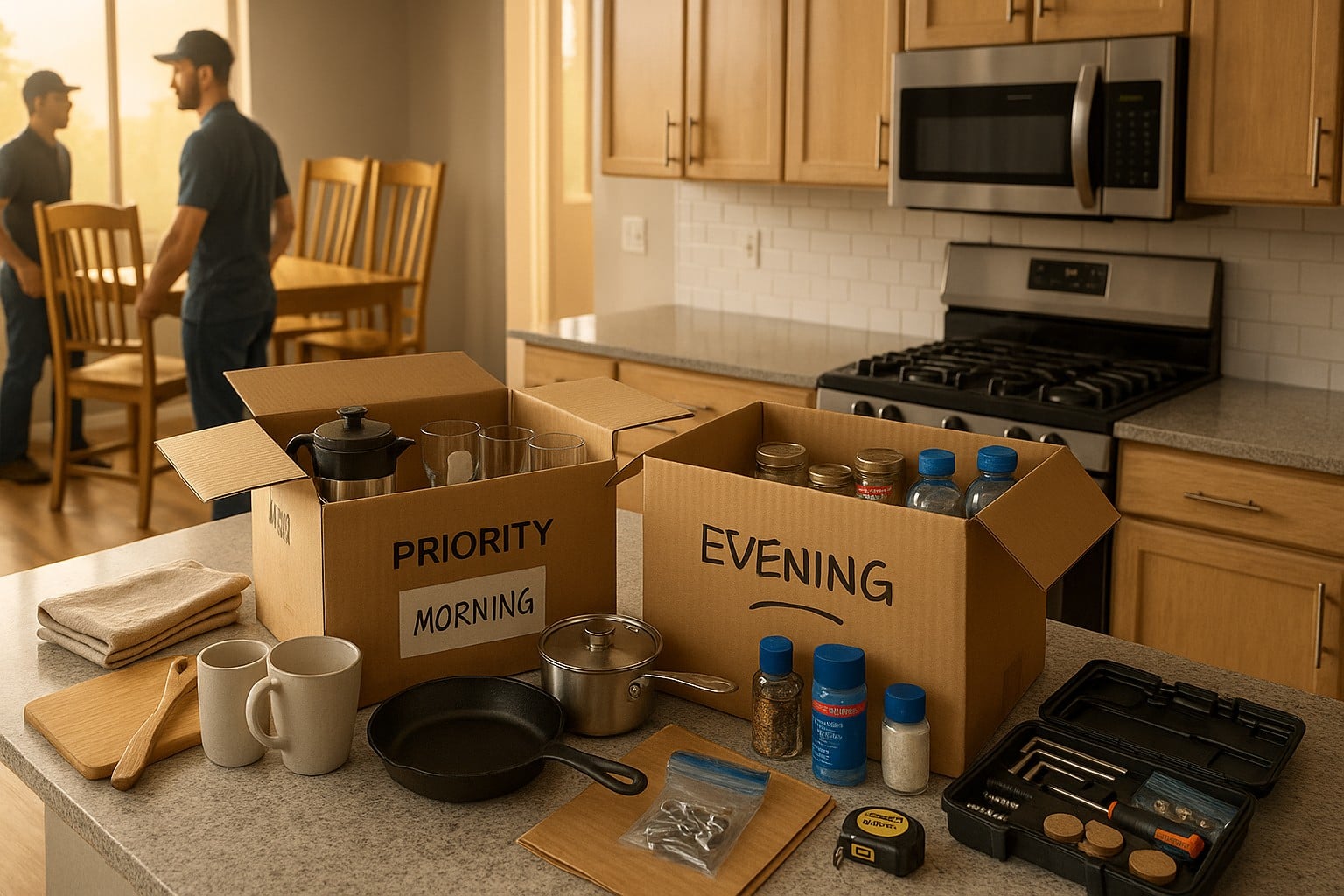
Day two is for action. You will build two special boxes and a small tool kit for furniture. These are not random catch alls. They are your quick start kit so you can eat, sleep, and breathe without unpacking a mountain of cardboard.
Here is the single checklist you need today
- Morning box for the first sunrise includes coffee or tea setup, two mugs, two plates, a multipurpose pan, a small pot, a wooden spoon, a cutting board, a sharp knife, dish soap, a sponge, a kitchen towel, paper towels, and a small trash bag roll.
- Evening box for the first night includes your favorite comfort food or shelf stable meal, salt and pepper, basic spices you actually use, foil or parchment, a lighter, reusable water bottles, vitamins, and a simple dessert so the day ends on a sweet note.
Keep both boxes open until the very last hour before you leave so you can toss in the phone charger and the corkscrew you almost forgot. Tape a paper label on the top and the side that says Kitchen Priority and write Morning or Evening in large letters.
Your furniture tool kit is tiny but mighty. Hex keys, a multi bit screwdriver, painter tape, a handful of zip bags for screws, felt pads for chair feet, and a tape measure. This kit rides with you in the car or in your backpack, not in the truck.
How To Pack Heavy Items Cast Iron And Mixers
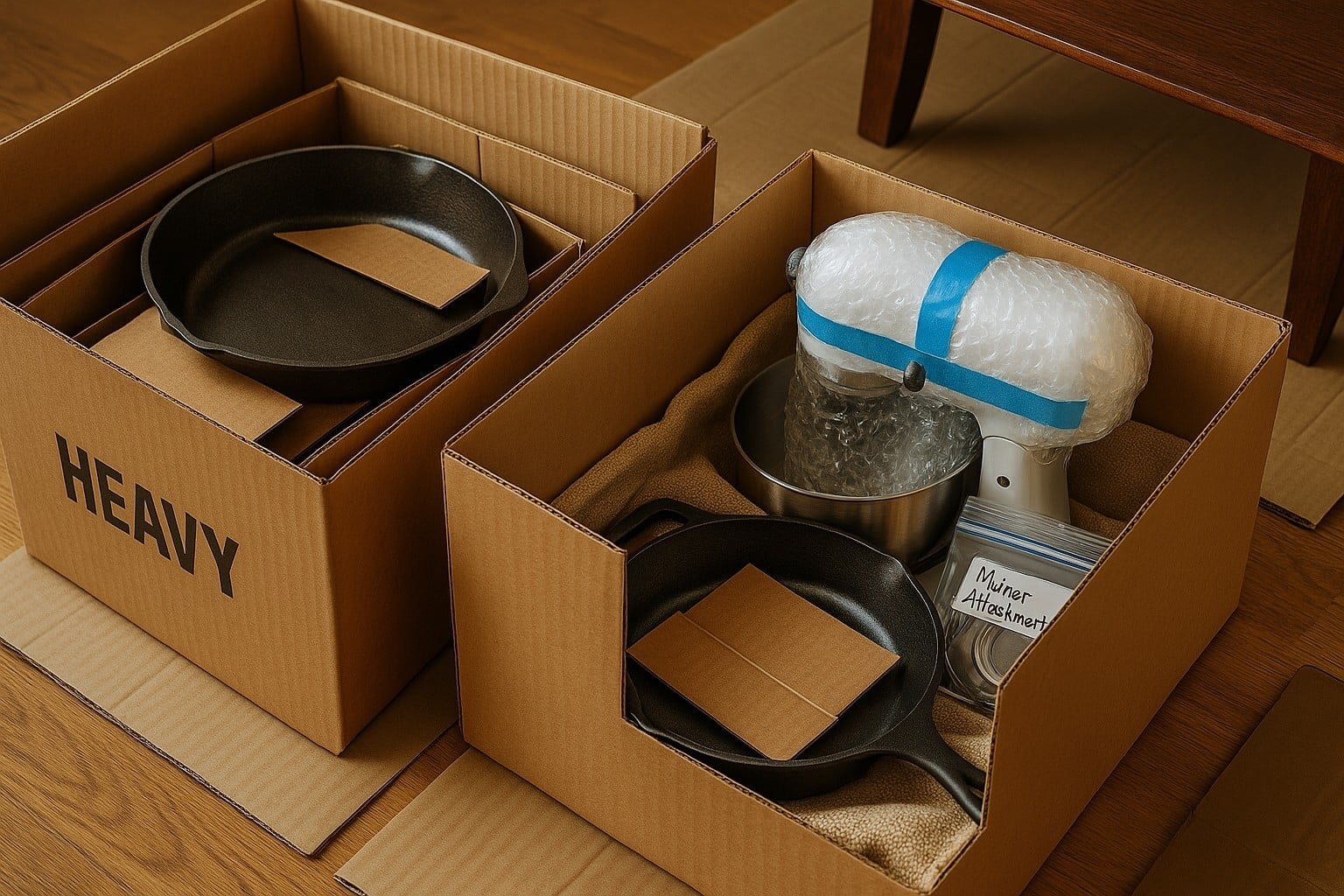
Heavy kitchen gear works like free weights. It can injure a mover and crack a floor if it is not tamed. The rule is small and dense. Use small strong boxes with a double layer of cardboard on the bottom. Line each box with a towel or folded paper to absorb shock.
Cast iron skillets should never ride metal against metal. Separate each piece with cardboard or a kitchen towel and nest only if the fit is perfect. Wipe a thin coat of oil to discourage surface rust, then wrap in paper before the towel layer. Mark the box with the word heavy so no one tries to toss it on top of something fragile.
Stand mixers and food processors travel best in their original foam, but you can get close with a custom wrap. Remove bowls, paddles, and blades. Wrap the body in bubble wrap, fill gaps with crumpled paper, and place attachments in a labeled zip bag that goes into the same box. If the mixer head tilts, secure it closed with painter tape so you do not leave residue.
When you stack these boxes, keep them low and tight. A heavy box on a tall stack is a recipe for a topple. Load heavy kitchen boxes near the door of the new kitchen so they are easy to open and return to service.
Preparing Kitchen Furniture
Kitchen furniture asks for simple surgical steps. Remove knobs and handles from drawers and tuck them into a labeled bag. Painter tape keeps doors from swinging but does not harm finish if you press lightly and remove soon after arrival. For drawers that like to slide open, add soft straps or a moving band around the piece and protect corners with cardboard guards.
Dining chairs are light but oddly shaped. Wrap the back and seat with a moving blanket and secure gently. If the legs unscrew, label each leg and its position so reassembly is stress free. A dining table deserves edge protection and a soft wrap to prevent shine marks. If the top detaches from the base, remove it and protect the underside where the finish is most vulnerable.
If you want the kitchen to come alive fast, ask your crew to prioritize furniture staging. You can do the same request when you book services and you can even lean on experienced movers from Boston to Chicago who understand a furniture first unload so the table, chairs, and main cabinet land before the tower of boxes. When the surfaces are in place, you can set down a pan and brew coffee in minutes instead of hours.
Place felt pads on chair feet before the first sit so you do not scratch the new floor. Clip your floor plan to a cabinet door where everyone can see it and mark the spot for the table with painter tape on the floor. Clear directions prevent a dozen tiny course corrections and save energy for the evening box ritual.
Keep The Kitchen Running While You Travel
Cold items that must come with you can ride in a cooler with ice packs. Keep a thermometer inside and aim for safe temperatures. Dry goods and spices do better in sealing jars than in loose packets. If you love cooking outdoors, tuck a small camp stove and a lightweight pan into the evening box. A warm bowl of soup on moving night can shift the whole mood of the day.
Label the door of the new kitchen with a paper sign that says Kitchen Drop Zone and draw an arrow. Movers are fast, and a clear sign keeps boxes from scattering across the living room. Stack priority boxes waist high near the counter. You will avoid bending and save your back for furniture assembly.
Frequently Asked Questions
How do I pack spices fast without a mess?
Transfer spices to small airtight jars and stand them in a shallow organizer box. Place a folded towel at the bottom as a cushion. Group jars by how you cook rather than alphabetically so your hand finds favorites on day one.
Which box is best for cast iron?
Choose only small sturdy boxes with a reinforced bottom. Line each box with a towel and separate pieces with cardboard or fabric so metal never touches metal. Mark the box as heavy and keep it low in the stack.
Where should I keep appliance manuals and assembly guides?
Slip manuals and quick start guides into a clear folder that goes into your furniture tool kit. If you prefer digital, snap photos and save them to a folder named Kitchen Setup on your phone, but still keep the paper copy in the kit until everything is assembled.
Your First Morning Made Simple
A good move is not about packing everything. It is about setting the first twenty four hours up for success. When the morning box opens and the table is already standing, you feel at home. Brew your coffee. Make eggs in your faithful pan. Sit for a minute at your own table and breathe. With a little planning over two calm days, your kitchen travels well and your new place starts to feel like yours the moment you turn the key.