HiPP Formula Stages Explained, A Complete Guide From Stage 1 to Stage 4
If you have spent any time researching European baby formula, you have probably wondered what the HiPP formula stages actually mean. There are numbers, age ranges, and unfamiliar words like Combiotic printed on every box, and for a tired parent scrolling at 2 a.m., it can feel like a code you were never given the key to. The good news is that the system is simple once you understand the logic behind it. This guide walks you through all four HiPP stages, what changes from one to the next, and how to know when your little one is ready to move up.
Why HiPP Formula Comes in Stages
HiPP is one of the oldest organic baby food producers in Europe, a family business from Bavaria that has been farming organically since before organic was a marketing term. Like most European brands, HiPP builds its lineup around the way a baby’s nutritional needs evolve during the first years of life.
A newborn’s digestive system is delicate and needs a formula that stays as close to breast milk as possible. A nine month old who is crawling, teething, and eating purees needs more energy and different nutrient ratios. A toddler eating full family meals needs something different again. Instead of one formula that tries to cover everything, the staged system adjusts protein levels, carbohydrates, and micronutrients to match each phase.
European formulas also follow EU organic regulations, which are among the strictest in the world. That means no synthetic pesticides on the farms, no GMO ingredients, and cows raised on organic feed. Since 2020, EU rules additionally require DHA, an omega 3 fatty acid important for brain and eye development, in every infant formula sold in Europe. With HiPP, these standards apply across every single stage.
HiPP Formula Stages at a Glance
| Stage | Age range | Type | Key characteristics |
| Stage 1 | From birth | Infant formula | Closest to breast milk, lactose based, prebiotics, DHA, can be sole nutrition |
| Stage 2 | From 6 months | Follow on formula | More filling, higher iron for growing energy needs, pairs with first solids |
| Stage 3 | From 10 months | Follow on formula | Supports a mixed diet, tailored for babies eating regular meals |
| Stage 4 | From 12 months | Toddler milk | Enriched with iron, vitamin D, iodine and omega 3, less protein than cow’s milk |
HiPP Stage 1 Formula, From Birth
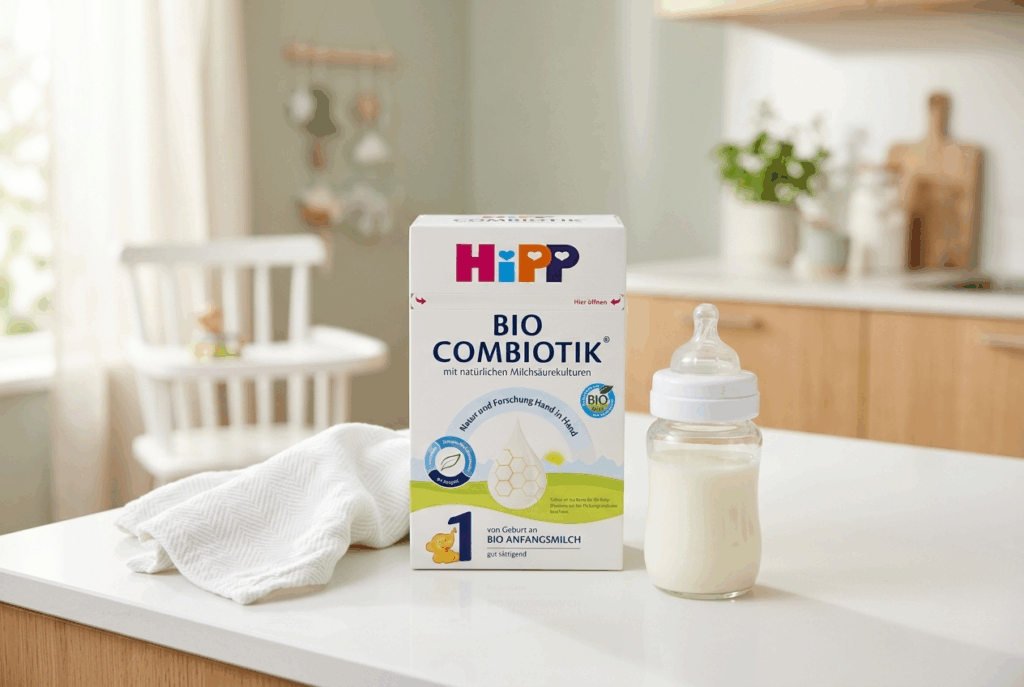
HiPP Stage 1 is the starting point and the formula designed for newborns. It is suitable from the very first bottle and can serve as a baby’s sole source of nutrition for the first six months.
What makes Stage 1 special is how closely it mirrors breast milk. Lactose is the primary carbohydrate, just as it is in breast milk, and the formula includes prebiotic fibers modeled after those found naturally in human milk. These prebiotics support the growth of healthy gut bacteria, which matters because a large part of a baby’s immune system develops in the gut. Many parents who switch from conventional formulas notice gentler digestion and less fussiness, though every baby is different.
Stage 1 is also the safest choice if you are unsure where to start. Because it is designed for the youngest and most sensitive babies, there is no harm in staying on it longer. If you want to compare options, including the classic German Combiotic version, the Dutch line, and the UK line, you can browse the full range of HiPP Stage 1 formulas in one place.
HiPP Formula Stage 2, From 6 Months
Around the half year mark, most babies start their first solid foods. Mashed banana ends up everywhere except in the mouth, and milk slowly shifts from being the entire diet to being the foundation of it. This is when HiPP Stage 2, called follow on formula in Europe, enters the picture.
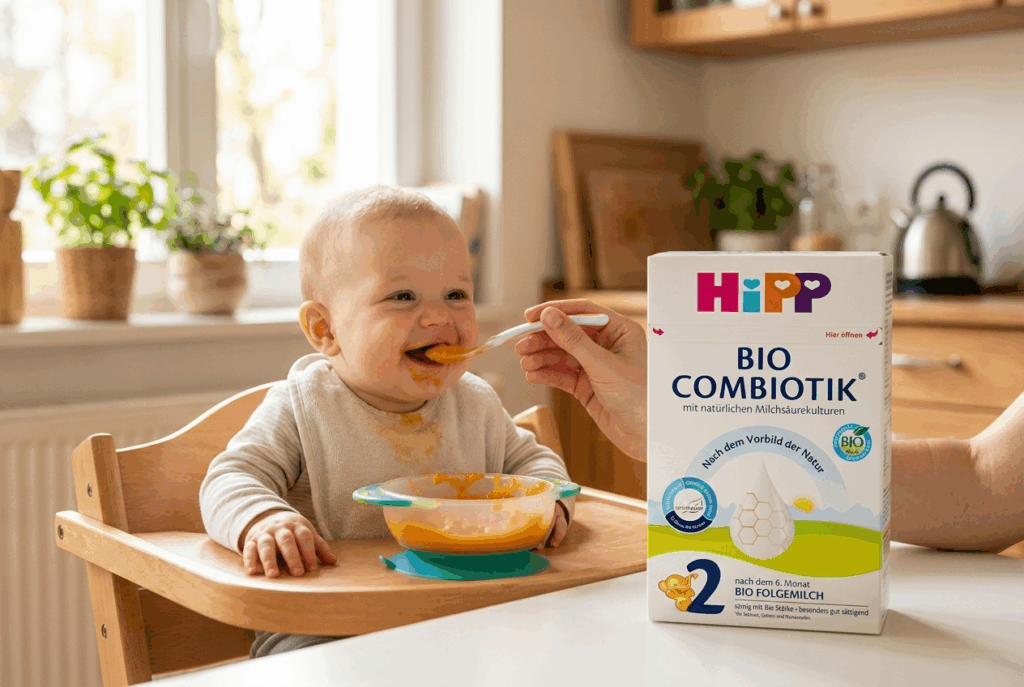
Stage 2 is slightly more filling than Stage 1 and adjusts the nutrient profile for babies who are becoming more active. Iron plays a bigger role at this age because the natural iron stores babies are born with begin to run low around six months, right when rolling, sitting, and early crawling demand more energy. Stage 2 accounts for this with an appropriate iron content alongside the same organic milk base, prebiotics, and DHA found in Stage 1.
Switching is optional. If your baby is thriving on Stage 1, you can simply continue with it. But many parents find that Stage 2 keeps their increasingly hungry baby satisfied longer, especially overnight. The HiPP Stage 2 collection covers the follow on versions of all major HiPP lines, so you can usually stay within the exact product family your baby already knows.
HiPP Stage 3 Formula, From 10 Months
By ten months, most babies are eating real meals. There might be scrambled eggs at breakfast, soft vegetables at lunch, and an impressive amount of food on the floor at dinner. Milk feeds become fewer but remain an important source of calcium, healthy fats, vitamins, and minerals.
HiPP Stage 3 is designed for exactly this transition period. It supports a mixed diet rather than replacing it, with nutrient levels tailored to older babies who get a growing share of their calories from solids. The formula remains gentle and familiar in taste, which makes it an easy continuation for babies who grew up on Stages 1 and 2.
Parents sometimes ask whether Stage 3 is necessary or whether they can move straight to cow’s milk. Most European pediatric guidance recommends waiting until at least the first birthday before introducing plain cow’s milk as a drink, since it lacks the iron, vitamin D, and DHA that babies still need in meaningful amounts. Stage 3 bridges that gap, and all major HiPP lines offer a Stage 3 version, so families can stay within the product line their baby already knows.
HiPP Stage 4, Toddler Milk From 12 Months
Once your baby becomes a toddler, the formula question changes character. Toddlers eat family meals, but their diets can be, to put it diplomatically, selective. A child who ate everything at ten months may suddenly survive on noodles and air at fifteen months. This is where HiPP Stage 4, known in Germany as Kindermilch, earns its place.
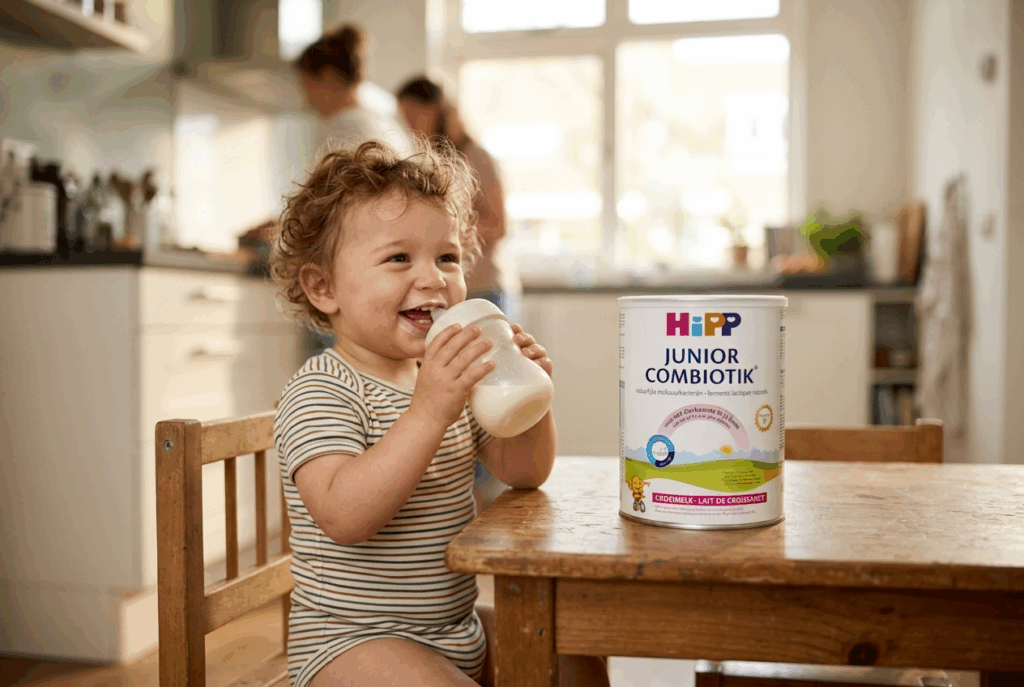
Stage 4 is a toddler milk enriched with the nutrients young children most commonly fall short on, including iron, vitamin D, iodine, and omega 3 fatty acids. Compared to plain cow’s milk it contains less protein, which aligns with European pediatric recommendations, since very high protein intake in toddlerhood has been linked to unfavorable weight development later on. Think of it as a nutritional safety net during the picky eating years rather than a replacement for real food.
A cup of Stage 4 in the morning or evening is an easy way to round out a toddler’s diet, and because it still tastes mild and milky, most children accept it without any fuss. HiPP offers its toddler milk in variants for 12 months and up as well as 24 months and up.
HiPP Stage 1 vs Stage 2, What Actually Changes
Because this is the switch most parents think hardest about, it deserves a closer look. The differences are deliberate but subtle. Stage 2 contains a slightly different carbohydrate composition that makes it more satiating, an iron level matched to the needs of babies past six months, and small adjustments to vitamins and minerals. What does not change is just as important. The organic milk base, the prebiotic fibers, the DHA, and the overall gentle character remain consistent, which is why most babies transition without noticing much at all.
A simple rule of thumb helps. If your baby is under six months, Stage 1 is the right choice, full stop. After six months, Stage 2 becomes an option worth considering, particularly if your baby seems hungrier than usual or is sleeping worse because of it.
How and When to Switch Between HiPP Stages
Moving from one stage to the next does not need to happen overnight. A gradual transition over several days is easiest on small tummies. A common approach is to replace one bottle per day with the new stage, then two, until the switch is complete. Some babies do not notice the change at all, while others need a week to adjust.
A few practical tips make the process smoother. Keep everything else consistent, including the bottle, the nipple, and the feeding routine. Watch diapers and mood for a few days, since minor changes in digestion are normal at first. And when in doubt, slow down. There is no prize for switching quickly, and the age ranges on the boxes are guidelines rather than deadlines.
How to Prepare HiPP Formula Correctly
Preparation is the same across all stages, and getting it right matters more than many parents realize. Boil fresh water and let it cool to around 40 to 50 degrees Celsius, which is roughly 104 to 122 degrees Fahrenheit. Pour about two thirds of the water into the bottle first, add the exact number of level scoops indicated in the feeding table on the box, then top up with the remaining water and shake well. Always use the scoop that comes in the box, since scoop sizes differ between brands and even between products.
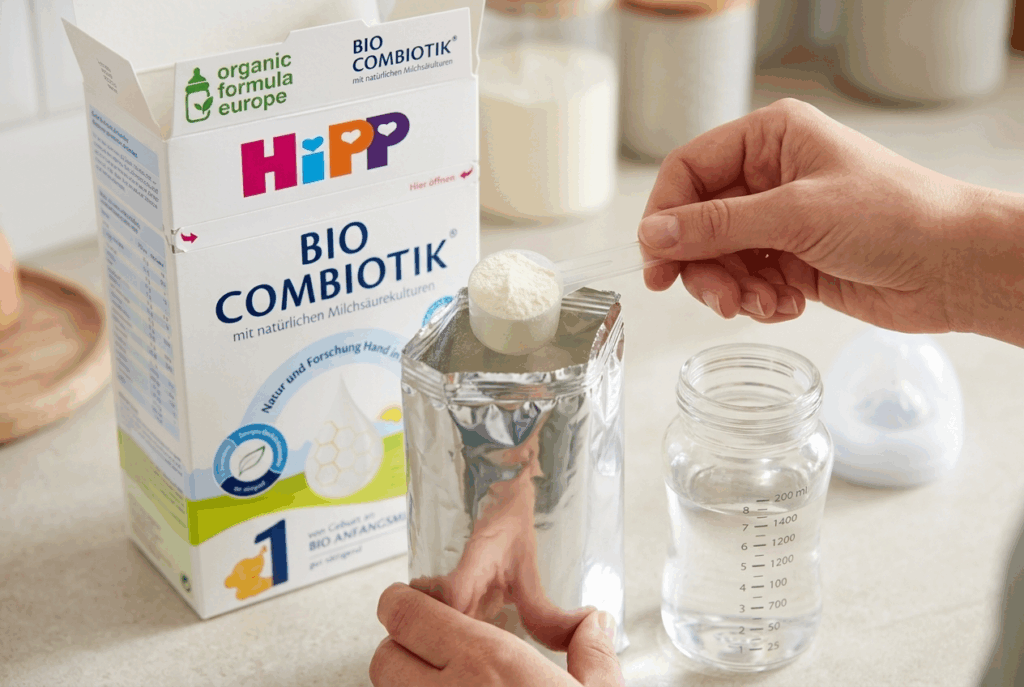
Cool the bottle to drinking temperature and always test it on the inside of your wrist before feeding. Prepare each bottle fresh, use it within an hour, and discard leftovers rather than reheating them. One more practical note for American parents. European boxes use metric measurements, so a cheap kitchen scale or simply trusting the enclosed scoop and the feeding table saves a lot of conversion headaches.
Frequently Asked Questions
Which HiPP formula is best for my baby? The best HiPP formula is the one that matches your baby’s age and individual needs. For healthy babies under six months, Stage 1 is the standard choice. HiPP also offers specialty lines for particular situations, such as HA for babies at risk of milk protein sensitivity or Comfort for digestive troubles, which are worth discussing with your pediatrician.
Can I skip a stage or stay on Stage 1 longer? You can stay on Stage 1 for the entire first year if you prefer, since it is nutritionally complete for infants. Skipping ahead is not recommended. Later stages are formulated for more mature digestive systems, so moving up early offers no benefit.
When exactly should I switch from Stage 1 to Stage 2? There is no fixed deadline. Six months is the earliest recommended point, and a hungrier baby who has started solids is the classic signal. If your baby is content on Stage 1, there is no rush.
Is toddler milk really necessary after age one? It is not mandatory, and toddlers with a varied, balanced diet can do well with regular whole milk. Toddler milk shines when eating habits are inconsistent, since it reliably covers iron, vitamin D, and omega 3 intake during phases when vegetables are suddenly the enemy.
What is the difference between the German and Dutch HiPP versions? Both are produced by HiPP under the same EU organic standards. The recipes differ slightly in details such as packaging size and whether the formula contains starch, but the core quality is identical. Parents usually pick based on availability and their baby’s preference.
Final Thoughts
The HiPP stage system follows a simple idea. Give babies exactly what they need at each phase of development, nothing more and nothing artificial. Stage 1 covers the newborn months, Stage 2 supports the introduction of solids, Stage 3 accompanies the transition to family meals, and Stage 4 fills nutritional gaps during the toddler years.
Whichever stage your child is in, the constants remain the same. Organic milk from family farms, strict EU regulations, no GMOs, and decades of experience in gentle infant nutrition. As always, talk to your pediatrician about your child’s individual needs, especially if there are allergies or health concerns in play. But once you have decided that a European organic formula is right for your family, understanding the stages is really all the decoding you need.