The Best Homemade Gnat Trap (Apple Cider Vinegar & Dish Soap)
This post contains affiliate links. As an Amazon Associate, I earn from qualifying purchases.
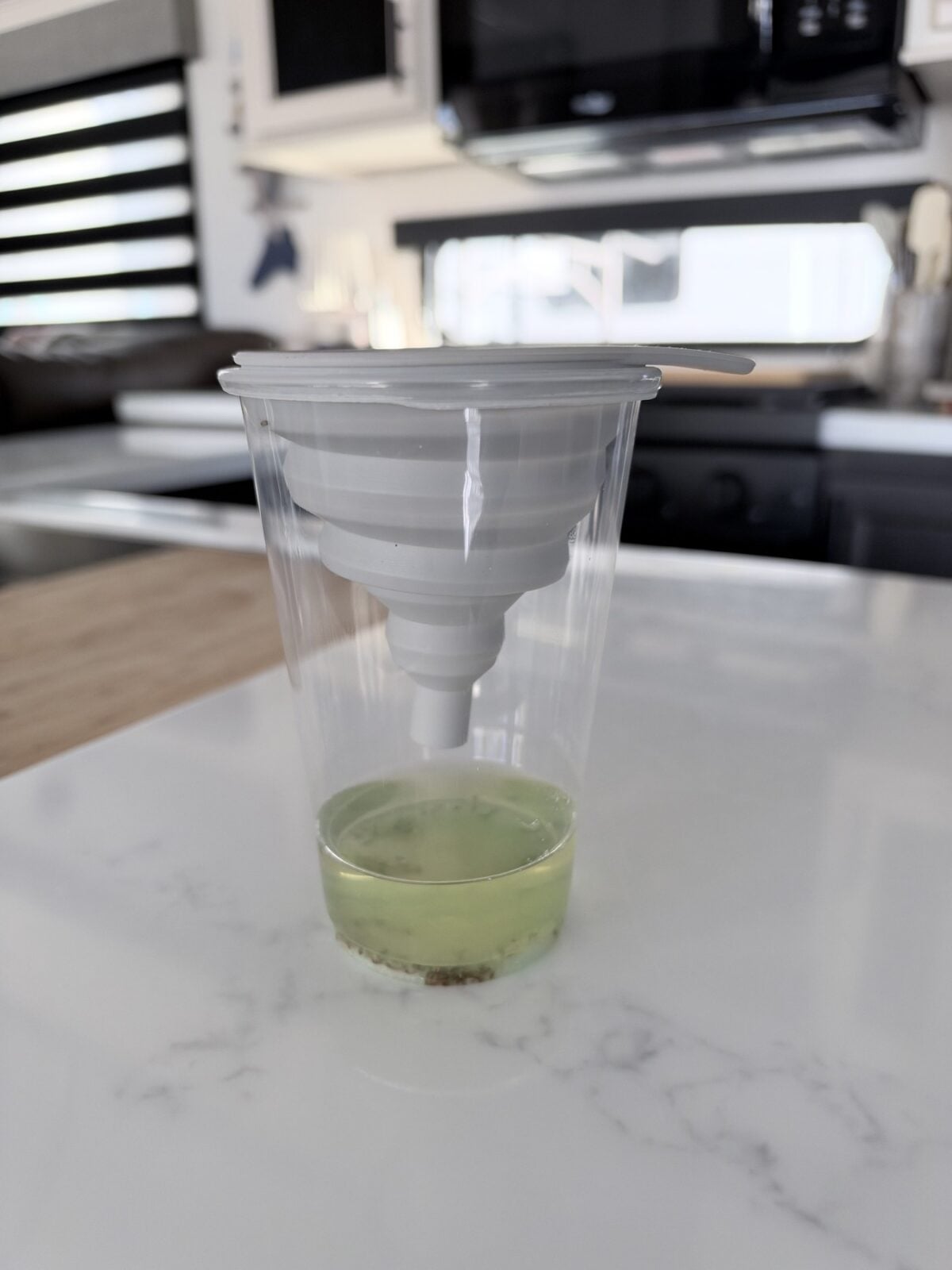
We’ve been using this homemade gnat trap for years, and I keep coming back to the same simple setup: 1/4 cup apple cider vinegar, one drop of dish soap, a glass, and a collapsible silicone funnel. In our home, it has worked better than every commercial alternative we’ve tried. No complicated mixture, no special refill—just two things we already keep in the kitchen.
One important detail before you make it: the little kitchen pests many of us call “gnats” are often fruit flies. This vinegar trap is meant for those vinegar-attracted flies. Fungus gnats coming from houseplant soil need a different approach, which I’ll explain below.
Jump to the how-to instructions
Why this is the trap I keep using
I’m calling this the best homemade gnat trap because it’s the one that has earned its place in our kitchen over years of use. We’ve tried plenty of store-bought options, but this simple vinegar-and-soap setup is still our favorite. That’s our firsthand experience, not a promise that every home or every type of tiny fly will respond the same way.
The apple cider vinegar provides the fermented smell that attracts fruit flies. The drop of dish soap lowers the liquid’s surface tension, helping flies that contact it sink. The funnel gives the trap a small entrance, and I like that the silicone version can be washed and reused.
How to make a homemade gnat trap
Makes: one trap. Refresh: every 2–3 days. For trapping kitchen fruit flies. Not for consumption.
What you’ll need
- 1/4 cup apple cider vinegar. I prefer raw apple cider vinegar, but regular apple cider vinegar works too.
- 1 drop dish soap. You don’t need a generous squirt.
- A clean glass that holds the vinegar with room above it.
- A collapsible silicone funnel that rests securely on the glass.
- Add the vinegar. Pour 1/4 cup apple cider vinegar into the glass. I use it straight, without adding water or sugar.
- Add one drop of dish soap. Gently swirl to combine without making a glass full of bubbles.
- Set the funnel on top. Position the wide opening upward and the narrow end down inside the glass. Keep the narrow opening above the liquid so flies can enter.
- Place it near the activity. Set the trap on a stable surface near the fruit bowl, recycling area, or other spot where the flies gather. Keep it out of reach of children and pets, and away from food preparation.
- Check and refresh. I replace our mixture every 2–3 days. Empty it, wash the glass and funnel, and start again with fresh vinegar and one drop of soap. Refresh sooner if the liquid becomes dirty or dries down.
What to expect after about 24 hours
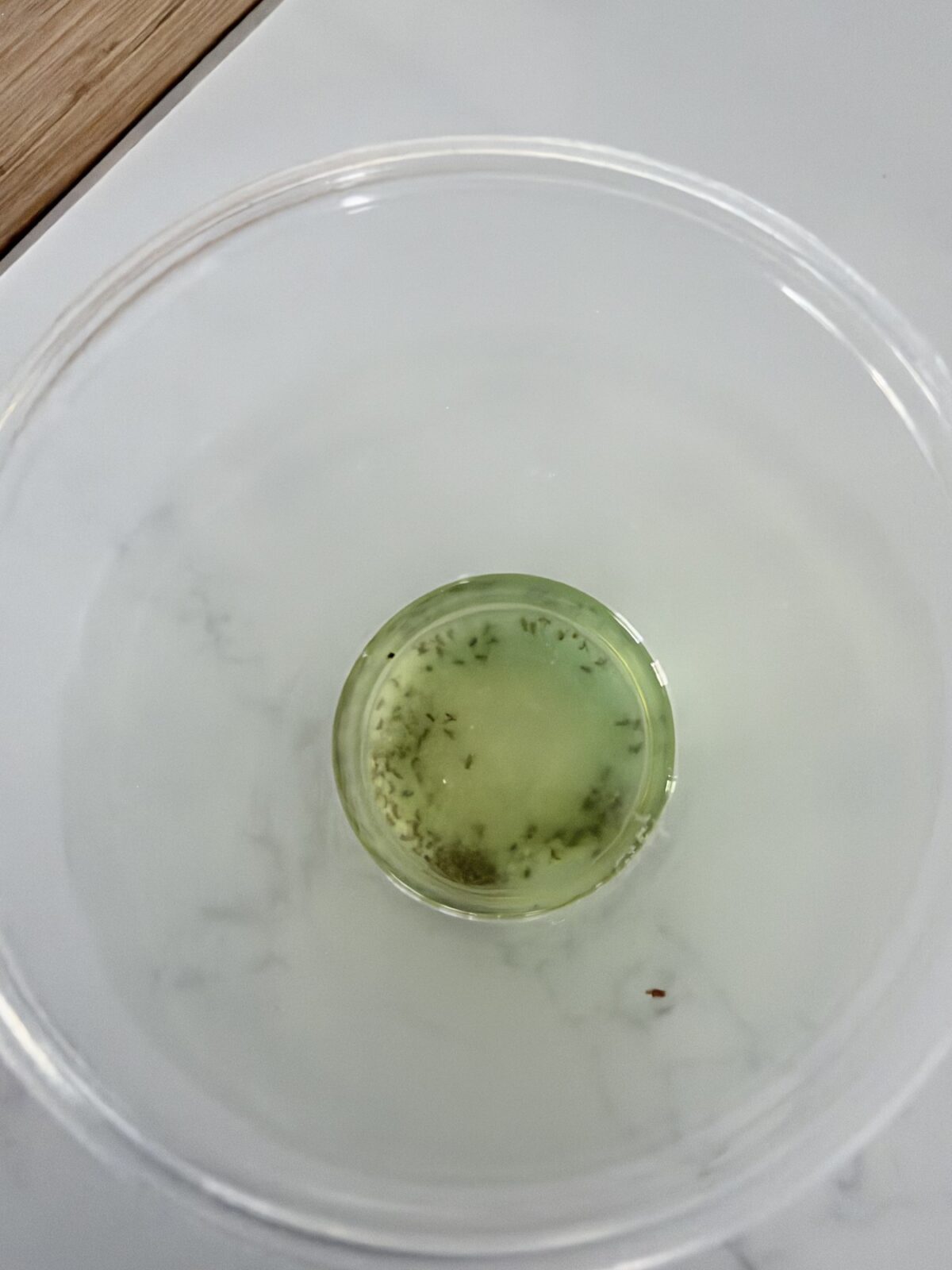
The trap I photographed had been sitting for about 24 hours. That’s one real example from our home—not a guaranteed catch count or a promise that an infestation will disappear overnight. I leave the trap in place while I deal with whatever is attracting the flies, then refresh the mixture every 2–3 days.
Fruit flies vs. fungus gnats: which do you have?
Fruit flies tend to gather around ripe or fermenting produce, drink residue, recycling, and food scraps. They often look tan with a darker abdomen; many have red eyes. The University of Minnesota’s fruit fly identification guide can help you compare what you’re seeing.
Fungus gnats are commonly associated with damp potting soil. If the insects rise from your houseplants when you water or disturb the pot, don’t rely on a kitchen vinegar trap to solve the problem. Let the soil dry to an appropriate level between waterings for that plant, and use yellow sticky traps to monitor and catch adults. University of Minnesota Extension explains the difference in its houseplant pest guidance.
Small flies around a sink aren’t automatically fruit flies, either. If the trap gets little interest, identifying the insect and finding its breeding source is more useful than continually adding more soap.
Help the trap by removing the source
Catching adult flies is only part of the job. Check for forgotten produce, sticky spills, food scraps, and residue in bottles or cans. Refrigerate ripe fruit when appropriate, rinse recycling, empty the compost container, and clean the trash can and the area underneath it. Keep those spots clean while the trap is working.
For broader prevention around the house, see my guide to flying insect control, especially the tips on managing food waste and checking entry points.
If you’re making other practical changes around the kitchen, my non-toxic living guide for your everyday kitchen walks through food storage, cookware, and a simple cleaning routine.
Common questions
Does the apple cider vinegar have to be raw?
No. Raw is my preference, but regular apple cider vinegar works in our trap too. Use what you have instead of delaying the setup for a special bottle.
Can I add extra dish soap?
I stick with one drop per 1/4 cup of vinegar. More soap isn’t part of our years-tested method, and there’s no need to turn the bait into a sudsy cleaning solution.
Do I need the silicone funnel?
The funnel is part of the setup we use and recommend. Choose one that sits securely on your glass with its small opening above the vinegar. I like being able to wash it and use it again rather than make a new cover each time.
Why isn’t my trap catching anything?
First, make sure you’re dealing with fruit flies rather than fungus gnats or another small fly. Try fresh apple cider vinegar, check that the funnel opening isn’t submerged, and move the trap closer to where you see activity. Remove competing food and drink residue, too.
How often should I change the mixture?
Every 2–3 days is our usual routine. Wash the glass and funnel between batches, and replace the mixture sooner if it gets dirty or evaporates. Don’t drink it or use the mixture on food or plants.