Lion’s Mane Mushroom Identification and Cooking Tips
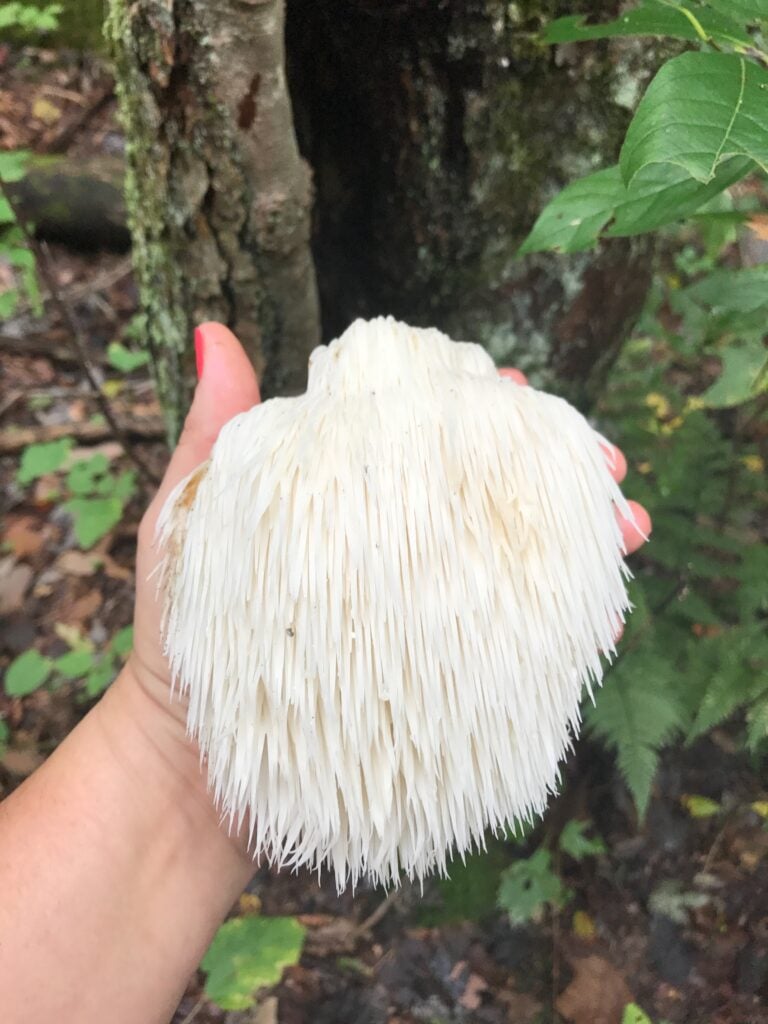
Lion’s mane mushroom identification starts with hanging white spines, a rounded growth form and wood—not soil—as the growing surface. True lion’s mane (Hericium erinaceus) forms an unbranched clump; its branching relatives belong to the same genus but are different species. Fresh specimens are white to cream and spongy to the touch. The sections below cover the spines, the host trees, the lookalikes, and how to clean and cook it once you’re sure of what you found.
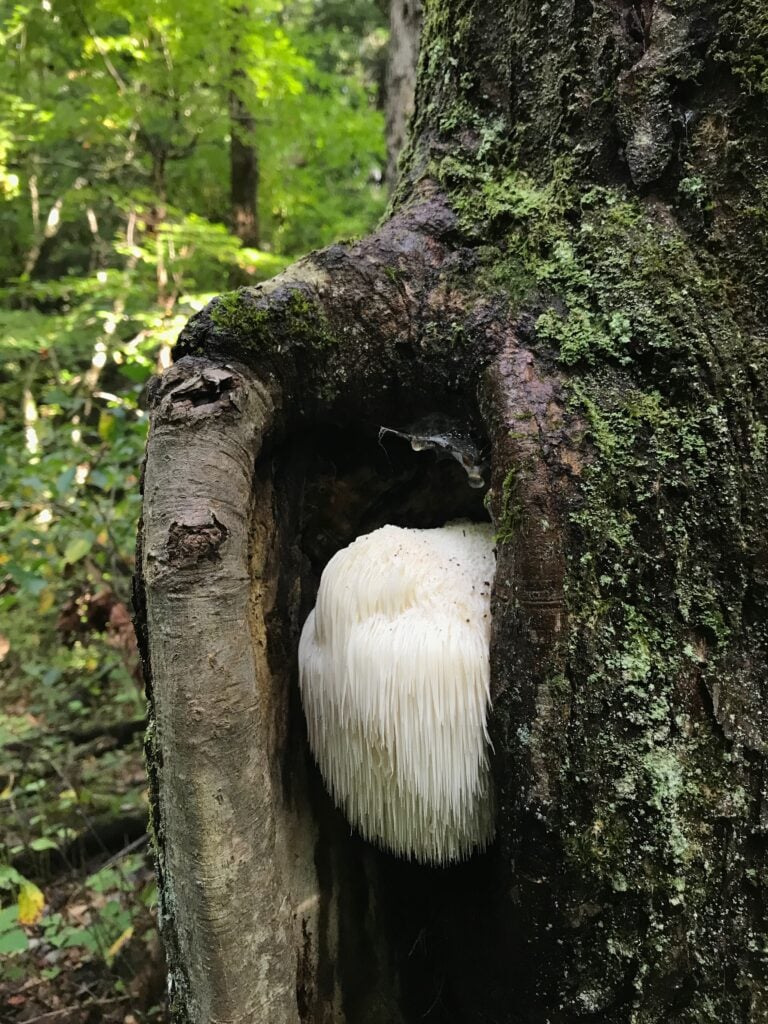
Key takeaways:
- Look for icicle-like white spines hanging from a cluster on hardwood, especially oak, beech, or maple.
- True lion’s mane (Hericium erinaceus) has no gills, pores, or stem structure like a typical mushroom.
- Related Hericium species can look similar. Age and water damage can also change how a specimen looks.
- Clean gently, slice thick, and sear or roast to bring out a seafood-like texture and flavor.
- When uncertain, skip it. No single photo replaces checking several features together.
Basics of Lion’s Mane Mushroom Identification
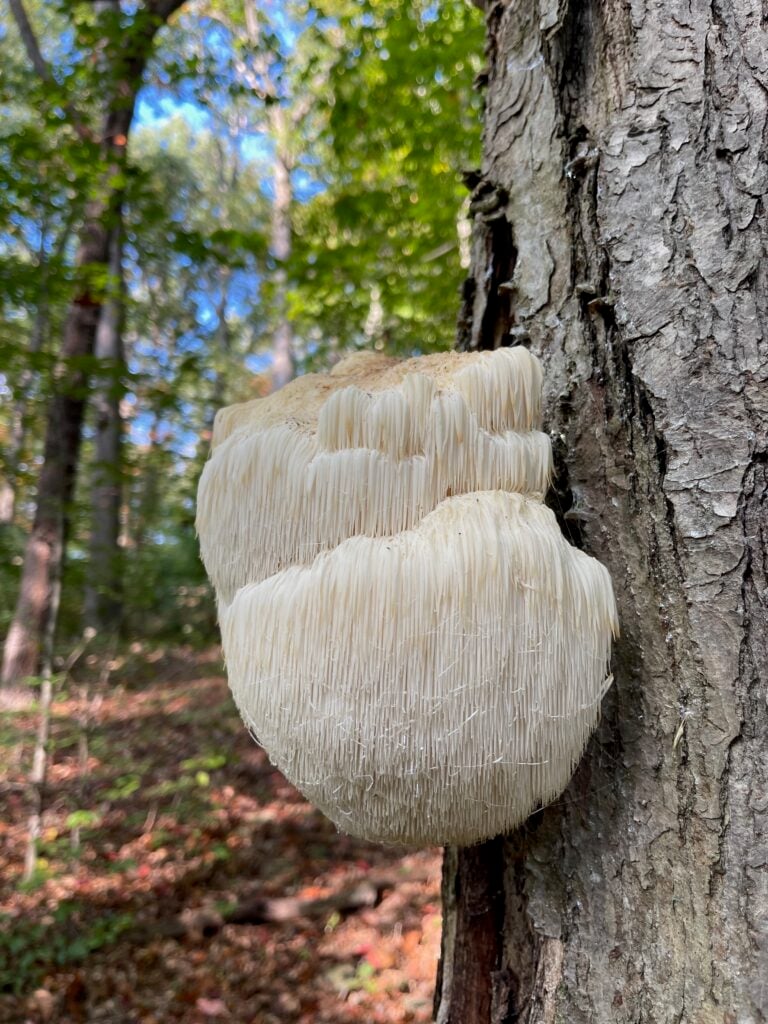
Lion’s mane grows as a white or cream-colored mass covered in soft, dangling spines. Developed spines are often around ½ to 2 inches long, but young specimens can have much shorter teeth. The whole fruiting body often looks like a shaggy pom-pom or a cluster of icicles stuck to a tree trunk. There is no typical cap-and-stem shape and no gills underneath; the clump attaches to the wood at its base. That sets it apart from almost every other mushroom in the woods. As it ages, the spines and flesh turn yellow or brown, and the surface can look matted after rain.
Hanging teeth are an important clue, not an identification by themselves. Check the entire growth form, attachment and host wood. Michael Kuo’s lion’s mane reference explains that young branching Hericium can initially look like one clump, making immature finds harder to separate.
Where and When to Find It While Foraging Lion’s Mane
Foraging lion’s mane means checking hardwoods, especially oak, beech and maple. Look at fallen logs, stumps and wounds on living trees, too. Late summer and fall are useful times to look in Pennsylvania, though weather and location change the timing. My fall foraging guide covers the other wild foods to watch for on the same trip.
Check wounds, old cuts, and dead branches on hardwoods rather than open ground. Look at low logs as well as trunks above eye level. If a mushroom is out of reach, leave it there rather than climbing an unstable tree or stretching with a sharp tool.
How to Identify Lion’s Mane Mushroom Safely
Check the spines, growth site and overall shape together, not any single trait alone. These are observation notes to take to a qualified local identifier—not a checklist that makes a mushroom safe to eat.
- Confirm the spine structure. Look underneath for soft, hanging teeth instead of gills or pores. For true lion’s mane, those teeth hang from an unbranched clump. Related species may carry teeth on branches.
- Check the host tree. Identify the wood as well as the fungus. A white, spiny growth on a conifer does not match the usual hardwood habitat of H. erinaceus.
- Examine the color. Fresh lion’s mane is white to cream. Deep yellow or brown color usually means it’s past its prime.
- Press the flesh. It should feel somewhat spongy and moist, not rubbery or woody.
- Smell it. Odor is not a dependable species test. A strongly sour or rotten smell is a reason to discard a specimen, but a mild smell does not establish that it is edible.
Never rely on one feature or a single photo for identification. Confirm several traits together. When something doesn’t line up, leave the mushroom where it stands.
What Are the Lion’s Mane Lookalikes?
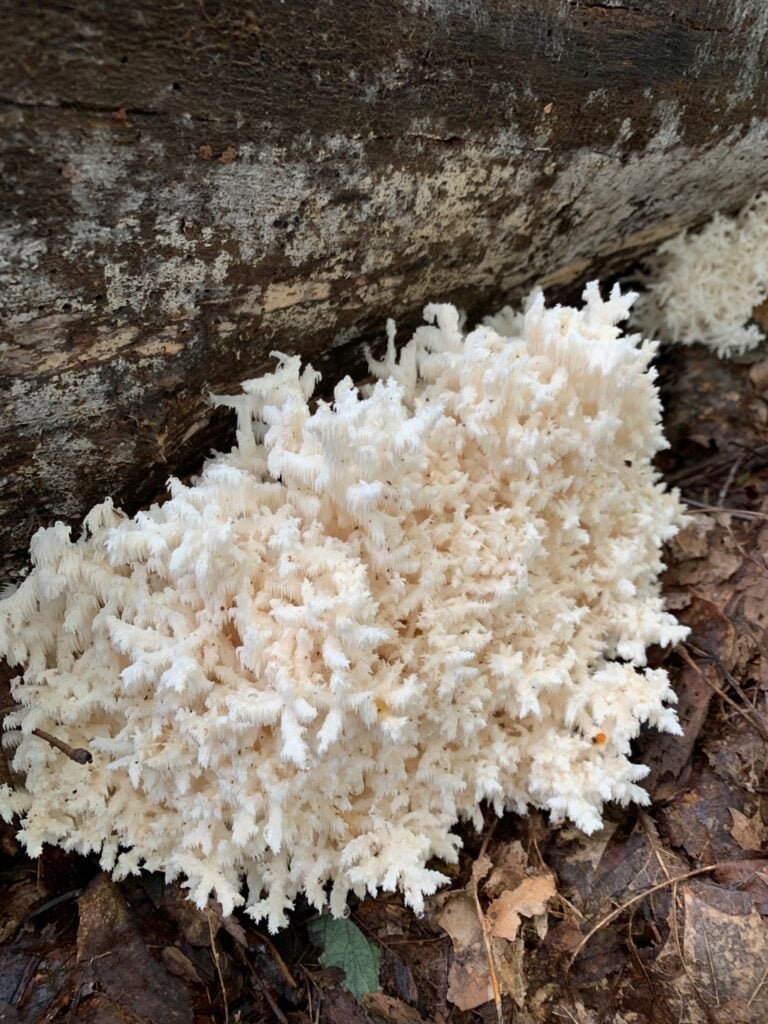
Lion’s mane lookalikes mostly come from the same Hericium genus. This genus includes several related species with similar spines but different growth habits. Hericium americanum tends to form scattered, branching clusters rather than one dense mass. Hericium coralloides looks distinctly coral-like, with branches tipped in shorter spines. The Minnesota DNR’s Hericium profile compares these growth forms. Do not extend information about a confirmed Hericium to every white or toothed fungus you find.
Old, discolored or waterlogged mushrooms can be harder to assess. Correct identification and freshness are separate checks: passing one does not replace the other. Pass on any specimen that’s slimy, moldy, strongly off-smelling or riddled with insect damage.
Compare the Branching Structure
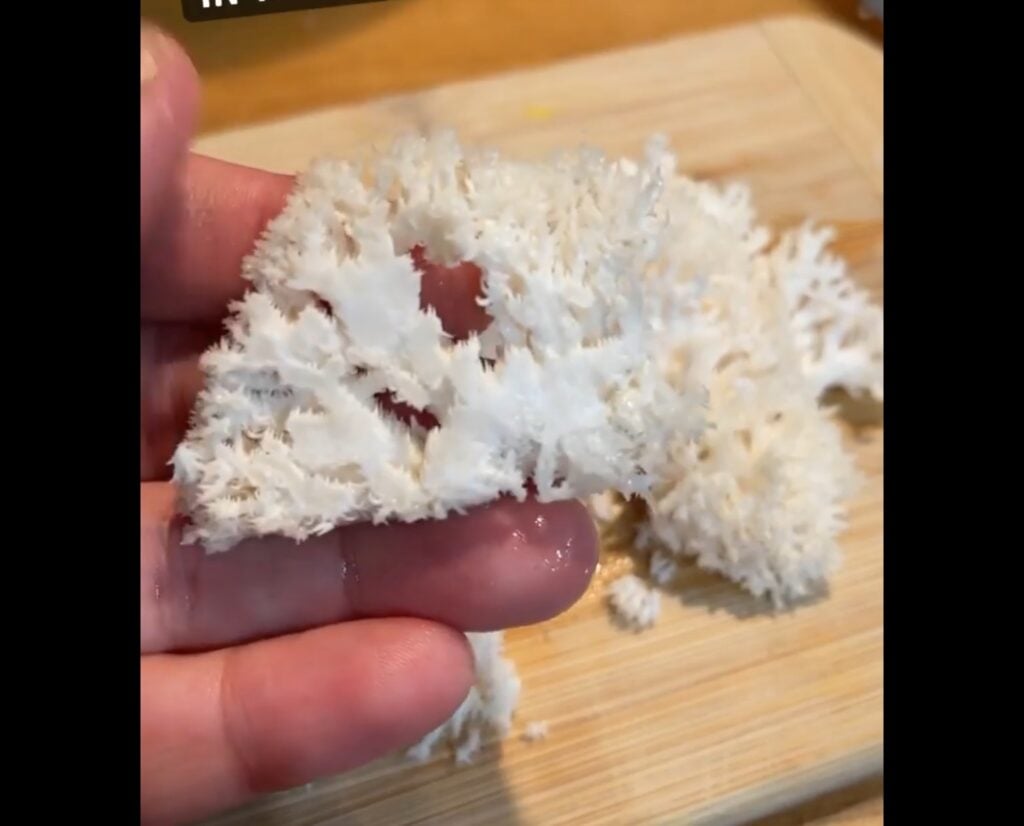
These two photos from our collection make the branching easier to see. Compare the open, coral-like framework and small teeth with the dense, long-spined clump near the top of this guide. This is a comparison of growth forms, not a confirmed species label for either photographed specimen. Young mushrooms can be particularly misleading.
How to Clean and Cook Lion’s Mane Mushroom
Once your identification is confirmed, start with gentle cleaning. Check between the teeth and around the base for trapped debris and insects, and trim away any damaged or tough portions.
- Brush off debris with a soft brush or damp paper towel. If brushing does not remove the dirt, rinse briefly under cool running water, then dry well. Avoid a long soak.
- Slice thick, about half an inch, so the pieces hold together while cooking.
- Pat dry thoroughly before it hits the pan. Extra moisture steams the mushroom instead of browning it.
- Sear in a hot pan with a little oil until the edges turn golden. Allow roughly 3 to 4 minutes per side to brown, then continue as needed until cooked through; thickness, moisture and pan heat change the timing. Browning alone is not a safety test.
- Season simply. Salt, pepper, and butter, or a splash of soy sauce, let the natural flavor come through.
Foragers often compare the texture, once seared, to crab or lobster. That makes it a popular stand-in for seafood in dishes like crab cakes or scampi. Cook any wild mushroom thoroughly, and try only a small portion the first time, even after a confident identification. Keep a separate labeled sample and photos of the growth site. If anyone becomes ill after eating wild mushrooms, contact Poison Control (in the U.S., 1-800-222-1222) or seek medical help promptly; don’t wait for symptoms to pass. Cooking cannot make a misidentified mushroom safe.
How to Store and Preserve Lion’s Mane
Refrigerate a confirmed, fresh harvest promptly in a paper bag or suitable ventilated produce container at 40°F or below. Keep it dry, check it daily and use it promptly. Discard moldy, slimy or off-smelling mushrooms rather than trying to rescue them by cooking.
For freezing, cook the cleaned pieces first, cool promptly and freeze in meal-size portions. The National Center for Home Food Preservation’s mushroom guidance uses steaming or heating in a pan before freezing, rather than a raw-freezing method. Dry only positively identified mushrooms thoroughly in a dehydrator, then follow my dried wild-food storage guide before putting them away. Drying does not make an unknown mushroom safe.
Dried lion’s mane can also go into my Instant Pot wild mushroom broth with other confirmed edible mushrooms. For more seasonal guides and recipes, head back to the foraging hub.
A reference guide helps on the next trip. A photo of the growth site, taken before picking, makes the find easier to double-check later. When a specimen doesn’t check out, leave it in place and ask a qualified local expert. A photograph or an app cannot confirm that a wild mushroom is safe to eat.
FAQ
Is Lion’s Mane Mushroom Safe to Eat Raw?
Cook it before eating, and only after a confident identification confirmed by a qualified local expert. The Missouri Department of Conservation’s bearded tooth guide recommends cooking and trying only a small amount the first time, since even edible mushrooms can cause individual reactions.
How Do You Tell Lion’s Mane From Other White Mushrooms?
Check for hanging spines instead of gills or pores, a growth site on dead or dying hardwood, and a shaggy, pom-pom-like shape. A defined stem and cap, or gills underneath, point to a different species.
Can You Forage Lion’s Mane Mushroom in Any State?
Rules vary by state, park, and land type. Check local foraging regulations before picking anything, including on public versus private land, since some protected areas prohibit foraging entirely.
What Does Lion’s Mane Mushroom Taste Like?
Many foragers describe a mild, slightly sweet flavor with a texture similar to crab or lobster once it’s seared. It takes on seasoning well, which is part of why it works in seafood-style dishes.
This article offers general foraging and food information, not medical advice. Have any wild mushroom identification confirmed by a qualified local expert before eating it.