How to Tell If Chicken of the Woods Is Safe to Eat
Before you put chicken of the woods in the skillet, check the pore surface, growth habit, freshness and host tree. Those clues help, but they are not a shortcut to a safe identification. Confirm the species with a current regional field guide and an experienced local mushroom identifier before eating it. Even correctly identified chicken of the woods can cause a reaction in some people.
Key takeaways:
- Check the underside. Chicken of the woods has tiny pores, never true gills.
- Check where it grows. It fruits from wood or roots, including buried roots that can make it look ground-growing.
- Check the texture. Fresh specimens feel moist and suede-like, not dry or chalky.
- Check the host tree. The host helps narrow down the species; oak alone is not proof that a mushroom is safe.
- Cook it fully and try a small portion first, since some people react even to a correctly identified mushroom.
What Is Chicken of the Woods?
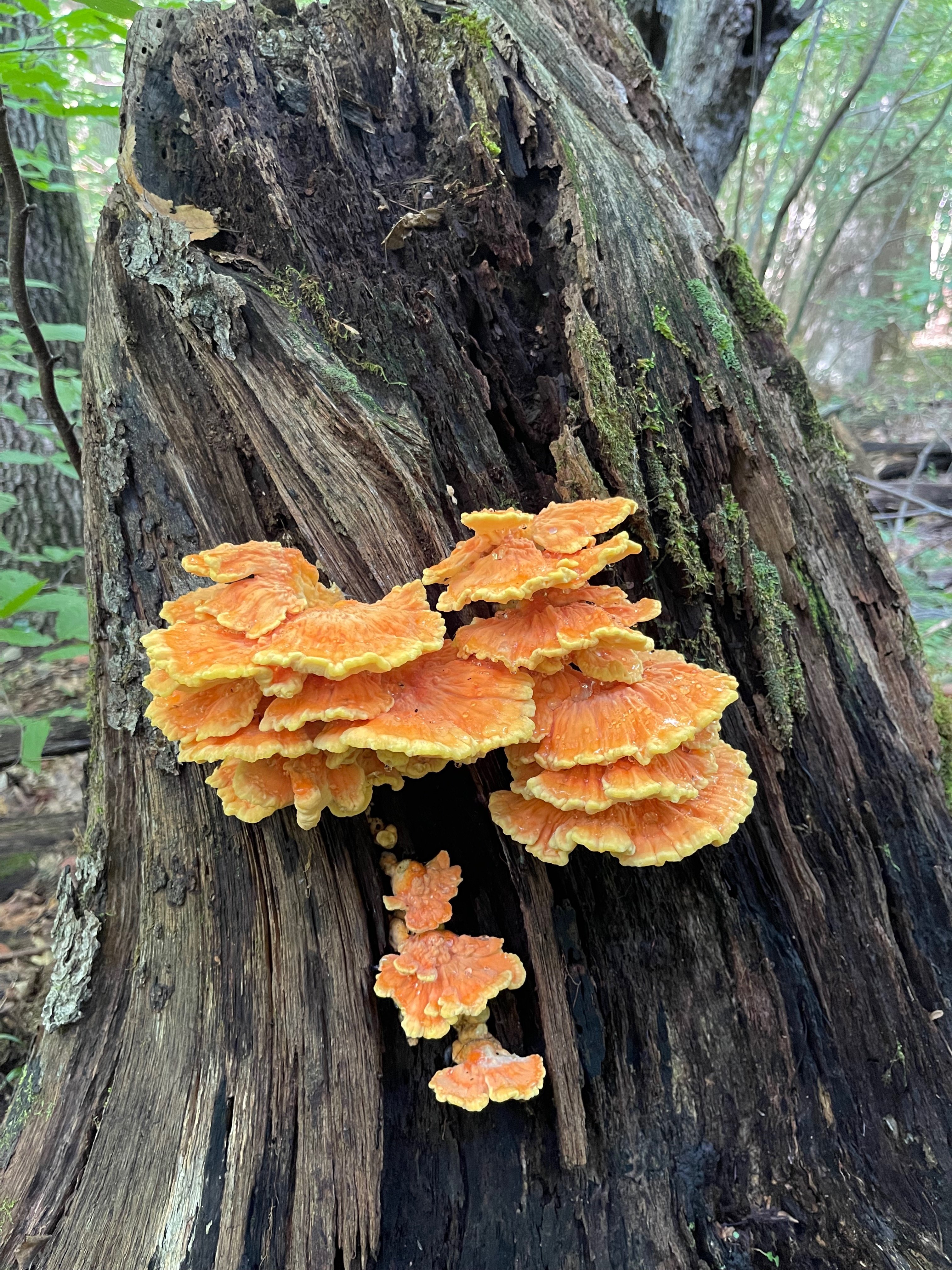
Chicken of the woods is the common name for several bracket fungi in the genus Laetiporus, including Laetiporus sulphureus and Laetiporus cincinnatus. They form orange to salmon-colored shelves or rosettes with a yellow or white pore surface below, depending on the species.
The name comes from its chicken-like texture once cooked. The species and its growth pattern matter: Michael Kuo’s description of Laetiporus cincinnatus explains that this white-pored species often forms a rosette over buried roots and may have a short, poorly defined stem.
Chicken of the Woods Identification: What to Check
Chicken of the woods identification works best when you confirm several features together, never by color alone.
- Look at the growth shape. Look for overlapping fan-shaped shelves or a rosette, not a cluster of ordinary stemmed caps. A short, poorly defined attachment may be present in some species.
- Check the underside for pores. Chicken of the woods is a polypore: it has small pores on the underside instead of gills. The pore surface may be yellow or white, and the spore print is white. Neither trait identifies it on its own.
- Check its connection to wood or roots. Shelves may grow on trunks or logs, while L. cincinnatus can grow over buried roots near a tree. An apparently ground-growing mushroom needs careful examination, not an automatic yes or no.
- Note the host tree. Laetiporus species are most commonly associated with oaks, though they sometimes turn up on other hardwoods.
- Feel the flesh. Fresh young fruit bodies are moist and tender. Old fruit bodies fade to pale beige or grey and turn tough as they age.
The single biggest identification mistake is trusting color alone. A bright orange shelf still needs the pore check, the growth-habit check, and a look at the host tree first.
Is Chicken of the Woods Poisonous?
Some Laetiporus species are eaten, but chicken of the woods is not risk-free. The Missouri Department of Conservation notes that some people experience stomach upset or swollen lips after eating it. Correct identification and thorough cooking do not eliminate every possible reaction.
Fresh, tender specimens are the ones worth considering for cooking; skip old, tough or deteriorating mushrooms. Host-tree warnings also vary by species and region. Do not treat “it was on oak” as a safety test, or assume that cooking makes an unknown mushroom edible. If you cannot confidently identify the mushroom and understand the guidance for that species, leave it.
Never eat chicken of the woods raw. Thorough cooking is non-negotiable. A small first portion lets you learn how your own body handles it.
Chicken of the Woods Lookalikes
Do not assume that an orange mushroom or a mushroom with pores is edible. These are a few mushrooms worth learning to distinguish—not a complete identification key.
- Jack-o’-lantern mushroom (Omphalotus illudens). Rule this one out first. Gills instead of pores on the underside mean you may be looking at a jack-o’-lantern, which is toxic. It also grows in clustered, stemmed caps from buried roots or stumps, never as a stemless shelf directly on a trunk.
- Velvet-top fungus (Phaeolus schweinitzii). This lookalike resembles chicken of the woods when young. Chicken of the woods has soft, pale flesh, while velvet tops have dark flesh and a rough, woody texture. Do not eat it; a yellowish young polypore is not automatically chicken of the woods.
- Giant polypore and black-staining polypores. Black-staining polypores darken where bruised or cut. Their browner, thinner fronds and staining are clues to a different mushroom.
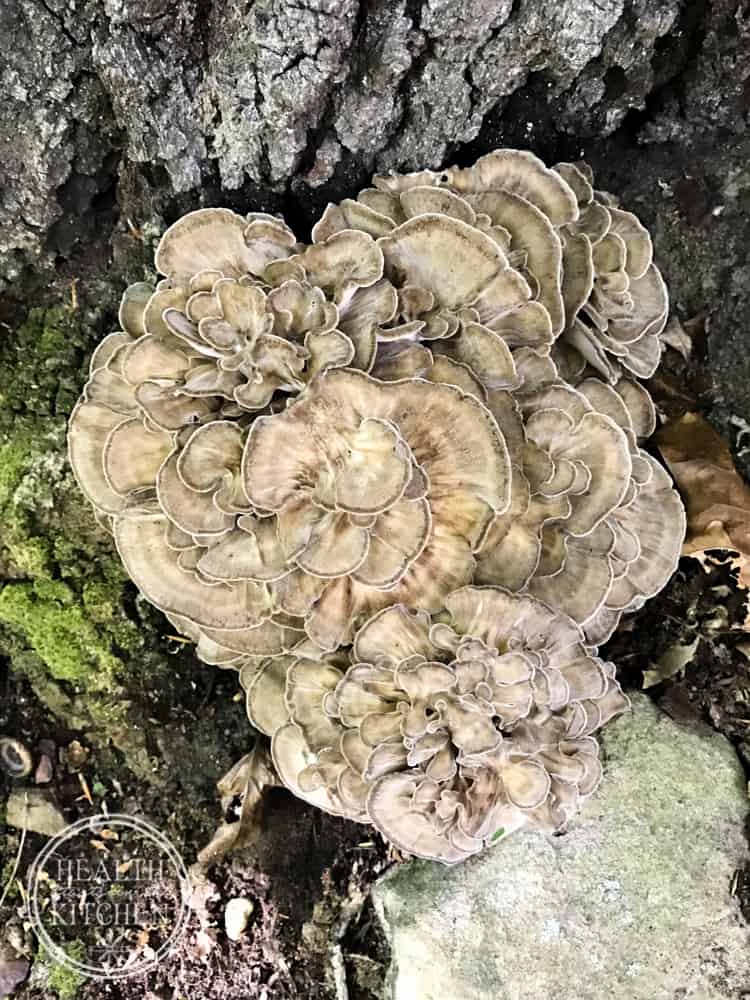
- Hen of the woods (Grifola frondosa). Despite the similar nickname, this is a different mushroom entirely. It is gray-brown, forms a rosette of small caps at the tree base, and is never orange.
Pores are a clue, not an edibility test. Never apply a blanket “all polypores are safe” rule. Check all the features in a regional field guide and get help from a local mushroom club if anything is uncertain.
Final Checks Before You Decide Chicken of the Woods Is Safe to Eat
When any single feature is off, the safest move is to leave the mushroom where you found it.
- True gills rule out chicken of the woods. Do not eat a gilled mushroom on the strength of its orange color.
- Skip old, brittle or buggy specimens. They taste worse and digest worse.
- Investigate apparent ground growth. Buried roots can support chicken of the woods, but that does not identify every ground-growing rosette.
- Get a second opinion. A photo and a written description rarely capture every feature; an experienced local forager can confirm what a picture misses.
- Start small the first time you eat any specimen, even one you are confident about, since individual reactions vary.
A confirmed, tender harvest is worth putting to use. The Fried Chicken of the Woods Recipe and the Chicken of the Woods Mushroom Hashbrowns both include cleaning and trimming notes for a fresh haul.
For more identification guides and ways to cook a confirmed harvest, browse my foraging hub.
FAQ
Can you eat chicken of the woods raw?
No. Cooking it thoroughly is essential for both texture and digestibility. Eating it raw raises the chance of stomach upset even in a correctly identified specimen.
What does chicken of the woods look like underneath?
The underside shows tiny pores, not gills, usually pale yellow to white depending on the species. A white spore print backs this up. True gills mean you are looking at a different, possibly toxic, mushroom.
Why does chicken of the woods sometimes make people sick even when identified correctly?
Digestive upset or an allergic-type reaction can happen even after correct identification and thorough cooking. A small first portion is a precaution, not a guarantee. Stop eating it if you develop symptoms.
Is chicken of the woods from conifers safe to eat?
Do not decide from the host tree alone. Several Laetiporus species grow on different hosts, and local edibility guidance varies. Have an experienced identifier confirm both the mushroom and the relevant species-specific cautions; skip it if there is any uncertainty.
This article is general information, not medical advice. Always confirm any wild mushroom’s identification with an experienced local forager or mycologist before eating it, and seek prompt medical advice if you experience symptoms after eating wild mushrooms. Save a sample or photos for identification; do not wait for symptoms to become severe.