E-Bike Safety for Beginners: Feeling Confident Before Your First Ride
You do not need to prove anything on your first e-bike ride. You can start with a quiet practice area, a short route, and permission to turn around whenever you want. The goal is to come home thinking, “I’d like to do that again.”
I started with no desire to pedal and relied heavily on my throttle. Cadence assistance eventually helped me enjoy pedaling, and now I choose torque mode with the goal of building strength. That change took time. Feeling comfortable with the bicycle underneath you comes before bigger mileage, faster settings, or keeping up with somebody else.
This post contains affiliate links. I may earn a commission when you purchase through them, at no extra cost to you.
Choose a bike you can manage while stopped
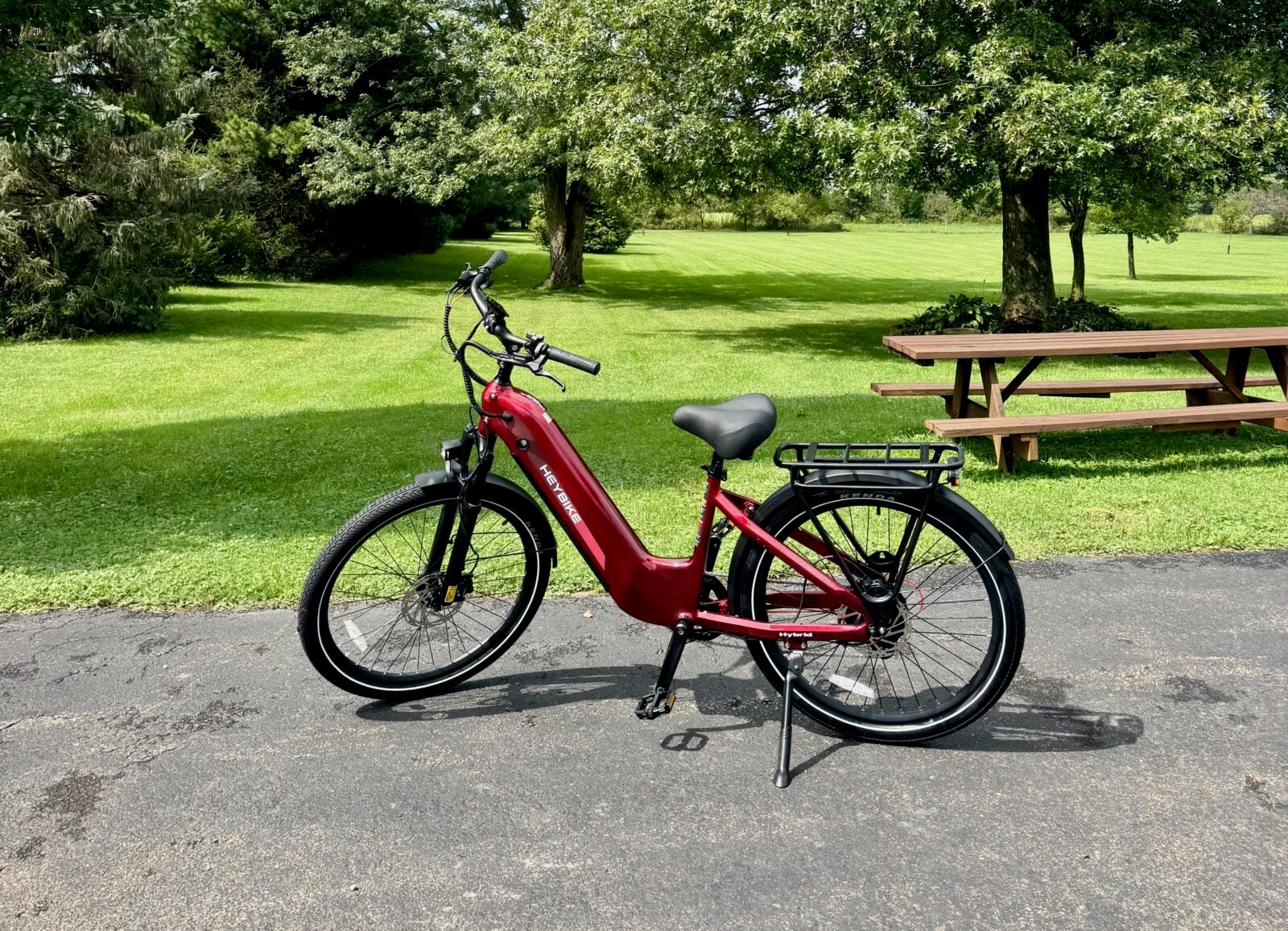
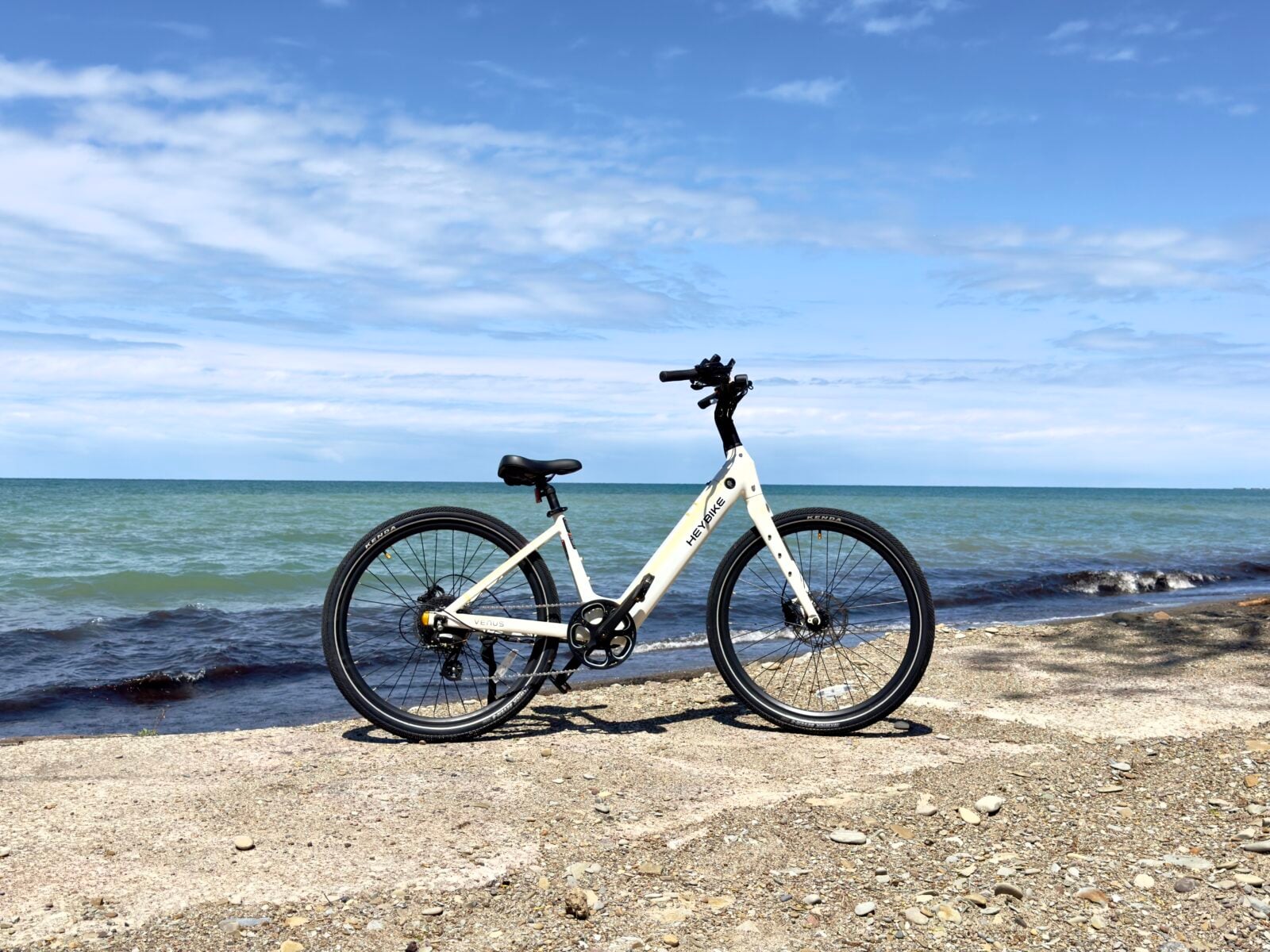
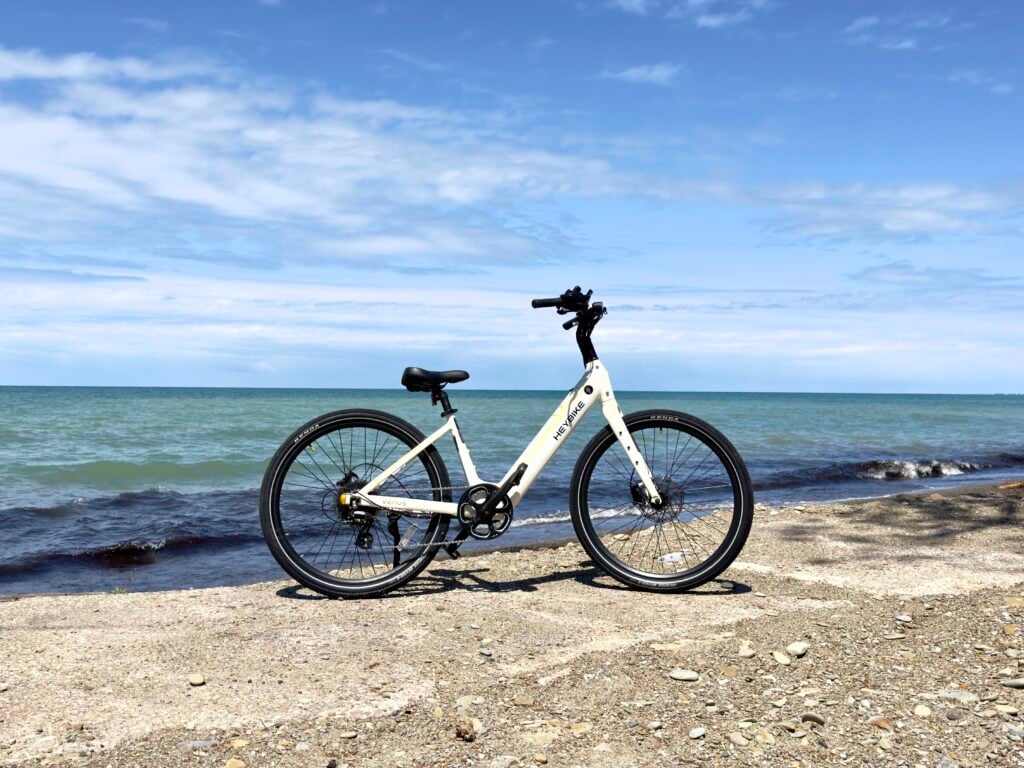
I love Venus’s approachable feel. Ruby, my Heybike Hybrid, is heavier and feels more substantial along roads, with a wonderfully comfy seat. But enjoying a bike in motion and handling it at a stop are different things. Before riding, make sure you can mount, dismount, reach both brake levers, and steady the bike without struggling. A step-through frame helps with access; it does not remove the need for a good fit.
Read my Venus review and Ruby review for those ownership impressions. If you’re comparing options, here are the Heybike Venus and Heybike Hybrid. A test ride and help with fit are worth arranging before choosing.
Do a short check before every ride
Check tire pressure against the bike and tire guidance, test both brakes, and make sure wheels, handlebars, seat, battery, and accessories are securely attached. Inspect for loose parts, damage, or rubbing. Keep bags, straps, laces, and loose clothing away from the wheels and drivetrain. If something feels wrong, have it checked before riding.
Wear a properly fitted bicycle helmet, secured level on your head. Bright clothing and working lights help you be seen; a mirror helps you look behind but does not replace looking and listening. NHTSA’s beginner guidance covers fit, tire and brake checks, visibility, and practicing away from traffic.
Learn the controls before the motor surprises you
Read your model’s instructions for power, assistance levels, throttle, brakes, and any walk-assist function. Begin with the lowest useful assistance in a flat, open area away from cars and pedestrians. Keep fingers away from the throttle while mounting or moving the bike by hand, and turn power off when handling it if there is any risk of accidental activation.
Practice a straight start, a gentle turn, and a controlled stop. Learn which lever operates each brake and apply both progressively rather than grabbing suddenly. Repeat until stopping and putting a foot down feel calm and predictable. Add speed gradually and give yourself extra room on loose or wet surfaces. An in-person cycling lesson is a good option if balance, turns, or traffic still feel uncertain.
Try torque and cadence in a practice area first
Venus and Ruby both offer torque and cadence sensor choices, as shown in Heybike’s comparison specifications. Torque responds to your pedaling force; cadence responds to rotation. Either can feel different from a conventional bicycle, so stop safely to change settings and practice the response at low assistance before returning to a busy route.
That choice can help you find a comfortable feel as your riding evolves. It is not an automatic safety setting. Cadence was the easy bridge into pedaling for me, but your preference may differ. Familiarity with starts and stops matters more than somebody else’s favorite mode.
Class settings are a separate decision
The Class 2/3 flexibility on these bikes is useful for choosing an appropriate configuration, but a higher setting is not a milestone you need to reach. A posted path limit can be much lower than either class’s assistance cutoff. Follow the class explainer and our four-state laws guide before deciding where to ride. Choosing torque mode does not make a throttle-equipped bike Class 1.
Make your first outing pleasantly simple
Choose daylight, decent weather, a familiar surface, and a short route with a straightforward return. Bring water, a charged phone, and enough battery margin to get home. Ride at your own pace, leave room to stop, and agree with a companion that nobody gets left behind. Save a loaded trailer, heavy panniers, and a big group for after you’re comfortable handling the bike on its own.
On roads, ride predictably with traffic, obey signs and signals, and watch for turning vehicles, opening doors, and surface hazards. On shared paths, slow down around people, announce your presence politely, and wait for enough room to pass. NHTSA’s road-safety guidance is a useful companion to a hands-on class. Stop off the traveled path before checking your phone or adjusting an app.
Finish with sensible charging habits
Use the supplied or manufacturer-recommended charger, follow charging instructions, and stay home and awake while charging. Unplug when charging is complete, and use only approved replacement batteries. Those are core recommendations from the Consumer Product Safety Commission.
Confidence grows through manageable experiences. A short ride that ends happily is a perfectly good first chapter. When you’re ready, explore how e-biking can fit into an active life after 40 and find more personal reviews and adventures in my e-biking hub.