Keto Grocery List for Beginners on a Budget
A keto grocery list for beginners on a budget centers on whole foods, not packaged “keto” products. Eggs, chicken thighs, ground beef, canned fish, frozen vegetables, and basic fats like butter and olive oil cover protein, fat, and fiber. These staples skip the markup that specialty keto snacks and flours carry.
Keto, Low-Carb & Carnivore: Start Here
Looking for your next meal or a place to begin? Explore my Keto and low-carb recipes, beginner guides, and meal inspiration, and find ideas that fit your own approach.
Key takeaways:
- Eggs, chicken thighs, and ground beef can be affordable keto proteins; compare local prices per serving.
- Frozen vegetables can reduce waste; compare their unit prices with fresh options.
- Skip keto-branded snacks, bars, and flours until your budget has room for extras.
- Useful staples are found throughout the store, including the freezer and canned-food aisles.
- Plan meals around sales and ingredients you will actually use.
What to Buy for a Keto Grocery List for Beginners
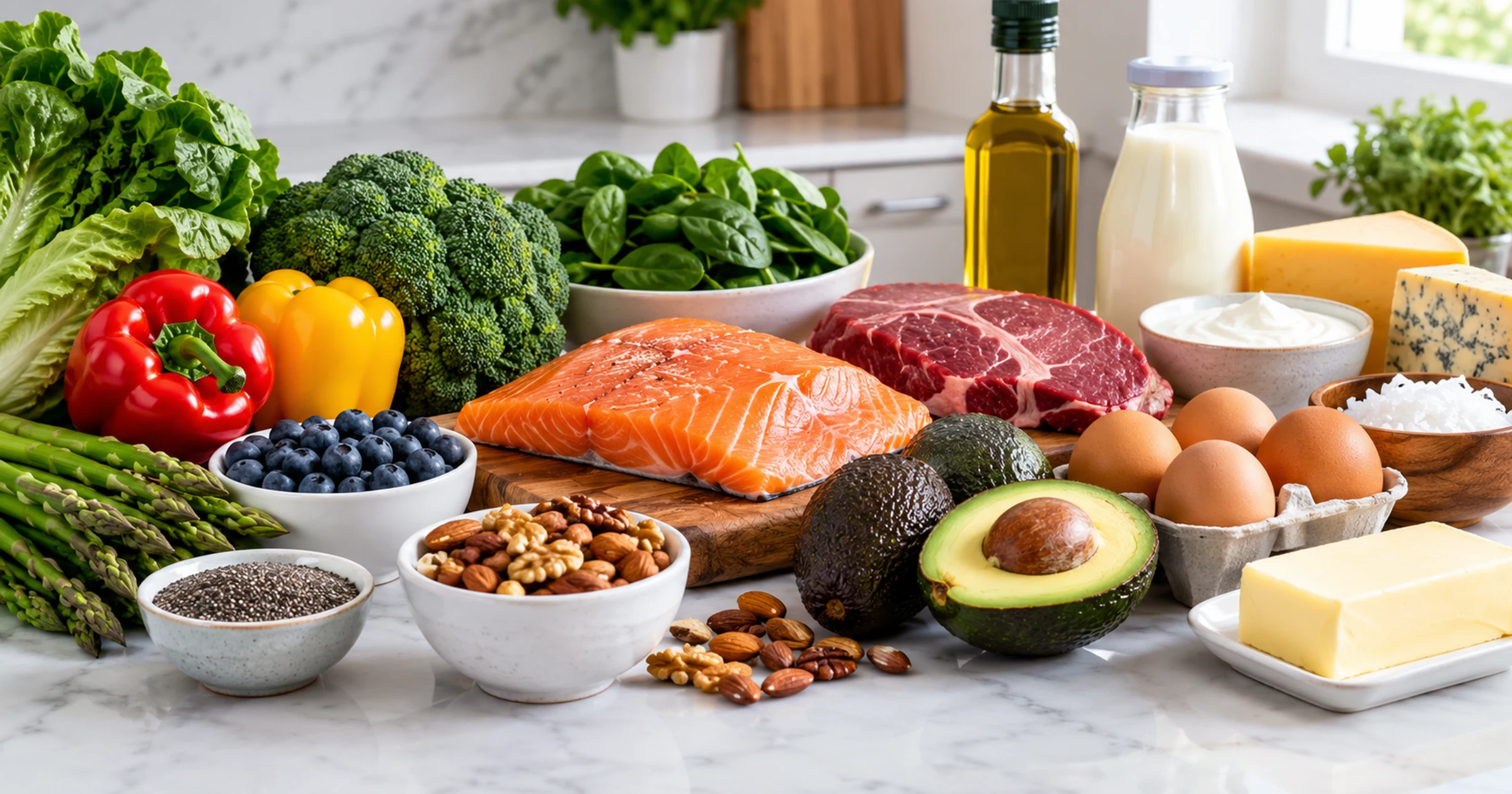
A budget keto shopping list leans on a short, repeatable set of staples. Eggs, ground meat, chicken thighs, canned fish, full-fat dairy, and frozen vegetables form the base of most affordable keto meals. Add basic fats, butter and olive oil, plus a few pantry seasonings, and the list for what to buy for a keto diet is complete.
Keep the list simple on purpose. The more it depends on specialty items, almond flour or MCT oil, the more it costs. Build the list around foods that are naturally low in carbs, rather than foods relabeled “keto” and priced accordingly.
Which Proteins Cost the Least on Keto
Eggs, chicken thighs, and 80/20 ground beef are worth comparing when shopping for affordable keto proteins. A dozen eggs is one of the most versatile buys on the list. Scramble them for breakfast. Hard-boil a batch for snacks. Use a few to bind another dish.
Chicken thighs and whole chickens may cost less than chicken breast; compare prices and the amount of usable meat. Ground beef works in almost any dinner and freezes well when bought in bulk. Other options to compare include canned tuna, salmon, and sardines — convenient pantry staples that need no cooking; follow the package’s storage guidance.
Pork shoulder and bone-in cuts may cost less per pound than loin or chops, but account for bones and trimming when comparing value. They hold up well in slow-cooked meals, so a single cut can stretch across several dinners.
Which Vegetables and Fats Stretch the Budget Furthest
Frozen broccoli, cauliflower, and spinach can be good value and keep longer than fresh produce. That cuts down on waste from produce you did not get to in time. Cabbage can be an economical choice, and it works in slaws, stir-fries, and soups. Zucchini and bagged spinach round out a low-carb produce drawer.
For fats, plain butter and store-brand olive oil do the job without a specialty price tag. Choose an oil you enjoy and will use; compare unit prices before buying a larger bottle. Compare block cheese with pre-shredded bags by weight; the cheaper option varies by store and sale.
What to Skip on a Cheap Keto Staples List
Keto-branded bars, shakes, breads, and baking mixes carry a price premium that whole foods do not. They can be convenient later, but they are the fastest way to turn a cheap grocery list into an expensive one. Specialty flours and MCT oil fall into the same category. They are useful once you are established, not necessary on week one.
Avoid filling your cart with every product carrying a “keto” label. Check the ingredient list of a plain item, canned tomatoes or mustard, against its carb count before assuming it needs a keto version at all.
How to Build a Weekly List Without Overspending
- Check store sales first, then plan meals around whichever protein is discounted that week.
- Buy in bulk when a staple like chicken thighs or ground beef goes on sale, and freeze portions promptly if you won’t cook them within their safe refrigerator storage time.
- Compare fresh and frozen vegetables, then buy what suits your recipes and reduces waste.
- Keep a short pantry list of salt, pepper, garlic, mustard, and one cooking oil, and resist adding specialty items to it.
- Follow your list throughout the store, including the freezer and pantry aisles for useful staples.
My keto diet for beginners guide covers what to eat and common early mistakes beyond the grocery list. Readers managing early symptoms may also want my keto flu guide, since cutting carbs quickly can bring on short-term fatigue or headaches. For meal ideas once the pantry is stocked, browse my keto and low-carb recipes.
A weekly list built this way rarely needs anything else: eggs, one cheap protein on sale, frozen vegetables, a block of cheese, and basic fats. Keep the list short. Repeat it often. Add a new ingredient only once you know you will use the whole package.
A Simple Keto Shopping Checklist
Pick the items you need for your planned meals rather than buying everything here. Amounts depend on your household, appetite, and what is already in your kitchen.
- Protein: eggs, a sale-priced meat or poultry option, and canned fish.
- Vegetables: cabbage, broccoli, cauliflower, spinach, or zucchini, fresh or frozen.
- Fats and extras: olive oil, butter, cheese, or avocado as your meals and budget allow.
- Flavor: salt, pepper, garlic, herbs, and mustard; check labels and serving sizes.
Compare unit prices and plan how you’ll use leftovers. These are practical shopping habits recommended in USDA’s budget-shopping tips, even though that resource is not a Keto meal plan.
Your carb needs and food choices are individual. Some people count total carbs and others count net carbs; use my beginner guide’s carb-range explanation as context rather than treating one shopping list as a guarantee of ketosis.
FAQ
What is the cheapest keto food for beginners?
There is no single cheapest choice everywhere. Compare eggs, sale-priced poultry or ground meat, canned fish, and frozen vegetables at your own store. Price per usable serving is more helpful than package price alone.
Can you eat keto on a tight budget?
Yes, it can be possible with careful planning. Start with the food you already have, compare sale prices, and skip optional specialty products. Your costs will depend on local prices, household size, and dietary needs.
Do I need special keto flours or oils to start?
No. Specialty items like almond flour, coconut flour, and MCT oil are optional extras, not requirements. A beginner can start with butter, olive oil, and whole-food staples, then add specialty ingredients later once the basics are established.
What vegetables should I buy for a budget keto shopping list?
Cabbage, frozen broccoli, cauliflower, spinach, and zucchini are useful low-carb options to compare. Frozen versions can reduce waste, while seasonal fresh produce may be the better buy.
How much does a week of budget keto groceries cost?
There is no reliable one-size-fits-all weekly total. Price your actual list at your local store and account for the number of people and meals it covers. Pantry items may cost more upfront but last across several weeks.
This article is general information, not medical advice.