
Kombucha Second Fermentation Recipe: Flavor and Fizz
Kombucha second fermentation is the bottling step that adds fruit flavor and gives homemade kombucha the chance to develop fizz. My simple version uses finished first-fermentation kombucha, fruit juice and a 1-liter swing-top bottle.
When you’re done brewing the base, it’s time to bottle your brew and reap its rewards! This is part two of my kombucha series. Start with how to make kombucha through its first fermentation if you haven’t brewed a batch yet.
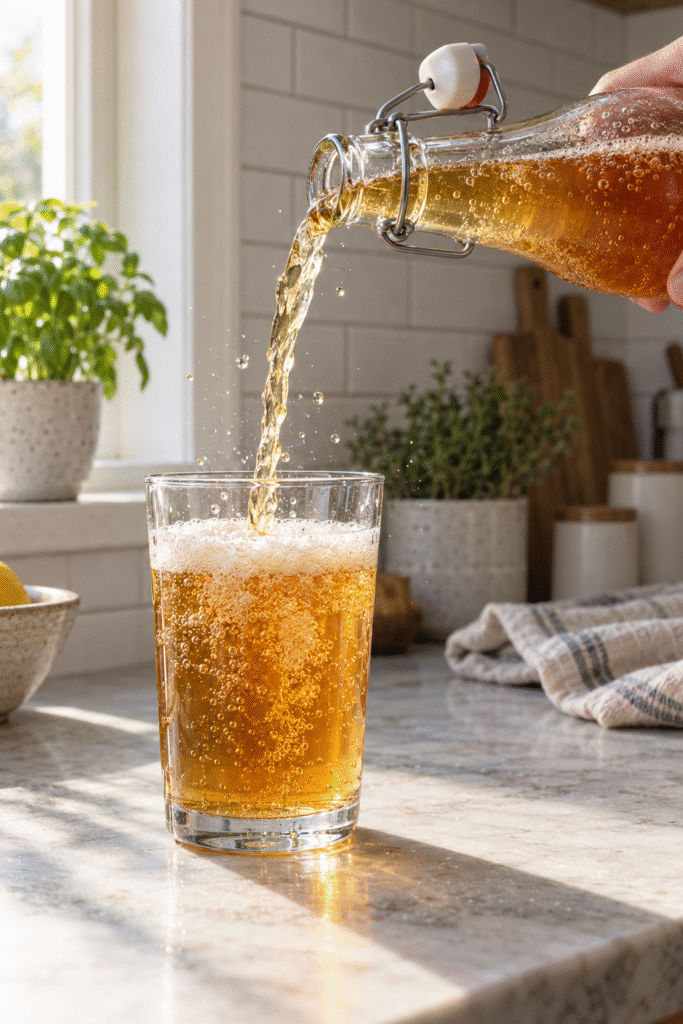
What happens during the second fermentation?
If you are still getting the equipment and starter ready, my kombucha beginner guide explains the first-batch workflow and points to a complete brewing method.
In the first stage, a breathable cover allows gas to escape from the brewing jar. At bottling, the sealed container traps gas produced by fermentation, which can create carbonation. Fruit juice adds flavor and fermentable sugar.
That same trapped gas creates pressure, so bottle choice and monitoring matter. A second ferment isn’t a reason to leave sealed bottles unattended for a fixed number of days. Temperature, juice and the activity of your base all affect the result.
Ingredients and juice-to-kombucha ratio
- 3 cups finished kombucha: use an unflavored first-fermentation batch.
- ¾ cup fruit juice: this recipe’s ratio is one part juice to four parts kombucha, or ¼ cup juice for every cup kombucha.
- One 1-liter swing-top bottle: use one specifically rated by its manufacturer for carbonated beverages, with an undamaged seal.
The liquid ingredients total about 3¾ cups before fermentation. Allow proper headspace rather than treating one liter as a fill-to-the-brim target. If your bottle’s safe filling level is lower, use another appropriately rated bottle for the excess.
Choosing juice and bottles
I prefer organic fruit juice because fresh fruit bits are a pain to get out of a narrow-neck bottle. Fruit is an option in other flavor recipes, but use their own amounts rather than treating chunks and juice as identical.
Shop for 1-liter swing-top fermentation bottles and check the manufacturer’s carbonation rating before buying. These are affiliate links; I may earn a commission from qualifying purchases.
Don’t improvise a pressure seal with Mason jars, decorative glass or parchment under a lid. Inspect glass for chips or cracks and check the gasket before filling.
How to bottle kombucha for its second ferment
- Reserve the culture and starter liquid needed for your next first-fermentation batch.
- Measure the finished kombucha and juice.
- Pour into clean, suitable bottles, leaving the required headspace.
- Seal and monitor daily during the room-temperature bottling stage. Carefully release pressure as directed in the card; daily opening also releases carbonation, so don’t keep adding sugar to compensate.
- Refrigerate once the batch is ready. Chill fully before opening slowly over a sink, away from your face.
The card below gives my ingredient amounts. For an additional reference on timing and bottle precautions, see CSU Extension’s kombucha guide.

Ingredients
- 3/4 cup organic fruit juice
- 3 cups kombucha (first ferment)
- 1 liter swing-top glass bottle rated for carbonated beverages

Instructions
- Pour the measured kombucha and juice into a clean 1-liter swing-top bottle rated for carbonated beverages, leaving the manufacturer’s recommended headspace. Use another suitable bottle for any excess. Seal and monitor daily at room temperature, away from direct sunlight and heat. Cautiously release pressure daily; timing varies by batch.
- Refrigerate when the batch is ready. Chill thoroughly before opening slowly over a sink, away from your face. Keep finished kombucha refrigerated and continue monitoring pressure; refrigeration slows fermentation but does not stop it completely.
Notes
How long does second fermentation take?
After bottling, follow the storage directions in my guide to how long kombucha lasts in the fridge. Refrigeration slows fermentation, but it does not make a batch shelf-stable.
There isn’t a universal number of days. A warm room and sweeter juice can build pressure faster than a cooler room or a different batch. Start checking daily rather than treating the calendar as proof of readiness. Refrigeration slows fermentation but doesn’t stop it completely.
If a bottle becomes unusually pressurized, don’t shake it or keep it warm hoping for more fizz. Keep bottles protected from heat and direct sunlight and handle them cautiously.
Flavor ideas to try next
- Apple Pie Kombucha combines apple juice with cinnamon and whole spices.
- Pumpkin Pie Kombucha uses pumpkin, ginger and pumpkin pie spice.
- Kombucha gummy bears are another use for a finished flavored batch.
Use each flavor recipe’s own quantities and capacity guidance instead of adding its ingredients on top of the full juice amount here.
Second-fermentation FAQs
Why is my kombucha still flat?
A leaking seal, temperature or the condition of the first ferment can affect carbonation. My guide to kombucha that isn’t fizzy helps you check the likely causes before adding sugar or extending the time.
Can I skip the second ferment?
Yes. You can refrigerate the finished first ferment and drink it without this bottling stage. It won’t necessarily have the same fruit flavor or carbonation.
Should I strain it?
You can strain small cultures or fruit material before drinking. Chill and open carefully first; don’t shake a pressurized bottle to loosen sediment.
Can I store it in the pantry?
Keep finished kombucha refrigerated. This recipe doesn’t make a shelf-stable product, and pressure can continue to build.
Does the second ferment make it alcohol-free?
No. Homemade kombucha can contain alcohol, and further fermentation can change the amount. Don’t assume a fizzy batch is alcohol-free or use it as a substitute for a verified alcohol-free drink.
More fermented drinks and foods
Bringing fermented foods into everyday cooking is why I wrote Fermented Foods at Every Meal. If you’d like more ideas beyond kombucha, my cookbook page has the details.
For another fruit-based ferment, try pineapple tepache. For a cultured milk drink, explore homemade kefir. Both have their own methods and ingredients.




This is a great guide on how to make kombucha! I really want to transition away from buying it from the store, so I think its definitely time I use a recipe like this to make it myself. Thank you for sharing!