Sous Vide Roast Beef (For Dinner or Homemade Deli Meat)
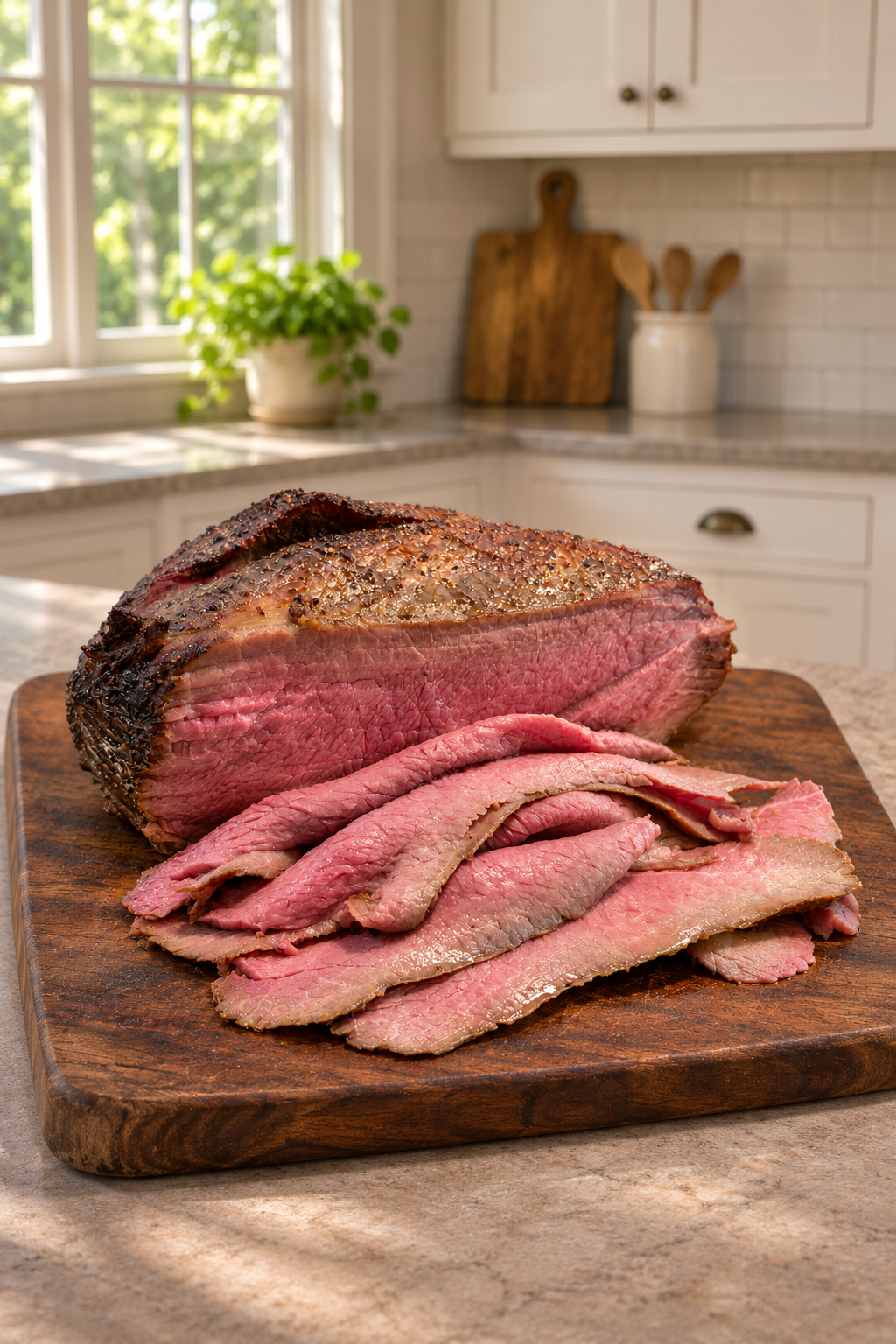
Homemade roast beef can do a whole lot more than fill a Sunday dinner plate. This sous vide roast beef is the starting point for warm slices with gravy, hot roast beef sandwiches, and thinly sliced homemade deli meat for lunches.
The idea is simple: start with an affordable boneless roast, season it, and let a temperature-controlled water bath do the cooking. Serve some warm, or chill it overnight for the easiest thin slicing with a knife.
If you loved my sous vide turkey breast for dinner and homemade deli meat, this is the beef version of the same cook-once, enjoy-it-several-ways approach. It uses the same basic equipment, including a big pot you may already own.
Why Make Roast Beef Sous Vide?
Lean beef roasts can go from beautifully pink to overcooked surprisingly quickly in the oven. Sous vide gives you control over the water temperature, while a longer cooking time helps tenderize economical cuts.
That gives you two very useful options: a roast beef dinner with your favorite sides, or a batch of sandwich meat you can season and slice yourself. Most of the cooking is hands-off, but this is a plan-ahead recipe. Start the bath the day before dinner, and allow another overnight chill if you want cold deli slices.
The Best Beef Roasts for Homemade Deli Meat
For this approach, shop for a boneless roast under 5 pounds, with roughly 2–4½ pounds a convenient shopping range. A fairly even shape is easier to cook and slice than a roast with a thick bulb at one end and a narrow tail at the other. Thickness matters more than weight alone when choosing a cooking schedule.
| Roast | Why choose it? | Best use here |
|---|---|---|
| Eye of round | Lean, compact, and often economical. Its even shape makes tidy sandwich slices. | First choice for classic homemade deli-style roast beef. |
| Top round / inside round | Lean and versatile, with broader slices than eye of round. | Another strong choice for sandwiches and thin dinner slices. |
| Bottom round / rump roast | A budget option with a firmer texture. Slice especially thinly across the grain. | Value-focused sandwich meat or hot beef with gravy. |
| Sirloin tip / knuckle | A lean roast that benefits from careful slicing. It is a different cut from top sirloin. | Hot roast beef meals and thin sandwich slices. |
| Center-cut chuck eye roast | Richer and more marbled, with seams that can make uniform deli slices harder. | Hot roast beef meals when richer flavor matters more than neat slices. |
My starting recommendation: Choose eye of round or top round if homemade deli meat is the main goal. Choose a well-trimmed, evenly shaped roast rather than simply buying the largest one that fits the budget.
These cut recommendations build on the Beef Checkoff’s roast-cut guide. They are shopping recommendations; they do not mean every roast needs exactly the same cooking time.
Chuck is an alternative for a different result. A center-cut chuck eye can work for a 24-hour cook, but a heavily seamed chuck roast may need longer to reach your preferred tenderness. Tenderloin, ribeye, and other naturally tender premium roasts are unnecessary for this budget deli-meat project and don’t need the same long treatment.
What Temperature and How Long for Sous Vide Roast Beef?
I cooked my 4-pound round roast at 130°F (54.4°C) for 24 hours in a preheated water bath. This is the setting used for this recipe.
If you prefer a firmer, less-red center, 140°F (60°C) is an optional higher setting. It moves the beef toward medium doneness; my tested version uses 130°F. Temperature controls doneness, while the long cook also affects tenderness.
The roast recommendations above focus on boneless cuts under 5 pounds. Cut, thickness, shape, and starting temperature still matter, so choose a cooking schedule suited to the actual roast rather than relying on weight alone. Preheat the bath, keep the beef fully submerged, and monitor the water level throughout the 24-hour cook. Douglas Baldwin’s sous vide guide explains heating and pasteurization by thickness.
Ingredients and Seasoning Ideas
- Boneless beef round roast: I used a 4-pound roast, fully thawed. See the cut guide above for other roast options.
- Chicago steak seasoning: This is the seasoning I used on my roast. Use enough to season all sides.
My homemade seasoned salt is another option. Other seasoning directions include coarse black pepper with garlic powder, Montreal-style steak seasoning, Cajun seasoning, or a little dried rosemary and thyme. Keep the seasoning versatile if you want to use the beef in several different meals. Check the salt already included in any blend before adding more.
Equipment: The Same Setup as My Turkey Breast
This post contains affiliate links. I may earn a commission if you purchase through these links, at no additional cost to you.
- Anova Precision Cooker Mini at Walmart: My affordable sous vide option; mine cost $29 when I bought it, and current prices may differ.
- A large pot you already own: Choose one deep enough for the circulator’s operating range and large enough for water to flow around the roast.
- Optional 12-quart sous vide container: Convenient for longer cooks. Check lid compatibility with your circulator and cover the bath to reduce evaporation.
- My Avid Armor USVX chamber sealer: My preferred way to package the roast.
- Avid Armor 8 × 12-inch chamber pouches: The same bag link as the turkey post. Check the actual roast dimensions, machine capacity, and room for a clean seal. A larger roast may need a larger compatible pouch or separate portions; these bags won’t fit every roast under 5 pounds.
- Cuisinart FS-75 Kitchen Pro Food Slicer: An optional upgrade if homemade deli meat becomes a regular thing. A sharp knife works, too.
Use food-safe pouches rated for the selected temperature and a long sous vide cook. Place the pot or container on a heat-safe surface, check the water level periodically, and keep it within the circulator’s operating range throughout the cook.
How to Make Sous Vide Roast Beef
1. Preheat the water bath
Attach the circulator to your pot or container, add water according to its instructions, and preheat to 130°F (54.4°C). Leave room for the bagged roast to displace water.
2. Trim, season, and seal
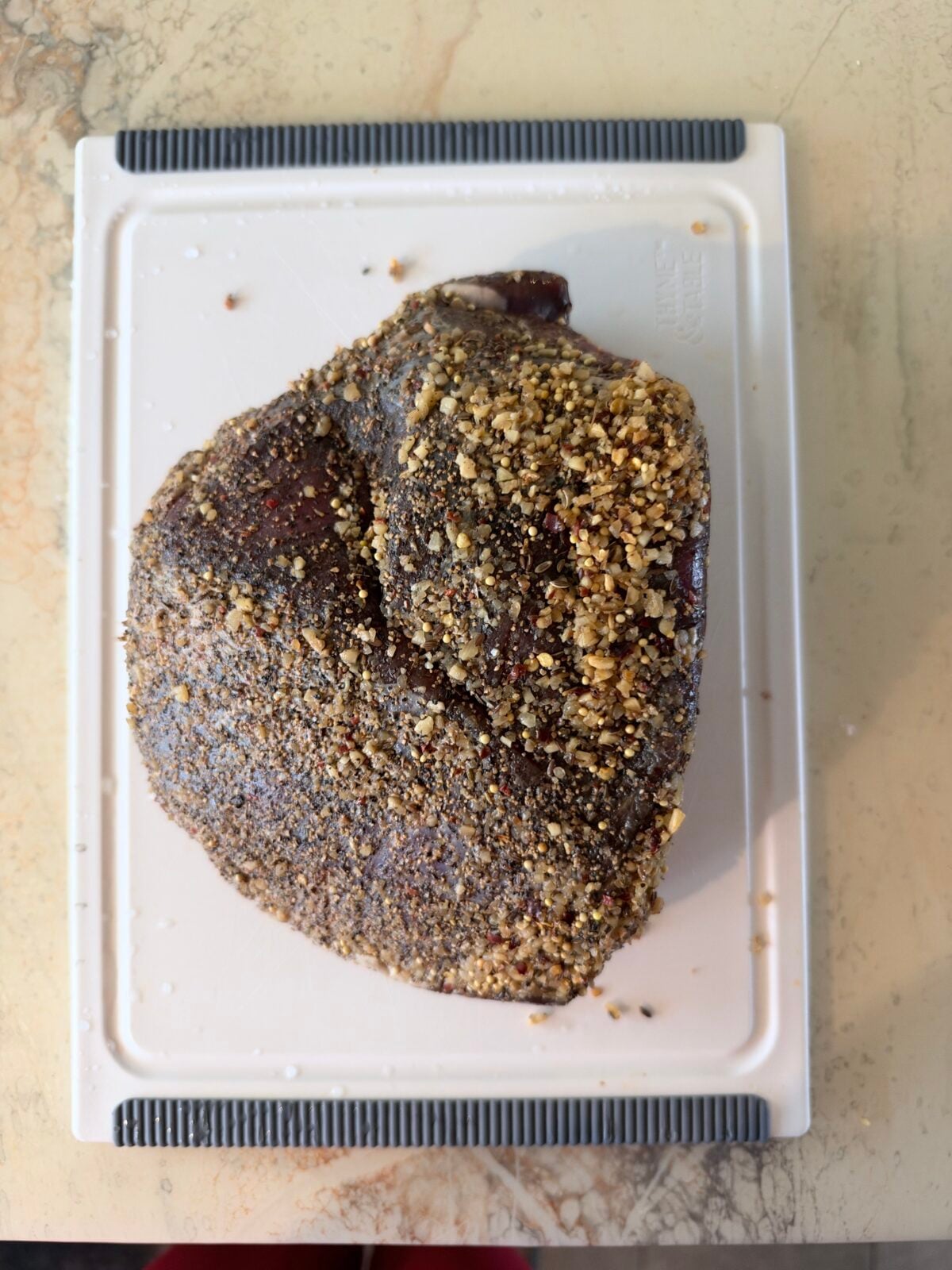
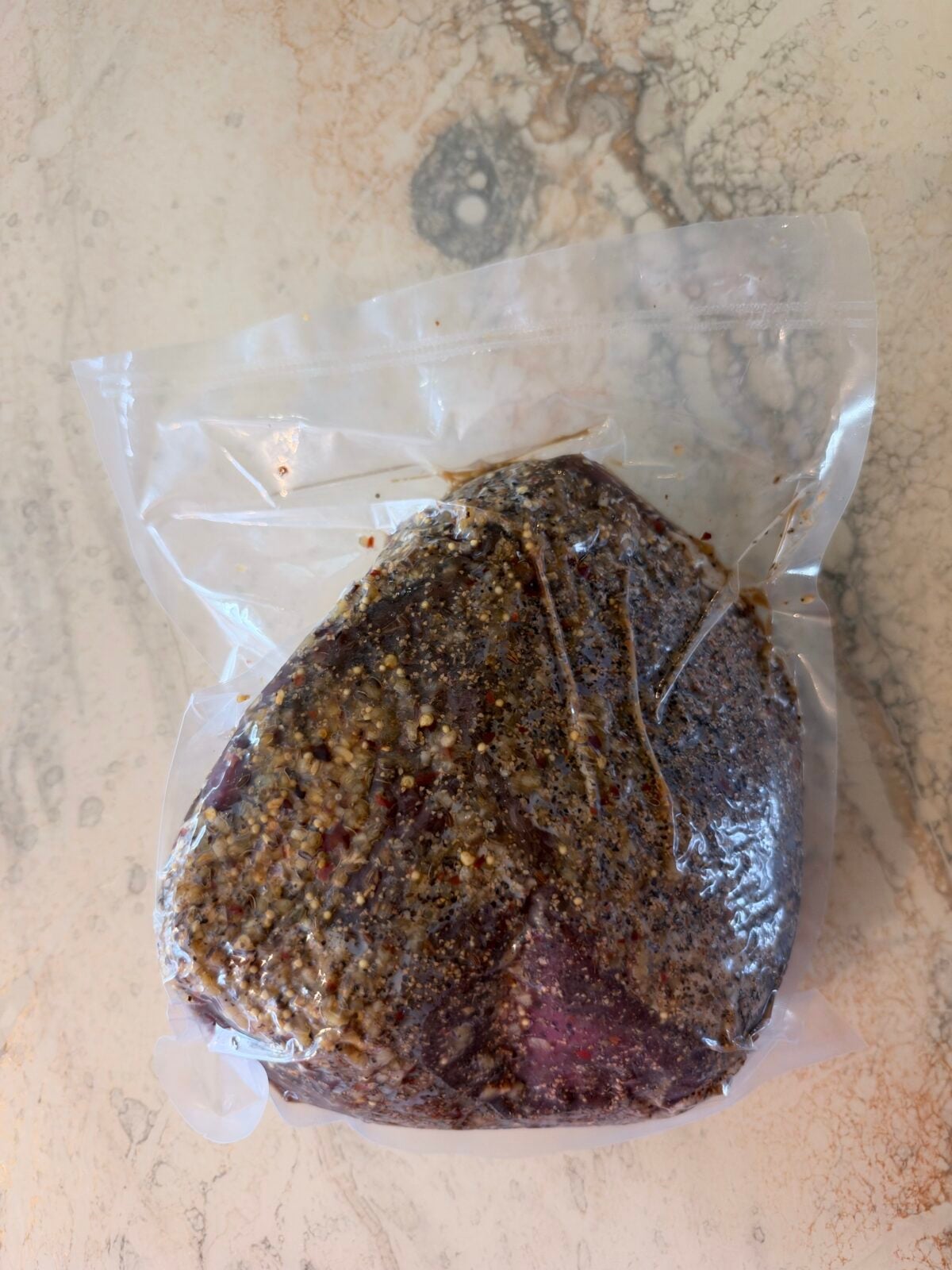
Remove the packaging and any absorbent pad. Trim tough exterior silver skin and excess hard fat, then pat the beef dry and season all sides with Chicago steak seasoning. Place it in a suitable sous vide pouch and seal according to your machine’s instructions.
Keep the sealing area clean and inspect the seal. If you divide a roast into smaller pieces, package them in a single layer with water able to circulate around each bag.
3. Cook in the preheated bath
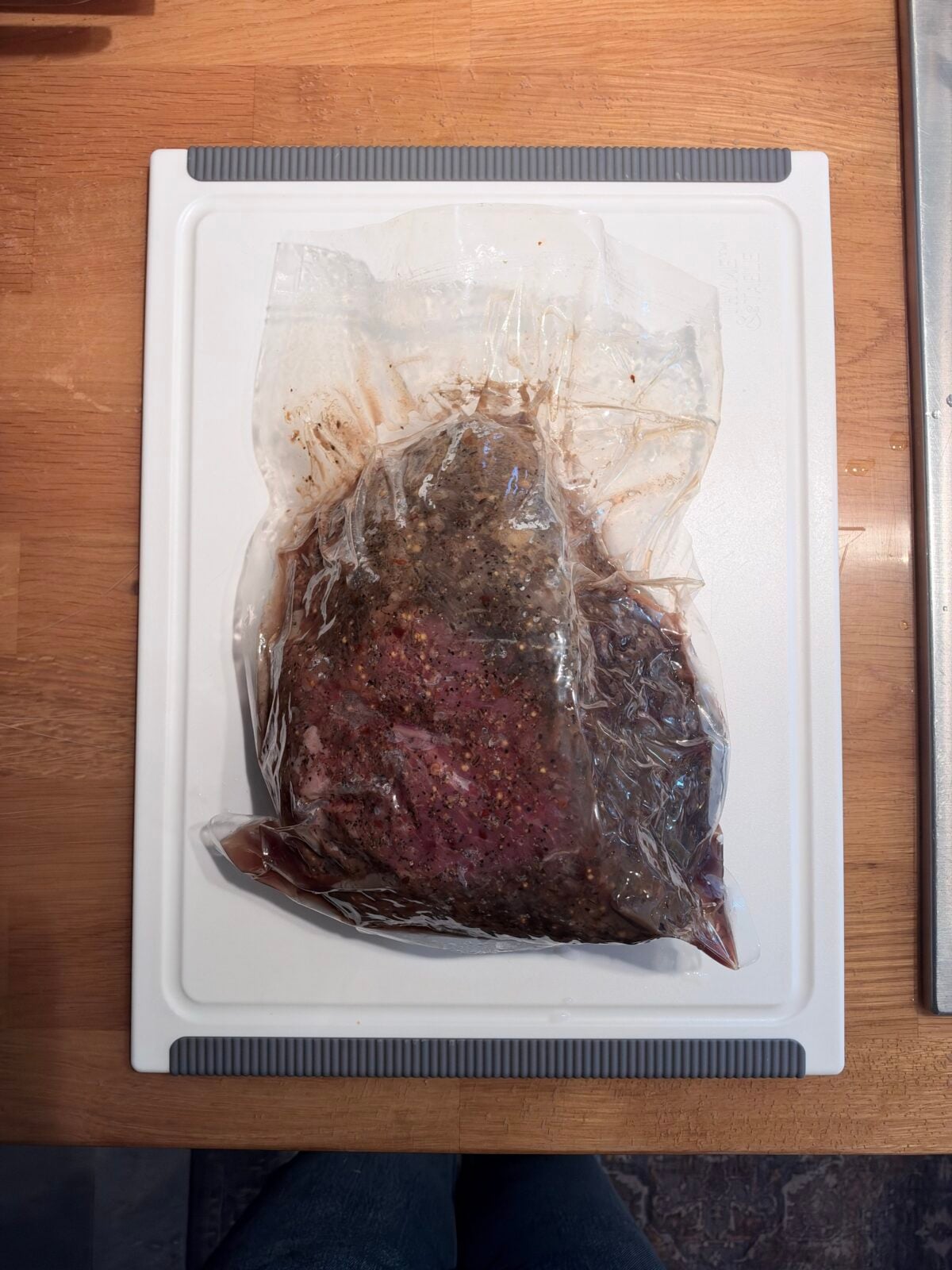
Submerge the bag completely in the preheated 130°F (54.4°C) bath and cook for 24 hours. Cover the bath to reduce evaporation and monitor the water level during the long cook.
4. Rinse and finish in the air fryer
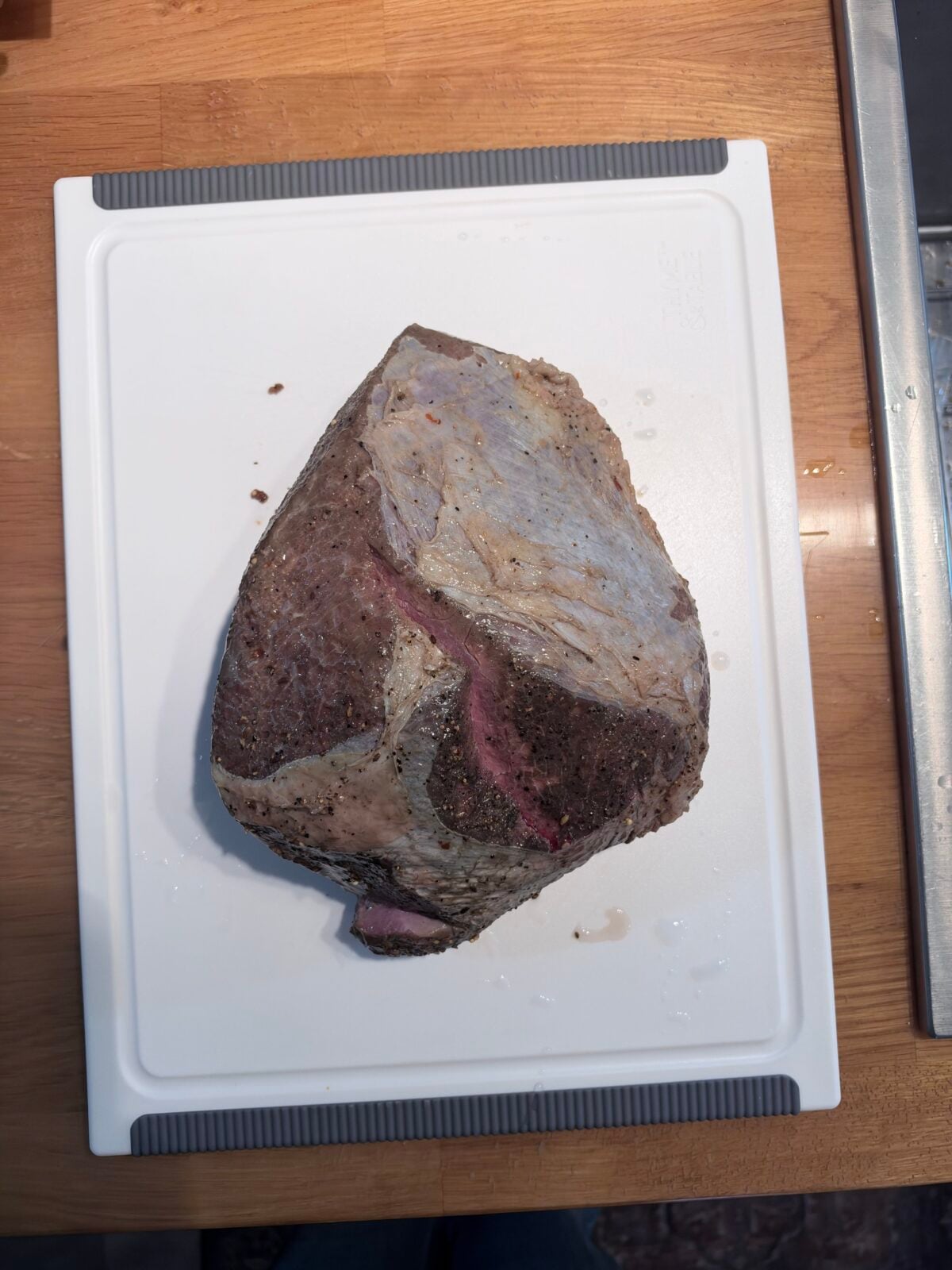
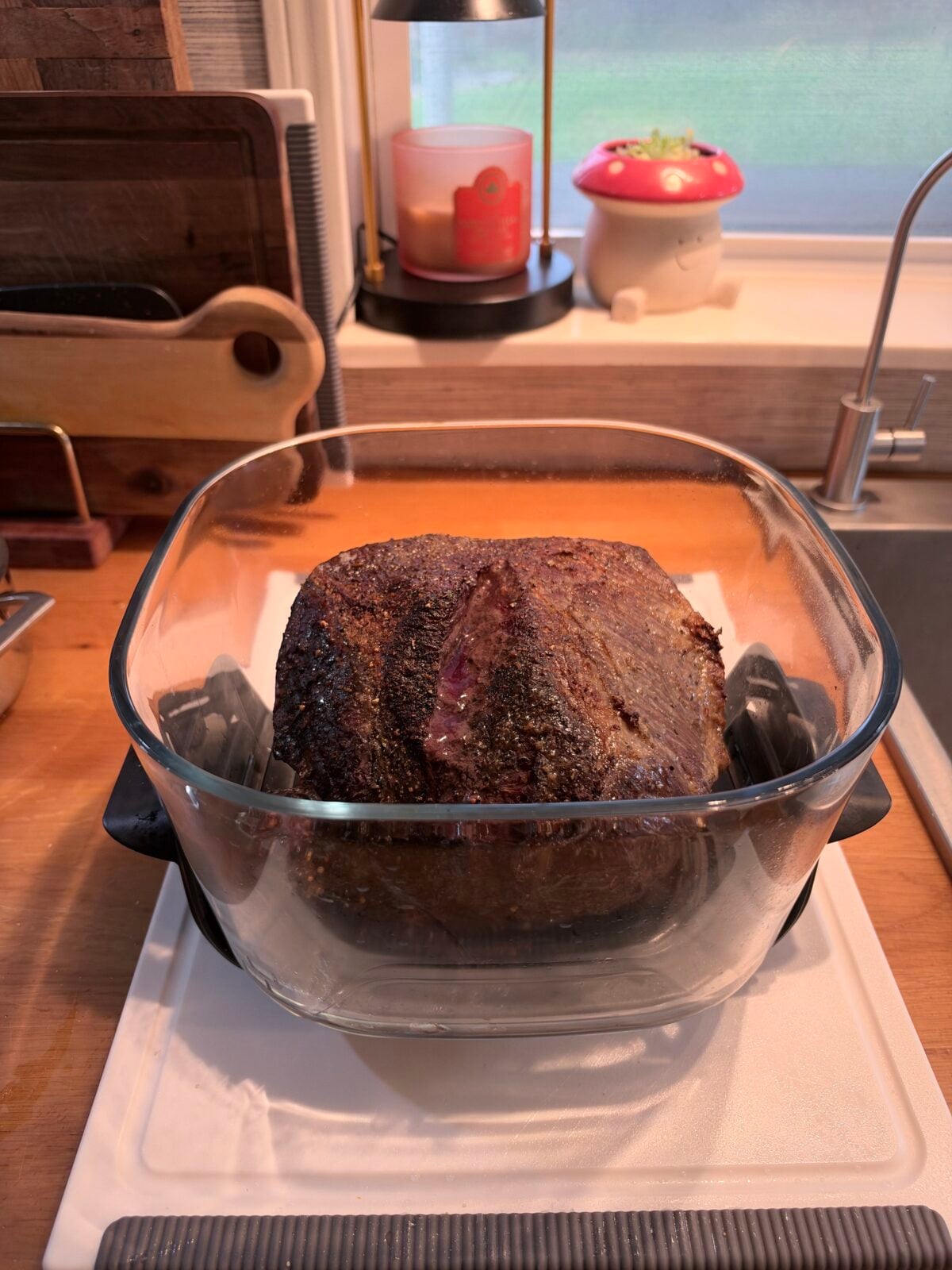
Remove the cooked roast from its bag. I rinsed the seasoning off after cooking, then patted the roast very dry before browning. Finish in the air fryer for 10 minutes on MAX Crisp, the setting I used for my roast.
5. Serve warm or chill for deli slices
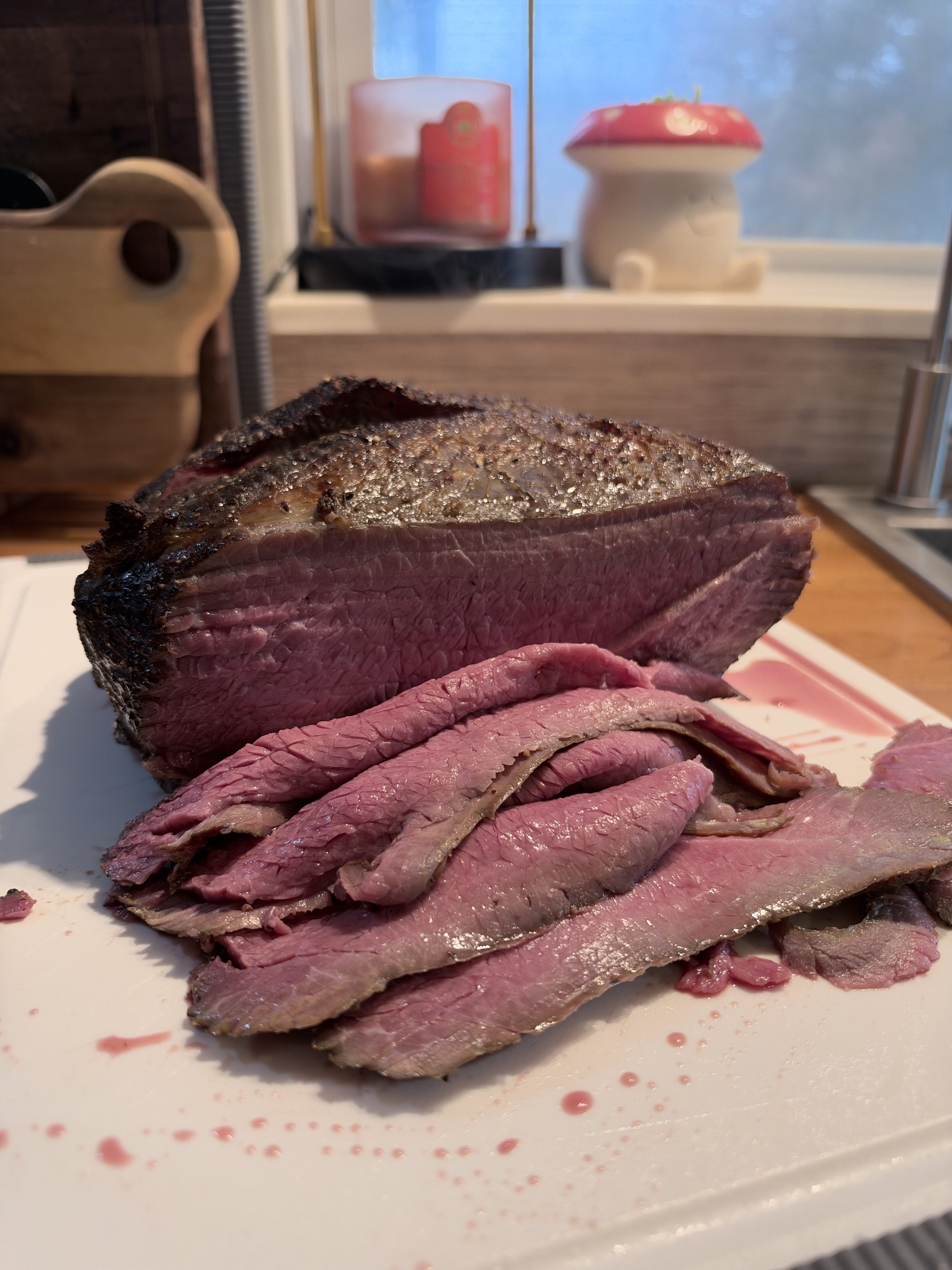
For dinner: Slice the finished roast across the grain and serve warm with your favorite sides, gravy, or au jus.
For cold sandwich meat: Brown the roast before chilling. Rapidly chill the cooked beef in a sealed food-safe bag in a generous ice-water bath, replenishing the ice until the center is thoroughly cold. Then refrigerate overnight before slicing. Don’t leave a whole roast on the counter to cool.
Can I Use a Zip-Top Bag Instead?
I use my chamber sealer, but you can use a suitable zip-top bag if its manufacturer supports the selected temperature and cooking duration.
- Place the seasoned roast in the bag and close the zipper most of the way.
- Slowly lower it into a separate container of cool water, keeping the opening above the water. Water pressure pushes the air toward the opening.
- Seal once most of the air is out, then transfer to the preheated bath.
- Clip the top securely to the pot, keeping the zipper above water and the beef fully submerged.
Check the seal and bag rating carefully for a 24-hour cook. The roast should fit comfortably without crowding the closure.
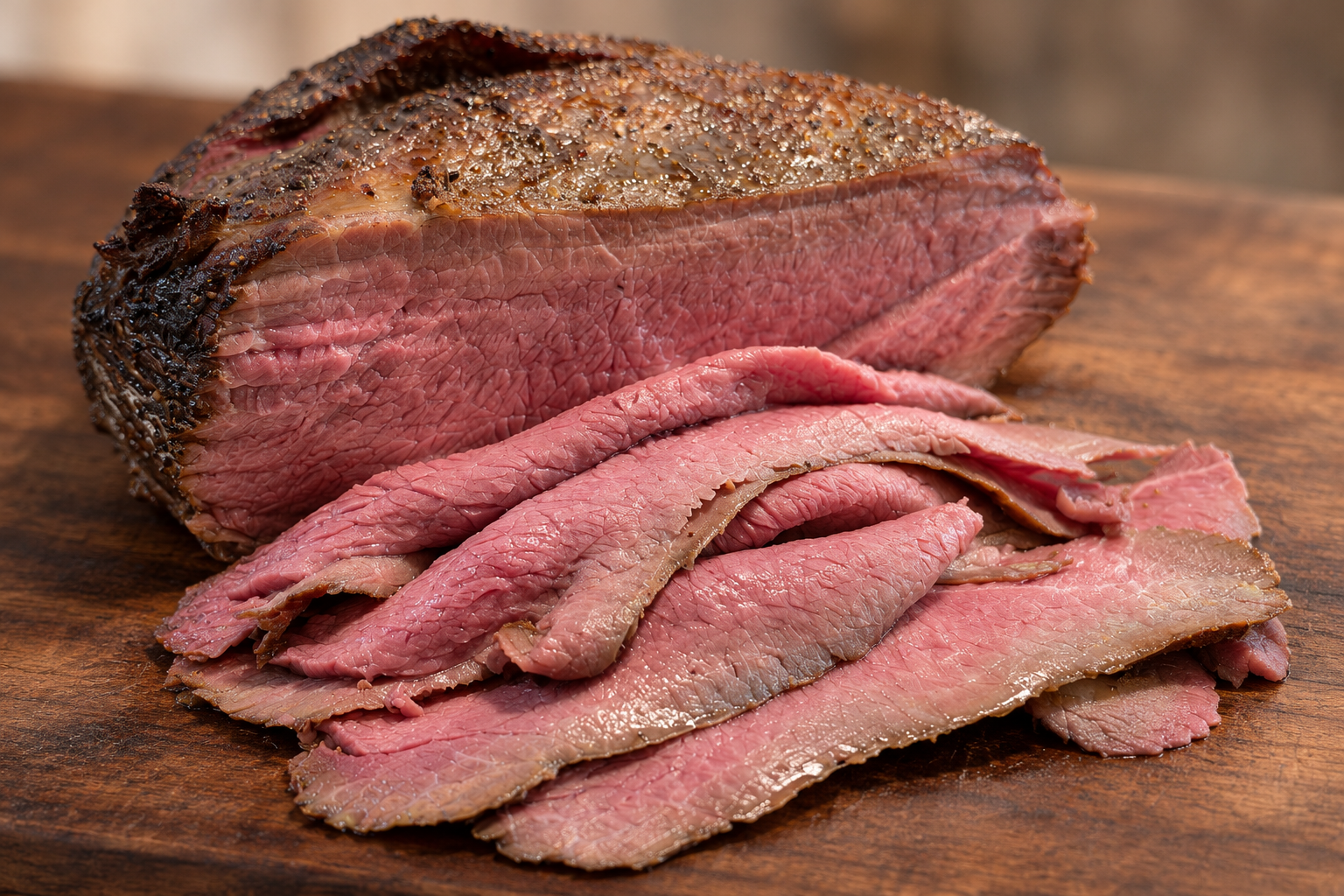
How to Slice Homemade Deli Roast Beef
For the easiest deli-style slicing with a knife, chill your cooked roast beef overnight in the refrigerator. Rapidly chill it first as described above, then refrigerate overnight. Cold beef is easier to slice thinly; warm beef is better suited to thicker dinner slices.
Use a sharp slicing knife and cut across the grain as thinly as you comfortably can. If you’re using a meat slicer, follow the manufacturer’s instructions and adjust the thickness to your preference.
Package the beef in meal-size portions so it’s easy to grab what you need. Freeze any extra promptly instead of trying to keep the whole batch in the refrigerator for the week.
Hot Roast Beef Meals and Sandwich Ideas
- Roast beef dinner: Warm slices with mashed potatoes, gravy, and a vegetable.
- Open-faced hot roast beef sandwich: Bread, sliced beef, and plenty of beef gravy, with fries or mashed potatoes alongside.
- French dip sandwiches: Thin slices on rolls with a cup of hot au jus for dipping.
- Classic cold roast beef sandwiches: Chilled slices with your favorite cheese, lettuce, and my horseradish sauce or mustard.
- Beef and cheddar: A toasted roll, thin beef, and melted cheddar for an easy lunch.
- Steakhouse-style salad: Sliced beef over greens with tomatoes, blue cheese, and your favorite dressing.
Warm thin slices gently just before serving so they don’t turn tough from prolonged simmering. Hot gravy or au jus can heat them quickly; reheating will move pink roast beef toward a more cooked appearance.
Is Homemade Roast Beef Cheaper Than Deli Meat?
It can be, particularly when round roasts are on sale. Compare the cost of the finished cooked beef with the deli price, rather than comparing raw roast weight directly with cooked deli meat.
Finished cost per pound = total roast purchase price ÷ finished cooked weight in pounds. Include seasoning and bag costs if you want a more complete comparison. The slicer, sealer, and circulator are separate equipment purchases.
Storing and Freezing Roast Beef
After rapid chilling, refrigerate at 40°F or below and use within 3–4 days, or freeze portions promptly. Vacuum sealing does not make the beef shelf-stable or automatically extend refrigerated storage. Thaw frozen portions in the refrigerator.
For general leftover handling, see USDA’s leftover storage guidance.
Frequently Asked Questions
Do I need an expensive roast?
No. Eye of round and top round are useful starting points for this project. Their lean shape works well for thin slices, while sous vide gives you control over doneness.
Does every roast under 5 pounds cook the same?
No. Cut, thickness, shape, starting temperature, and your preferred tenderness all matter. A long narrow roast and a compact thick roast can weigh the same and heat differently.
Can I use the turkey recipe’s bags?
Possibly. Measure the beef and leave adequate sealing space. The linked 8 × 12-inch pouches are an option, not a guarantee of fit for the full under-5-pound range.
Can I make this from frozen?
This recipe is written for a fully thawed roast. A frozen roast needs a schedule that accounts for its starting temperature and thickness.
Sous Vide Roast Beef Recipe
Ingredients
- 4 pounds boneless beef round roast fully thawed
- Chicago steak seasoning to taste
Instructions
- Preheat a sous vide water bath to 130°F (54.4°C).
- Remove the beef packaging and absorbent pad. Trim tough exterior silver skin and excess hard fat, pat dry, and season all sides with Chicago steak seasoning to taste.
- Seal in a food-safe sous vide pouch rated for this temperature and a 24-hour cook.
- Submerge in the preheated bath and cook for 24 hours. Cover the bath to reduce evaporation, maintain water circulation around the pouch, and monitor the water level.
- Remove the cooked roast from the bag. Rinse the seasoning off, then pat the roast very dry.
- Finish in the air fryer for 10 minutes on MAX Crisp.
- For a hot meal, slice across the grain and serve warm. For deli meat, rapidly chill the finished roast in a sealed food-safe bag in a generous ice-water bath until thoroughly cold, then refrigerate overnight. Slice thinly across the grain with a sharp knife or meat slicer.