How to Identify Chanterelle Mushrooms: A Foraging Guide
Chanterelles are one of the wild mushrooms I look forward to most each summer. Their golden color makes them easy to spot against the dark forest floor, and their delicate, slightly fruity flavor is wonderful in everything from a simple butter sauté to chowder and biscuits. The important part is learning to identify them by several characteristics—not color alone.
Before you eat any wild mushroom: positively identify it with more than one trusted resource and, ideally, an experienced local forager or mycologist. Photos on the internet are not enough. When there is any doubt, leave it in the woods.
How to Identify Chanterelle Mushrooms
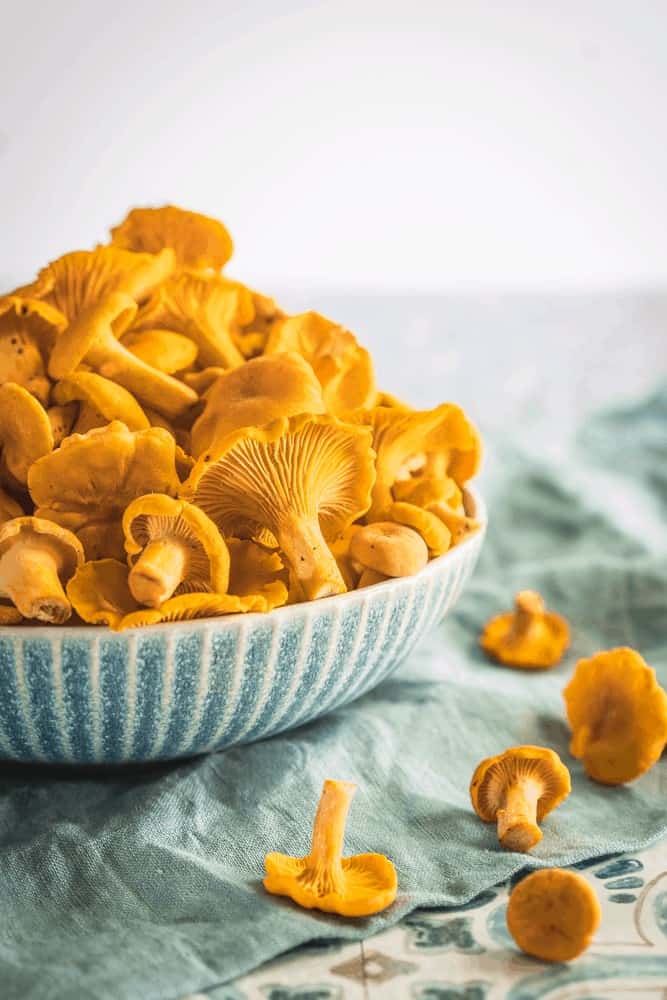
Chanterelles are a group of woodland mushrooms in the genera Cantharellus and Craterellus. Species and color vary, but the golden chanterelles we find here in Pennsylvania usually have wavy, irregular caps and a solid, pale interior.
Use all of these features together:
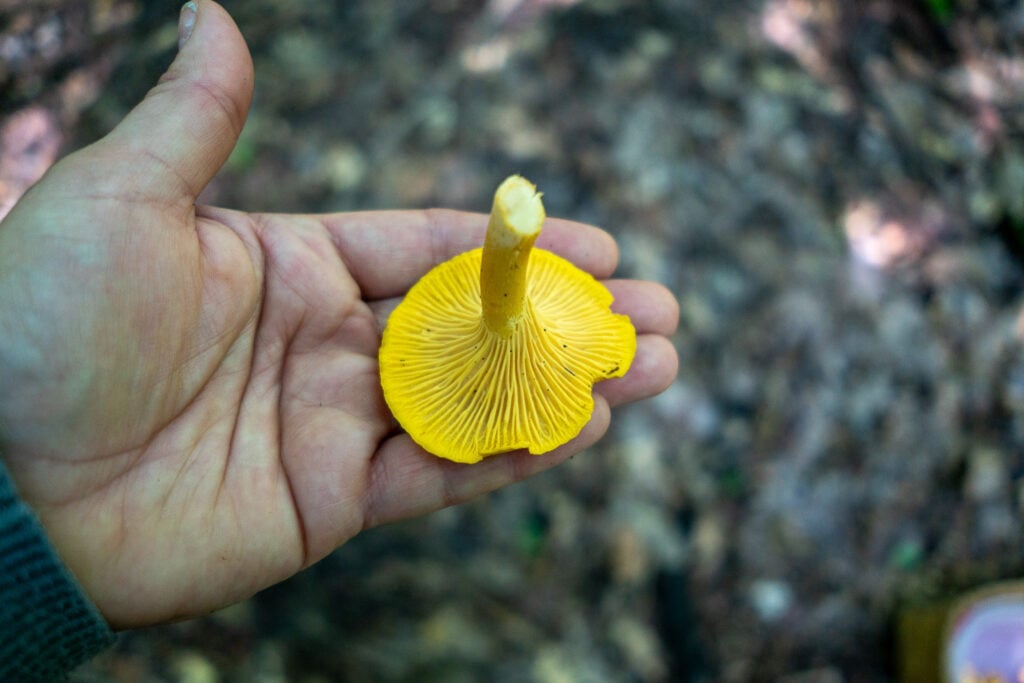
- Blunt ridges, not true gills: The underside has shallow, forked ridges that run partway down the stem. They look more like wrinkles molded into the mushroom than thin, separate blades.
- Cap and stem grow together: Chanterelles often have a vase or trumpet shape with no sharp line separating the cap from the stem.
- Solid interior: Slice one lengthwise. The flesh should be solid and usually white to pale cream inside—not orange throughout and not hollow.
- Growth habit: They grow from soil or leaf litter in association with living trees. They may appear scattered, in small groups or along the same hillside, but they do not grow in dense clusters directly from wood.
- Aroma: Many smell faintly fruity, sometimes compared to apricots. Scent can support an identification, but it should never be your deciding feature.
Color alone is unreliable. Depending on the species, age and weather, chanterelles can range from egg-yolk yellow to peach, orange or nearly white.
Chanterelle Look-Alikes
The two look-alikes most often discussed are false chanterelles and jack-o’-lantern mushrooms.
Jack-o’-Lantern Mushrooms
Jack-o’-lanterns (Omphalotus species) are toxic and can cause severe gastrointestinal illness. They have thin, sharp, blade-like true gills and usually grow in dense clusters from stumps, roots or buried wood. A mushroom can look as if it is growing from soil while actually being attached to a buried root, so check the base carefully.
False Chanterelles
False chanterelles (Hygrophoropsis aurantiaca) have crowded, soft true gills that can split and fork. They are often more orange throughout, commonly grow on decaying wood or woody debris, and lack the firm, pale interior of a true chanterelle.
Neither an apricot smell nor a golden cap is proof. If the underside has thin gills you can separate or brush away, it is not a chanterelle.
When and Where to Find Chanterelles
In Pennsylvania, our best chanterelle hunting is usually from summer into early fall, especially after warm soaking rains. Exact timing changes with the weather and the species growing in your area. I start checking reliable spots several days after good rainfall rather than relying on a calendar date.
Look in established hardwood forests, often around oaks, beech and other mature trees. Chanterelles form a mycorrhizal relationship with living trees, which is why you find them on the ground rather than fruiting from logs.
For more seasonal ideas, visit my summer foraging guide and the complete Foraging Guides & Wild Food Recipes hub.
How to Harvest Chanterelles Responsibly
Choose firm, fresh mushrooms and leave very young specimens to grow. Also leave old mushrooms that are waterlogged, bug-riddled or beginning to decay. Avoid raking away moss and leaf litter, which does more damage to the habitat than carefully picking a mushroom.
You can cut chanterelles at the base or gently twist them free. Research has not shown that careful picking harms the underground mycelium; minimizing soil disturbance and following local collection rules matter more. Some parks and public lands prohibit or limit mushroom collecting, so always check before you harvest.
Carry them in a breathable basket or mesh bag rather than a sealed plastic bag. This protects their texture and keeps them from becoming slimy on the walk home.
Cleaning and Storing Fresh Chanterelles
Chanterelles hold plenty of grit in their folds, so I clean them as soon as I get home. Brush away loose debris, trim the dirty stem end and use a damp towel or a quick rinse for stubborn soil. I do not soak them; a long bath can leave them waterlogged. Spread cleaned mushrooms on a towel to dry before cooking.
Store unwashed chanterelles in the refrigerator in a paper bag or a container lined with a dry towel. For the best texture, use them within several days. Discard mushrooms that become slimy, smell sour or show signs of decay.
How to Cook Chanterelle Mushrooms
Always cook wild mushrooms before eating them, and try a small serving the first time. Even correctly identified edible mushrooms can disagree with some people.
Chanterelles pair beautifully with butter, cream, shallots, potatoes, corn and fresh herbs. Start them in a skillet over medium heat so their moisture cooks away, then add your fat and seasonings. Their flavor is delicate, so they do not need much fuss.
Once your identification is confirmed, put your harvest to work with my chanterelle mushroom recipes, including chanterelle crab and corn chowder and chanterelle herb biscuits.
Frequently Asked Questions
Do chanterelles have gills?
No. True chanterelles have blunt, forked ridges—often called false gills—that are part of the mushroom’s flesh and run down the stem. Thin, sharp, removable blades are true gills and point to a different mushroom.
Can chanterelles grow on wood?
True chanterelles grow from the ground in association with living trees. They do not grow directly from logs or stumps. Check carefully for buried wood when evaluating any look-alike.
Can you eat chanterelles raw?
I do not recommend it. Cooking improves their flavor and digestibility. As with any wild edible mushroom, begin with a small, thoroughly cooked portion.
What is the safest way to learn chanterelle identification?
Use a current regional field guide and learn in person from an experienced local mushroom club, forager or mycologist. Confirm every important feature and never eat a mushroom identified from a single photo or trait.