A Guide to Foraging Wild Blackberries
Summer on our Pennsylvania homestead means coming back to the house with purple-stained fingers and buckets full of free, nutrient-dense food. If you want to experience this joy for yourself, foraging wild blackberries is a great place to start. It requires zero expensive equipment and rewards you with delicious fruit that often costs a fortune at the local grocery store. For those of us eating a keto or low-carb diet, these wild treats are incredibly high in fiber and low in sugar, making them the ultimate summer snack.
Important safety note: Confirm the plant using multiple identifying features and harvest only ripe, intact berries from areas free of spraying, roadside pollution, and other contamination. Wear protective clothing around thorns, wash the berries carefully, and leave unfamiliar fruit in place.
Key takeaways:
- Pick wild blackberries during their peak season in late July and August.
- Harvest on a dry, sunny day for the highest sugar content, ideally early in the morning when the berries are freshest.
- Look for plump, shiny black berries with a solid white core.
- Always wear long pants and sturdy sleeves to protect against sharp thorns.
What Is Foraging Wild Blackberries?
Foraging wild blackberries means locating, identifying, and harvesting uncultivated blackberry plants growing in nature. These resilient plants grow abundantly across North America. They thrive in sunny spots along forest edges, country dirt roads, and abandoned fields. You will often find them forming dense thickets that provide shelter for local wildlife.
Blackberries are generally a two-year plant. The first year produces a tall green cane completely covered in protective thorns. The second year brings the delicate flowers and the dark fruit. Once the second year finishes, that specific cane dies off while new ones take its place.
Because they grow abundantly and have very few toxic look-alikes, blackberries are widely considered one of the safest plants for beginner foragers. You get the antioxidant benefits of fresh berries without having to plant a single seed.
How to Identify Wild Blackberries Safely
You want to look for large, shiny, dark berries that easily detach from the stem when you gently pull them. If you have to tug hard, the berry simply needs another day or two on the cane.
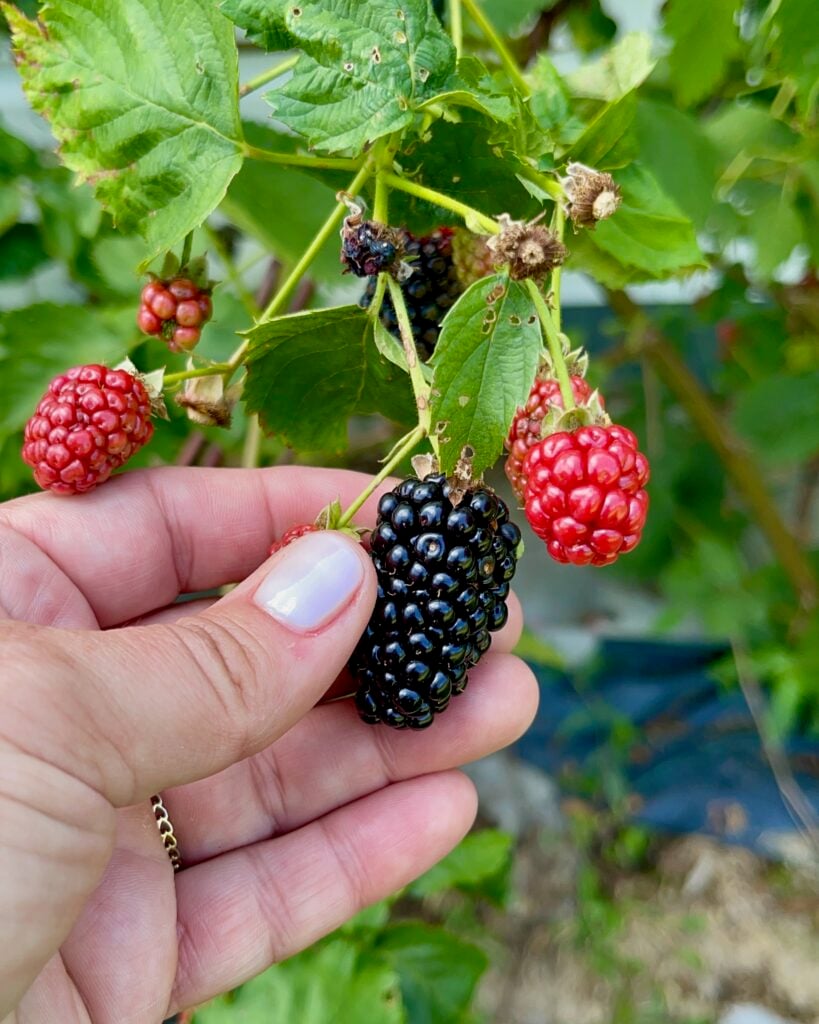
A crucial identifying mark is the center of the fruit. According to Mossy Oak’s identification guide, wild blackberries have a solid white core inside the fruit. If you pick a dark berry and it has a hollow center resembling a little cup, you likely found a black raspberry instead. Both are delicious and completely safe to eat, but it helps to know exactly what you are putting in your basket.
Never rely on technology alone for your safety. Modern phone apps help narrow things down in the woods. However, the Farmers Almanac notes that you should never use an app as your only source for safety-critical foraging decisions. Always cross-reference your findings with a reliable field guide before you eat any wild plant. For more tips on finding hidden food safely, read our guide on Dandelion and Other Wild Edible Plants.
Your Wild Berry Foraging Guide: Timing and Gear
The season peaks from late July through August in most of the United States. You will get the sweetest harvest if you pick on a dry, sunny day. Head out early in the morning when the berries are freshest and the intense summer heat has not yet made them soft.
Always make sure you have permission to be on the land. Foraging on private property without asking is a major mistake, and many public parks have specific regulations about harvesting plants. You also want to leave plenty of berries behind for the local wildlife that rely on these dense thickets for food.
When you find an untouched patch, tread carefully. Blackberry canes are notorious for sharp thorns that easily tear through thin clothing. Wear long sleeves, sturdy pants, and closed-toe shoes. Bring a wide container for your harvest rather than a tall one. If you stack soft fruit too high in a deep bucket, the sheer weight will crush the berries at the bottom into a soggy mush. Spread your harvest out in wide, shallow baskets to keep the fruit intact.
How to Store and Use Your Summer Harvest
Get your berries into your refrigerator or freezer as quickly as possible. Wild fruit does not have the artificial shelf life of grocery store produce. Do not wash your berries until right before you plan to eat them, as excess moisture encourages rapid mold growth.
When you are ready to bake or snack, give the fruit a gentle rinse in a colander under cold water. I love using fresh blackberries in low-carb desserts because their natural tartness perfectly balances out the sweetness of keto-friendly sweeteners. They make a fantastic addition to our Grain Free Triple Berry Tartlets, adding a rich pop of color and flavor. You can even toss a handful into a Chopped Blueberry Kale Quinoa Salad for an unexpected sweet twist.
If you pick more than you can eat in a few days, freezing is your best option. Freezing your extra blackberries in a single layer on a flat baking sheet before moving them to a storage bag ensures you have perfectly separated berries all winter long.
FAQ
Are Wild Blackberries Safe to Eat Raw?
Yes. As long as you positively identify the plant and harvest from an area free of pesticides and road runoff, wild blackberries are completely safe to eat raw. Just give them a gentle wash in cold water first.
How Can You Tell When a Wild Blackberry Is Ripe?
A ripe wild blackberry is plump, deep black, and slightly shiny. It should practically fall off the stem into your hand when you touch it gently. If it resists a light pull, leave it on the cane to sweeten for another day.
Do Wild Blackberries Have Poisonous Look-Alikes?
There are very few toxic berries that closely resemble wild blackberries in North America. The most common mix-ups happen with wild black raspberries or dewberries. Both of these alternatives are completely safe and delicious to eat.