Hen of the Woods vs Maitake: Are They the Same Mushroom?
Hen of the woods vs maitake is not a comparison of two mushrooms. Both names belong to one species, Grifola frondosa, a polypore that grows in rosette-shaped clusters at the base of oak trees. Hen of the woods is the common English name. Maitake is the Japanese name, used widely in supplement markets and Asian grocery stores.
Important Foraging Safety Notice
Foraging mistakes can cause serious illness or death. This post shares educational information and personal experience. It does not identify your finds or confirm they are safe to eat.
You are responsible for what you harvest, prepare, eat, and serve. Have all wild foods identified and confirmed edible by a qualified local expert before consuming them. Never eat anything you cannot reliably identify.
Read the full Foraging Safety & Disclaimer before using this post.
Key takeaways:
- Hen of the woods and maitake are the same mushroom, Grifola frondosa.
- Other names for it include ram’s head and sheep’s head.
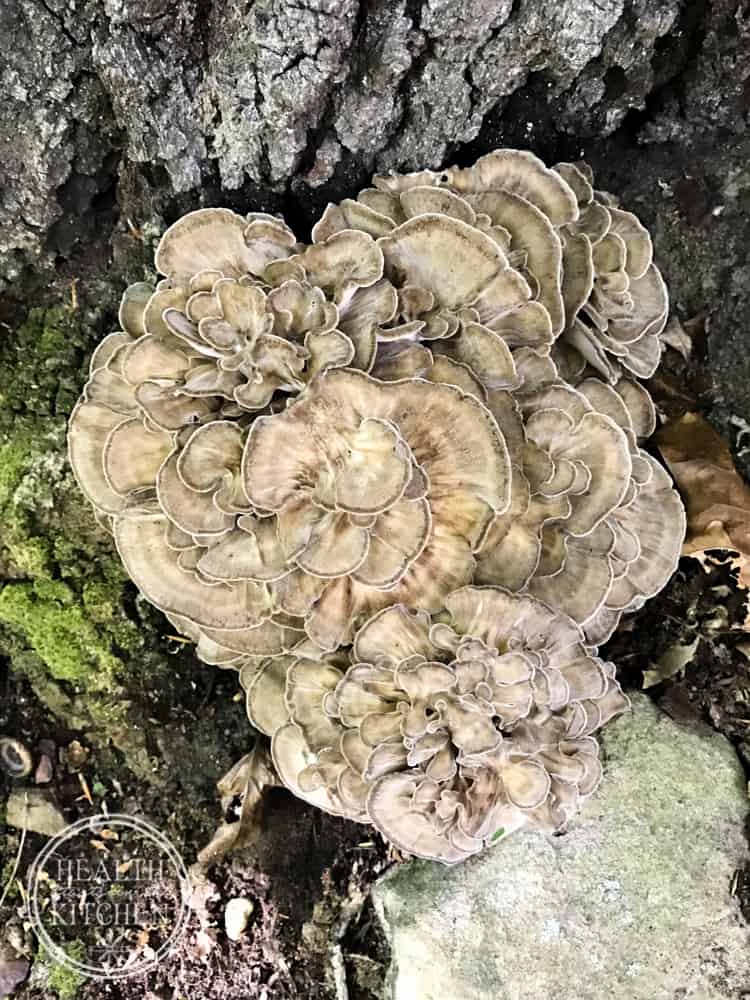
- It grows as a cluster of grayish-brown, fan-shaped caps at the base of oak trees.
- Its main lookalike, the black-staining polypore, bruises black. Hen of the woods does not.
- Fall is the main season to find it across most of its North American range.
Hen of the Woods vs Maitake: One Mushroom, Several Names
One species carries both names, plus a few more. Grifola frondosa is a polypore that grows at the base of old oaks or maples. English speakers know it as hen-of-the-woods, sheep’s head, or ram’s head. The Japanese call it maitake.
The Japanese name sticks in the US supplement market. It also shows up in many Asian grocery stores, where it is usually sold as maitake rather than hen of the woods. The name itself has a story: it means “dancing mushroom,” a nod to how foragers reportedly celebrated finding it. So when a recipe calls for maitake and a foraging guide calls for hen of the woods, they mean the same ingredient.
| Name | Origin | Where You’ll See It |
|---|---|---|
| Hen of the Woods | English, describes its ruffled, hen-like look | Foraging guides, farmers markets, US recipes |
| Maitake | Japanese, means “dancing mushroom” | Supplement labels, Asian grocery stores, mycology research |
| Ram’s Head / Sheep’s Head | English, describes the clustered shape | Regional foraging terms, older field guides |
No matter which label you see, the identification checklist below is the same.
Hen of the Woods Identification: What to Look For
A hen of the woods is a cluster, not a single cap. It forms a large bunch of grayish-brown, fan- or spoon-shaped fronds attached to one branched, central stem. Each frond is fan-shaped or deltoid, dark to pale gray-brown, often with faint concentric zones, and has a wavy margin.
Flip a frond over and you will not find gills. This mushroom is a polypore, so its spore surface is made of tiny pores instead. One useful identification clue is location: hen of the woods grows near the base of oaks, where it causes a slow butt rot in the tree.
Clusters can return near the same tree in later years, which is why keeping seasonal foraging notes can be useful. Recurrence and habitat are clues, not proof of identity.
Maitake Mushroom Identification Beyond the Name
Looking under the Japanese name turns up the same checklist. Color is your first clue. The caps run grayish to brown on top and are paler and porous underneath. Texture is the second clue: young specimens are tender, while older clusters toughen as they mature, so harvest hen of the woods while it is young.
Size can be dramatic. One cluster found in New Hampshire measured 24 inches across. Most specimens you find foraging will be smaller. Even a modest cluster can still fill a basket from a single find.
Foraging Hen of the Woods: Lookalikes and Timing
Before you fill that basket, compare your find with the black-staining polypore. Its tissue can bruise dark, while hen of the woods generally does not. Check cap shape, pore surface, branching structure, host tree and regional references together; a bruise test alone does not identify a mushroom.
Do not rely on shape alone to tell the two apart, since both grow in similar rosettes at the base of trees. Use the full set of features in our wild mushroom safety guide and have uncertain finds checked by a qualified local expert.
One more mix-up is common by name alone, not by appearance. Chicken of the woods is a bright orange or yellow shelf fungus. People often confuse the two by name. They look nothing alike once you see them side by side.
Season narrows the search further. Hen of the woods typically fruits from late summer into early autumn. In Pennsylvania and other oak-heavy regions, fall is the prime hunting window. If you are new to foraging wild mushrooms, bring a field guide, check your find against more than one source, and never eat anything you cannot confidently identify.
What to Do Once You’ve Confirmed Your Find?
Once a qualified expert has confirmed your identification, harvest fresh, tender fronds without digging into the soil or damaging the tree. Leave old or deteriorating specimens behind.
Clean the fronds with care. Maitake grows around sticks, twigs, and leaf litter. Plan to spend time pulling the fronds apart and checking for forest debris before it ends up in your cooking pot.
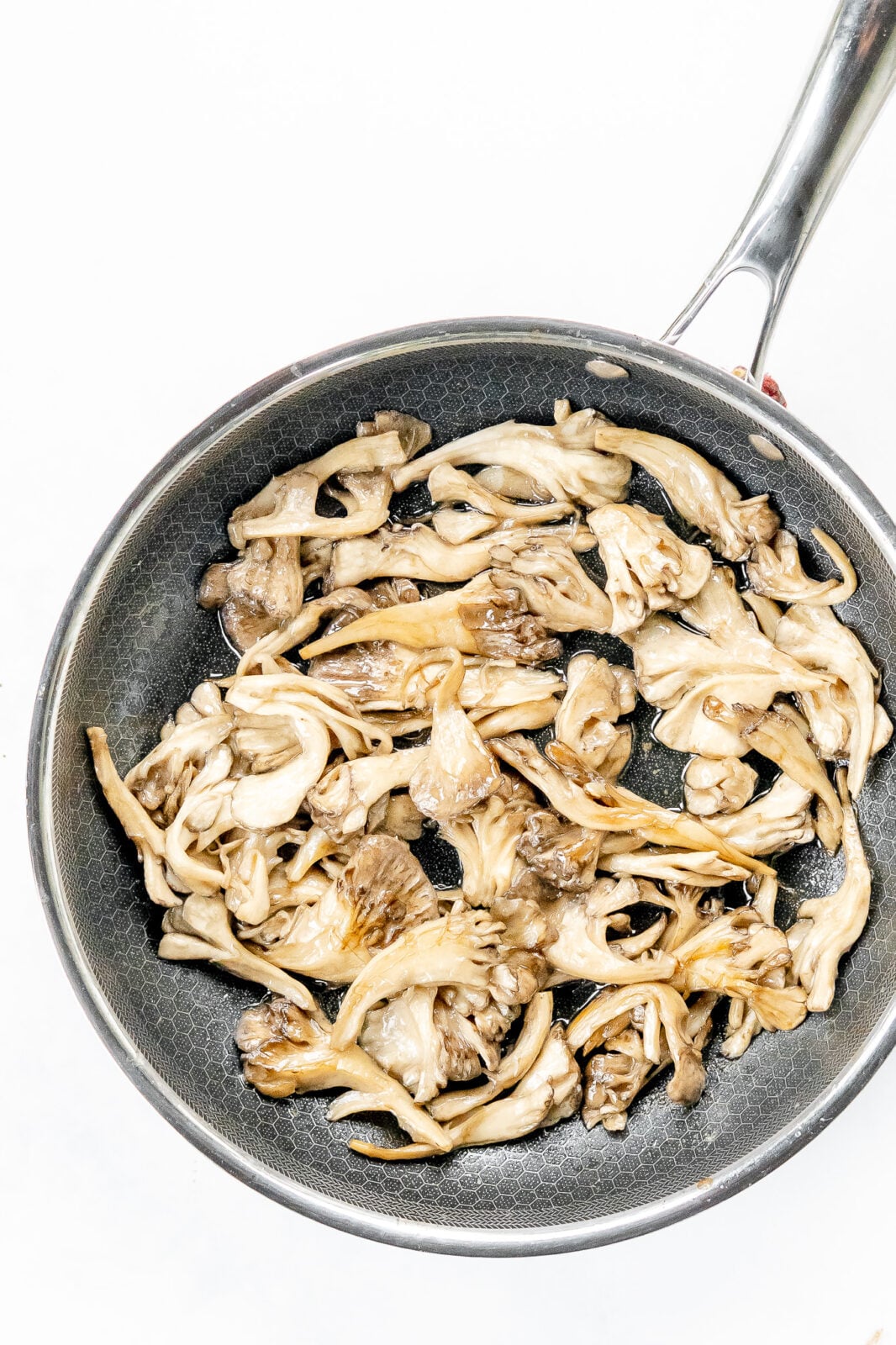
From there, cook the mushrooms thoroughly. For a first dish, the sautéed maitake recipe is a simple place to start. Freezing or dehydrating are options for surplus mushrooms. Penn State Extension advises against canning wild mushrooms; do not use cultivated-mushroom canning directions for a wild harvest.
FAQ
Is hen of the woods the same as maitake mushroom?
Yes. Both names describe Grifola frondosa, a soft-fleshed polypore with smoky brown, wavy caps arranged in large clusters around a single branched stem.
What are the other common names for Grifola frondosa?
Beyond hen of the woods and maitake, common names for Grifola frondosa include ram’s head and sheep’s head mushroom, both describing the shape of the clustered fronds.
How do I know I haven’t found a black-staining polypore instead?
The black-staining polypore can darken where handled, while hen of the woods generally does not. Staining is only one clue: compare the whole specimen with reliable regional references and seek expert confirmation before eating it.
Where and when does hen of the woods grow?
It fruits at the base of hardwood trees, mainly oaks, almost always in a rosette pattern touching the trunk. Late summer through fall is the main season across most of its range.
Can chicken of the woods and hen of the woods be confused?
Only by name, not by sight. Chicken of the woods is a bright orange or yellow shelf fungus growing directly on wood. Hen of the woods is gray-brown and grows in a ground-level rosette at the tree’s base.
This article offers general foraging and food information, not medical advice. Always have a wild mushroom confirmed by an experienced forager or mycologist before you eat it.