How to Identify Puffball Mushrooms Before Cooking
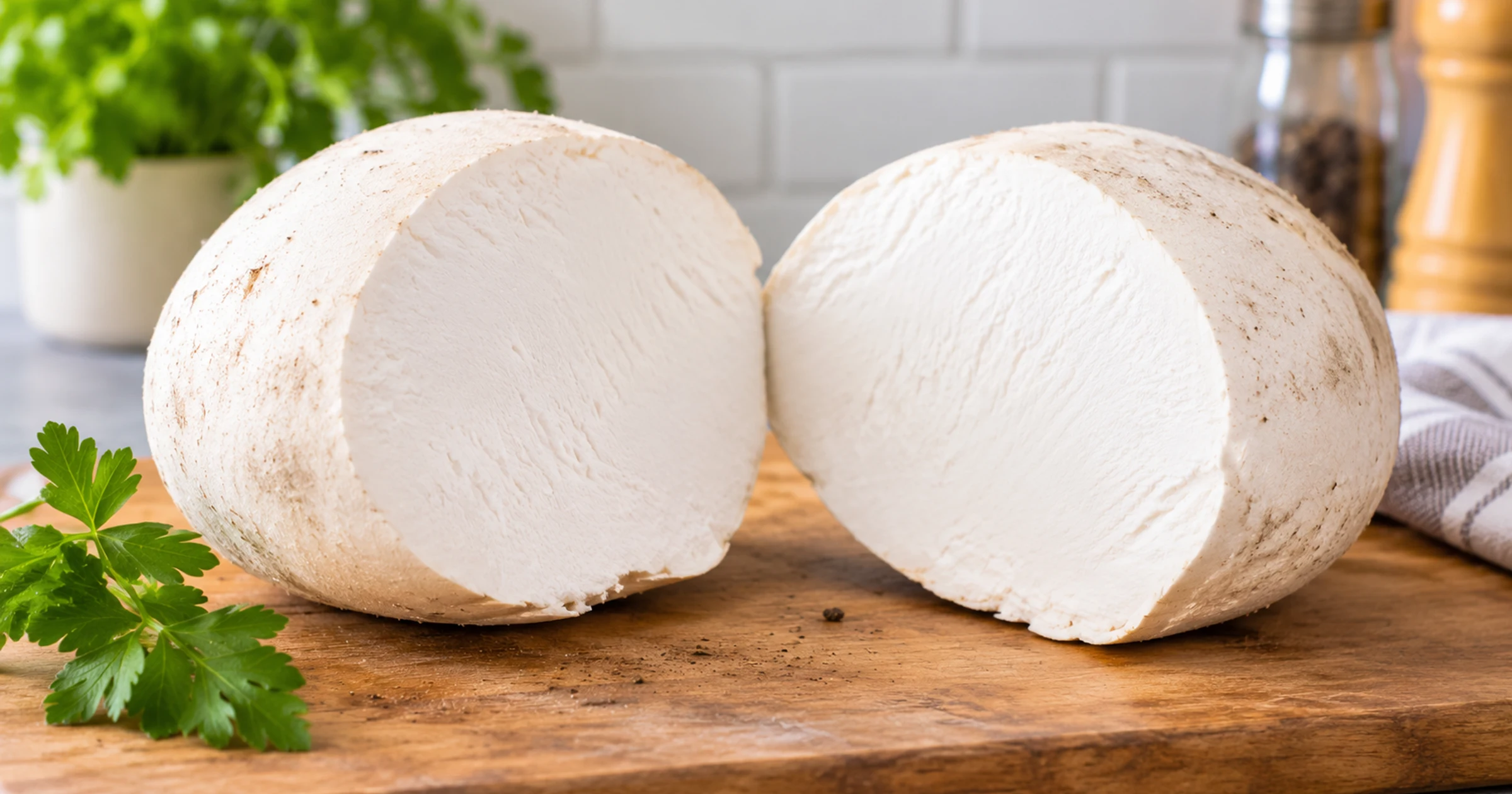
Knowing how to identify puffball mushrooms starts with one cut: slice the mushroom in half from top to bottom. Check that the inside is uniformly white, soft, and marshmallow-like, with no outline of a cap, stem, or gills. Any dark spots, a developing mushroom shape, or a tough rubbery texture mean you should set it aside. This cut is essential, but it does not replace identifying the species with several features and expert confirmation.
Important Foraging Safety Notice
Foraging mistakes can cause serious illness or death. This post shares educational information and personal experience. It does not identify your finds or confirm they are safe to eat.
You are responsible for what you harvest, prepare, eat, and serve. Have all wild foods identified and confirmed edible by a qualified local expert before consuming them. Never eat anything you cannot reliably identify.
Read the full Foraging Safety & Disclaimer before using this post.
Key takeaways:
- Edible puffball species must be correctly identified and fresh, with uniformly white flesh and no developing cap or gills inside.
- Cut every puffball in half vertically before eating, no exceptions.
- Young Amanita mushrooms and earthballs (Scleroderma) are the two look-alikes to rule out.
- Any yellow, brown, purple, or black coloring inside means skip it.
- Giant puffballs grow as large as a volleyball, but even small puffballs need the same inspection.
How to Identify Puffball Mushrooms by Shape and Texture?
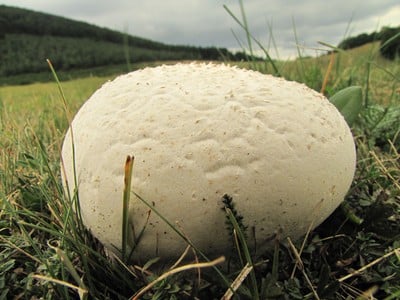
Puffball mushroom identification starts with shape, not size. A puffball is round and ball-shaped, and it releases spores through an opening at the top instead of from gills under a cap. Several groups of fungi are called puffballs, so the round shape alone is not an identification. When young and edible, they have a smooth, white interior without visible gills, stems, or caps. They grow on the ground, alone or in clusters, in fields, meadows, and along forest edges.
Puffballs range from small, golf-ball-sized species to the giant puffball. Size alone never confirms the species. Every puffball, large or small, gets the same check before it goes near a cutting board.
How Do You Identify Edible Puffballs?
You identify an edible puffball by confirming it has no gills, cap, or stem. Then you slice it open to check for a solid white interior. Look for an interior without developing gills, a cap or a distinct stem; external texture varies by species. Work through these steps in order:
- Inspect the outside first. Turn the mushroom over and look at the point where it attached to the ground. A puffball has no stalk running through it, just a smooth or slightly textured surface.
- Check for warts or spines. Many common puffballs have a gem-studded or slightly spiny surface. Giant puffballs are usually smoother.
- Slice it in half, top to bottom. Cut each one open vertically, top to bottom, and confirm it is one solid, soft, white mass inside with no outline. This is the step that matters most.
- Look for an outline. A faint shape of a cap, gills, or a stem inside means you do not have a puffball. Put it down.
- Check the color. The flesh should be pure white from edge to center. Any yellow, green, brown, or purple tinge means the mushroom is past its edible window, or is not a puffball at all.
- Test the texture. A young Scleroderma looks round and white inside like a puffball, but the flesh is hard. The flesh of a true puffball is soft, almost like a marshmallow.
Passing these checks does not by itself establish that a mushroom is safe to eat. Confirm the species with a qualified local expert, then follow the wild mushroom safety and cooking guidance.
Puffball Mushroom Safety: What to Check Before Eating
Puffball mushroom safety comes down to two look-alikes and one rule: never skip the cut test. The first danger is young Amanita species, including the death cap and the destroying angel, which can resemble puffballs before their caps open. Eating one by mistake can be fatal. The second group, earthballs, have a thick, rubbery skin and a dark, granular interior. They lack the soft, marshmallow-like consistency of a true puffball.
Never eat a puffball-shaped mushroom without cutting it open first, even when you feel confident about the species. A young Amanita button looks convincingly round and white from the outside. Cutting every specimen is a required check, alongside complete species identification.
Inspect every specimen individually, even when mushrooms grow close together. Keep children and pets away from unidentified mushrooms and avoid breathing spore clouds from mature puffballs. Discard specimens that are yellowing, brown, powdery or deteriorating.
Puffball Look-Alikes: Amanita and Earthball Compared
Two mushrooms need ruling out before you eat a puffball: young Amanita species and earthballs. A vertical cut can reveal important warning signs, but young earthballs may still be pale inside. A cap or stem forming inside means it is not a true puffball; that is the Amanita tell. Earthballs give a different signal: a dark, hard interior rather than a developing mushroom shape.
| Feature | True Puffball | Young Amanita | Earthball (Scleroderma) |
|---|---|---|---|
| Interior color | Solid white | White, but shows an outline | May be pale when very young; later purple to black |
| Texture | Soft, marshmallow-like | Firmer, shows cap/gill shape | Hard, rubbery |
| Outer skin | Thin, smooth or slightly warty | Smooth, egg-like | Thick, tough, almost crusty |
| Growth habit | Ground, alone or in groups | Ground, often near trees | Ground, in similar spots to puffballs |
| Danger level | Only correctly identified edible species in fresh condition | Can be fatal | Causes gastrointestinal distress |
Eating a death cap or destroying angel while it is still young can be fatal, according to mycological identification guides. That is why foragers treat the vertical cut as mandatory, not optional, in guides like Eat The Weeds. If the interior shows any hint of a forming mushroom, or anything but solid white, leave it in the woods.
Is a Giant Puffball Edible, and How Do You Confirm It?
A correctly identified giant puffball should be fresh and uniformly white inside before cooking. The cut test alone does not establish identity. Check for solid white flesh, soft texture, and no outline of a cap or stem. According to WildBounds’ foraging guide, several puffball species, including the giant puffball, grow wild and are sought by foragers specifically while immature and non-sporing. A giant puffball that starts turning yellow or developing a powdery texture inside has moved past the edible stage. It is not toxic in the way a look-alike is, but it no longer tastes good.
After an expert has confirmed an edible puffball species and every specimen has been checked, trim away any flesh that touched the ground. Plan to cook it the same day or soon after. Puffballs do not keep as long as firmer mushrooms once cut, and their texture changes fast. A single giant puffball can feed a group, so there is rarely a reason to harvest more than you will use. Knowing how to identify puffball mushrooms before you ever pick up a knife saves you this guesswork in the field.
Skip any puffball with a tough or leathery skin, a color other than white inside, or any trace of a developing mushroom shape. When even one of those signs shows up, treat it as a look-alike, not a puffball having an off day. For a confirmed find, the puffball mushroom recipes guide covers cleaning, cooking, and storage. The giant puffball parmesan recipe is a simple way to use a large one. Find other seasonal identification guides in the foraging hub.
FAQ
How can you tell a giant puffball from a poisonous look-alike?
Cut the giant puffball in half from top to bottom. A true giant puffball is solid white inside with no outline of a cap or stem. Earthballs can be pale when very young, and young Amanitas may show a developing mushroom shape. Have the whole specimen identified; a white interior alone is not proof of edibility.
Is it safe to eat a puffball mushroom that is slightly yellow inside?
No. A puffball should be pure white inside to be edible. Yellow, green, or brown coloring means the mushroom has started producing spores and has passed the point of being good to eat.
Do puffball mushrooms have any poisonous look-alikes?
Yes, two matter most. Earthballs (Scleroderma) have a thick, rubbery skin and a dark, granular interior. Young Amanita mushrooms, including the death cap, can resemble puffballs before their caps open.
Can you identify a puffball mushroom without cutting it open?
Not reliably. The outside of a young Amanita button can look almost identical to a puffball. Cutting it in half to check for a solid white interior with no shape inside is the step every reliable identification method relies on.
This article is general foraging information, not medical advice, and does not replace in-person instruction from an experienced forager or a mycological society before you eat any wild mushroom.