Puffball Mushroom Recipes: Foraging, Cooking & Storage
If you’ve ever spotted a massive white ball in a field or meadow and wondered whether it was safe to eat, you’re already halfway to a gourmet wild mushroom dinner. Giant puffball mushrooms are one of the easiest and most rewarding wild edibles to forage. Once you know what to look for, puffball mushroom recipes can transform a late-summer hike into a kitchen triumph. The catch? You need to know exactly what you’re looking for, and what to avoid.
Important Foraging Safety Notice
Foraging mistakes can cause serious illness or death. This post shares educational information and personal experience. It does not identify your finds or confirm they are safe to eat.
You are responsible for what you harvest, prepare, eat, and serve. Have all wild foods identified and confirmed edible by a qualified local expert before consuming them. Never eat anything you cannot reliably identify.
Read the full Foraging Safety & Disclaimer before using this post.
The short version: Puffball mushrooms are choice edibles with white, firm, uniform interiors and no gills or stem. They can be approachable foragers’ mushrooms, but immature Amanita mushrooms—including deadly species—can resemble small puffballs, so every specimen must be cut open and checked carefully. Air fry or pan-fry them breaded for a crispy, healthy snack, or use them in stews and fritters. Forage in late summer through mid-fall, store in the fridge for up to 5 days, and always cut vertically to inspect the entire interior before cooking.
This guide belongs with my foraging hub, fall foraging guide, and full wild mushroom recipe collection.
What Are Puffball Mushrooms?
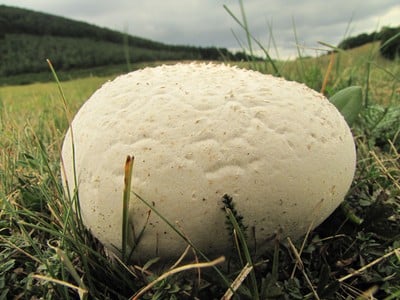
Giant puffballs (Calvatia gigantea) are among the most distinctive mushrooms you’ll ever encounter. They’re whitish, globe-shaped fungi ranging from softball to beach ball size, with short, root-like mycelial fibers anchoring them to the ground. Unlike typical mushrooms with stems, caps, and gills, puffballs are entirely solid. When young and choice for eating, the entire interior (called the gleba) is completely white and firm, almost like tofu.
The texture is creamy and soft, often compared to a mushroom-flavored marshmallow with a delicate flavor. When you slice a fresh puffball and pan-fry or air-fry it breaded, the inside stays tender while the exterior turns golden and crispy. This makes puffball mushroom recipes incredibly versatile: they work as a substitute for chicken or veal in traditional preparations, and their mild flavor works well with all kinds of seasonings.
Their smooth white shape looks distinctive, but identification still deserves real care. Small, immature Amanita mushrooms can look like puffballs from the outside, and some Amanita species are deadly. Cutting every specimen vertically is non-negotiable.
Distinguishing Puffballs From Poisonous Lookalikes
Cut every puffball vertically from top to bottom before you cook it. The entire inside should be firm, plain, and pure white, with no outline of a cap, stem, gills, or any other structure. A developing mushroom shape inside can indicate an immature Amanita, including deadly species. Dark, purple, brown, yellow, soft, or powdery interiors are also a firm no.
Earthballs often have thick, warty skin and a dark interior, but outside texture alone is never enough. The Missouri Department of Conservation giant puffball guide has a clear safety overview. If anything about the identification is uncertain, leave it in the field. Never use an app or a photo as your only confirmation.
Puffball Mushroom Foraging Tips and Timing
Giant puffballs aren’t picky about habitat. You’ll find them in grasslands, meadows, fields, lawns, and deciduous forests. They’re saprotrophic fungi that decompose grass litter and detritus. They often appear in circular arrangements called “fairy rings,” which can offer several pounds of mushrooms at once.
Timing is everything. Look for puffballs from late summer through mid-fall, though they appear most reliably from September through October in North America. They fruit quickly after rain, so a wet spell followed by warm weather is your cue to scout favorite spots.
When you find one, resist the urge to grab it immediately. Kneel down and inspect the base. It should have root-like mycelial fibers, not a stem. Slice it vertically. If it passes the white, gilled-free interior test, harvest it. Use a knife rather than pulling, as this may damage the mycelium and prevent future flushes from the same patch.
Store fresh puffballs in the refrigerator in a paper bag for up to 5 days. They deteriorate quickly, so cook them within 2-3 days for best results. You can also slice and freeze them on a baking sheet before transferring to freezer bags, though texture suffers slightly.
How to Cook Puffball Mushrooms: Methods and Recipes
The beauty of puffball mushroom recipes is their simplicity. The flesh cooks quickly and absorbs flavors readily, making them ideal for straightforward preparations that let the delicate mushroom taste shine.
Air Fryer Puffball Mushrooms are the modern approach and our family’s favorite. Slice the cleaned puffball into half-inch-thick pieces. This thickness lets you see they’re white all the way through. Dredge each slice lightly in flour, dip in beaten egg, then coat in a mixture of panko breadcrumbs, grated Parmesan, garlic powder, and salt. Spray lightly with olive oil and air fry until golden and cooked through, checking early because machines and slice thicknesses vary. The result is tender inside, crispy outside, and far healthier than deep-fried versions because you’re using minimal oil.
For a Pan-Fried Puffball Parmesan, use the same breading approach but fry in a cast-iron skillet over medium heat with lard, palm oil, or another stable cooking fat until golden brown on both sides. Drain on a paper towel, then top with tomato sauce and melted mozzarella for a gluten-free, low-carb take on the classic chicken parmesan.
Puffballs in stews and soups work beautifully too. Cube the cleaned flesh and add it to any mushroom-forward soup or hearty stew in the last 10-15 minutes of cooking. They’re delicate and don’t need long cooking times.
The key across all methods: respect the texture. Don’t overcrowd the pan, don’t stir constantly, and don’t overcook. Puffballs are done when they’re just tender, not mushy.
Eating Puffballs Safely
Cook puffballs before eating, and try only a small serving the first time. Even correctly identified edible mushrooms can disagree with an individual stomach. Keep one uncooked specimen in the refrigerator for a day or two in case an expert needs to confirm what was eaten.
My favorite place to begin is this puffball mushroom parmesan. It shows exactly how well those big, clean slices stand in for eggplant.
FAQ
Can You Eat Puffball Mushrooms Raw?
No, puffballs should always be cooked. While they’re not poisonous raw, cooking improves digestibility and flavor.
How Long Do Fresh Puffball Mushrooms Last?
Store them in a paper bag in the refrigerator for up to 5 days. Eat them within 2-3 days for best texture and taste.
When Is the Best Time to Forage Puffball Mushrooms?
Late summer through mid-fall (September through October) is peak season in North America. They appear most reliably after rain followed by warm weather.
Can You Freeze Puffball Mushrooms?
Yes. Slice them, lay them flat on a baking sheet to freeze individually, then transfer to freezer bags. They’ll keep for several months, though texture softens slightly when thawed.
Start building a stockpile of wild mushroom recipes and foraging knowledge. We’ve tested these puffball mushroom recipes across our Pennsylvania homestead and share seasonal foraging guides and mushroom preparations throughout the year. Explore our full wild mushroom recipe collection to discover what’s in season near you and turn each harvest into a meal you’ll remember.