Surprising Pine Needle Tea Benefits
During winter, fresh garden produce is scarce. But the evergreen trees in your backyard hold a powerful nutritional secret. You might walk past them every day without realizing they are packed with vitamin C. Learning about pine needle tea benefits completely changed how I look at winter wellness on our six-acre Pennsylvania homestead.
Important safety note: Not every evergreen is safe for tea, and toxic yew can be deadly. Some pine species are also inappropriate during pregnancy. Do not identify a conifer from a photo, smell, or app alone; confirm the exact species with a qualified regional expert. Consult a clinician about pregnancy, health conditions, or medication interactions.
Foraging your own food connects you to nature. It also provides nutrients that store-bought groceries often lack. This simple brew is an incredible addition to your kitchen. It suits keto, gluten-free, or wild-food diets perfectly.
Key takeaways:
- Pine needle tea contains 5 times the concentration of vitamin C found in lemons.
- It supports respiratory health and acts as a natural immune booster.
- You must properly identify safe tree species, as some evergreens are toxic.
- Steeping fresh needles in hot water preserves the delicate vitamins.
What Is Pine Needle Tea?
Pine needle tea is a traditional foraged drink. You make it by steeping fresh or dried edible pine needles in hot water. Indigenous cultures have relied on this beverage for centuries. It provided essential nutrients during harsh winters when snow buried other food sources.
History shows just how powerful this simple brew can be. The Iroquois saved French explorer Jacques Cartier and his crew from scurvy. They prepared a nurturing tea made from local pine needles.
Today, making this tea is a rewarding way to practice sustainable living. It offers a pleasant, earthy flavor. It pairs wonderfully with a slice of lemon or a drop of raw honey.
Top Pine Needle Tea Benefits for Your Health
Adding wild foods to your diet introduces unique compounds. Cultivated plants rarely offer these specific benefits. Just as I value the digestive support of nigella seeds, I rely on pine needles for their specific medicinal properties.
Incredible vitamin C content. The most famous advantage of this wild brew is its high concentration of ascorbic acid. Research indicates that certain pine needles contain 5 times the concentration of vitamin C found in lemons. This makes it a fantastic, free resource for keeping your immune system strong.
Rich in antioxidants. Pine needles contain powerful antioxidants. These compounds help reduce free radicals in your body. Lowering oxidative stress can support overall wellness.
Respiratory relief. If you have a stubborn cough, the warm steam from pine tea supports respiratory health. It helps soothe irritated airways.
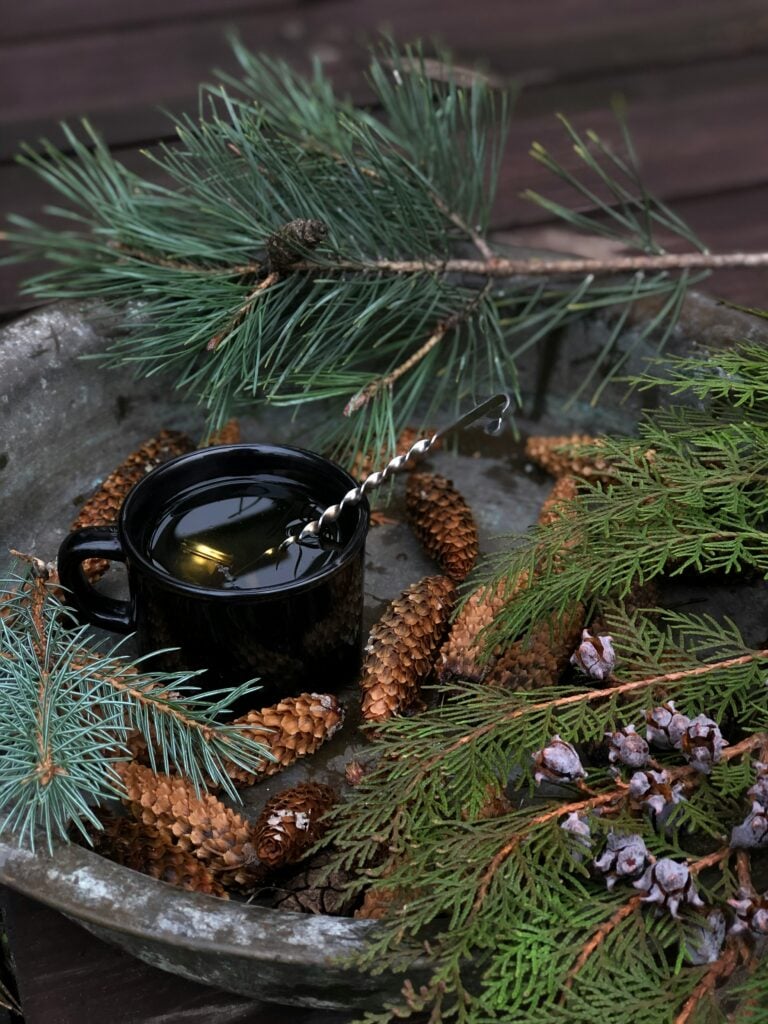
(Image: A steaming mug of pine needle tea on a wooden table surrounded by fresh pine branches – alt: ‘freshly brewed pine needle tea in a rustic mug’)
Foraging Pine Needles Safely
Before you run outside to harvest branches, you need to know exactly what you are picking. Not all evergreens are safe for human consumption. Just like foraging for dandelions and other wild edibles, proper identification is non-negotiable.
The safest and most commonly used species for tea include the Eastern White Pine, Noble Fir, and Douglas Fir. Eastern White Pine is my absolute favorite for tea. It has a mild, slightly sweet flavor.
You must strictly avoid toxic evergreens. The Yew tree is toxic and should never be used. Other species to avoid include the Ponderosa Pine and the Lodgepole Pine. They can also be toxic.
Always use a reliable plant identification guide. Consult a local foraging expert before harvesting. When foraging pine needles, look for bright green, fresh growth. Never harvest from trees near busy roads or areas sprayed with pesticides.
How to Make Pine Needle Tea at Home
Brewing this tea is incredibly simple. However, the technique matters. You want to extract the nutrients without destroying the vitamin C.
First, gather a small handful of fresh, safe pine needles. Wash them thoroughly under cold water. This removes any dust or debris. Next, carefully remove the brown papery sheaths at the base of the needles.
Roughly chop the needles into small pieces. This exposes more surface area. It allows the natural flavors and vitamins to release into the water. Place about two tablespoons of the chopped needles into a mug.
Bring a kettle of water to a boil. Let it sit for a minute off the heat before pouring. Pouring boiling water directly over the needles will destroy the vitamin C. Pour the hot water over the needles. Cover the mug with a saucer. Let it steep for 10 to 15 minutes.
Strain the needles out and enjoy your warm cup. I love serving it alongside savory baked goods like chanterelle herb biscuits with pine nuts. It makes for a fully foraged meal.
FAQ
What Are the Main Pine Needle Tea Benefits?
Pine needle tea is packed with vitamin C and supports a healthy immune system. It provides valuable antioxidants and supports respiratory health.
Can You Drink Pine Needle Tea Every Day?
Yes, you can safely drink a cup of properly identified pine needle tea at any time of day. It is a gentle herbal drink.
What Is the Best Pine Tree for Tea?
The Eastern White Pine is widely considered a great choice due to its excellent safety profile, high vitamin content, and pleasant flavor.
How Long Should I Steep Pine Needle Tea?
Steep the chopped needles in hot water for 10 to 15 minutes. Covering the cup while it steeps helps retain the heat.