Turkey Tail Mushroom Guide: Identification, Harvesting & Uses
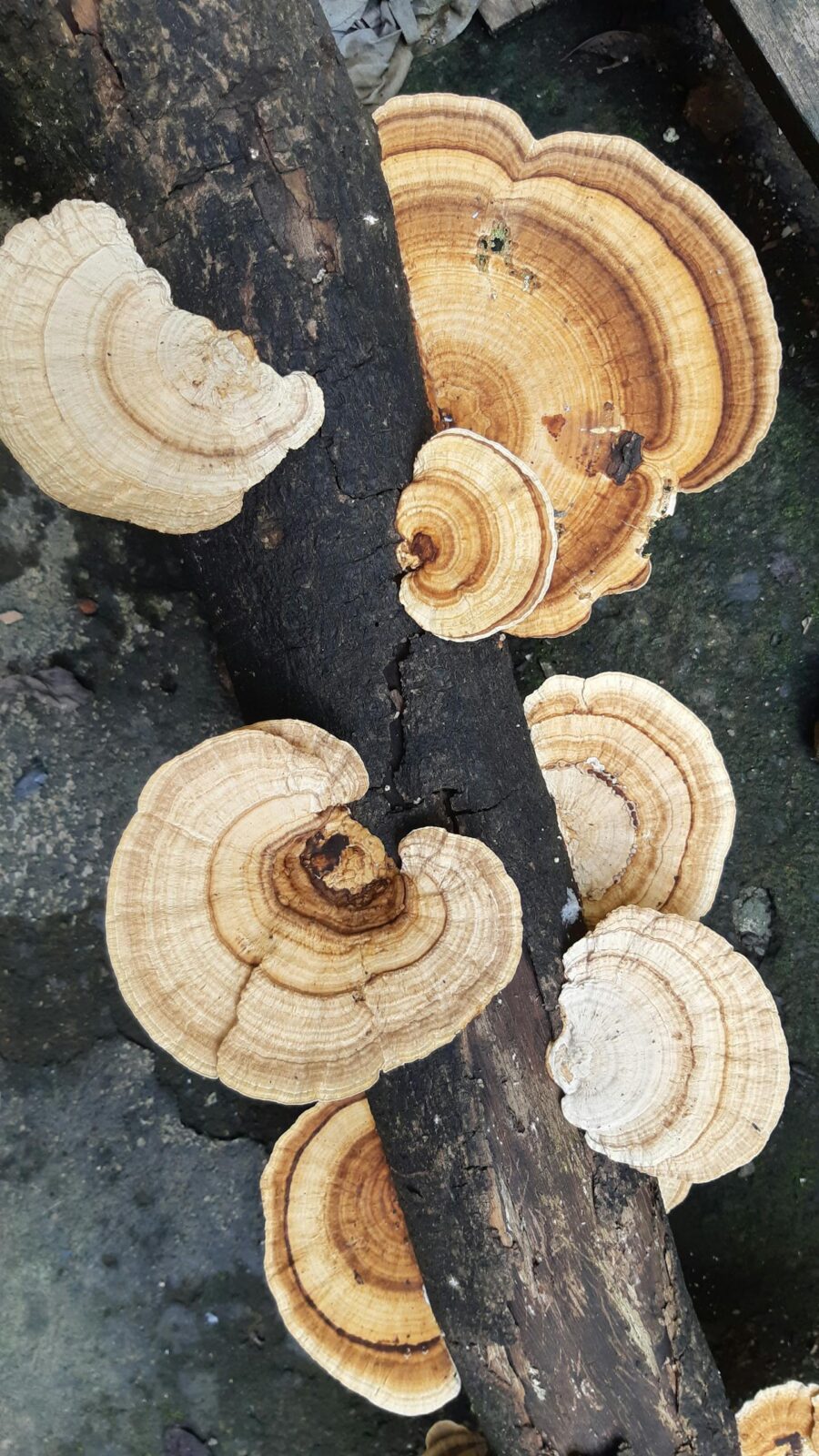
Turkey tail mushrooms are beautiful, common, and surprisingly easy to walk past once you stop looking only for mushrooms with caps and stems. They grow in thin, colorful shelves on dead wood and can show up during nearly every season.
I’ll be honest: turkey tail isn’t a mushroom I personally enjoy. It is thin, tough, and leathery—not something I want to sauté for dinner. But it still belongs in a complete foraging library because it is frequently mistaken for similar fungi, and many foragers want to know how to identify, harvest, dry, and use it.
Important: Never consume a wild mushroom based on a photograph or a single identifying feature. Use several characteristics together, consult current regional field guides, and have your identification confirmed by a qualified local expert when you are learning.
What Is a Turkey Tail Mushroom?
True turkey tail is Trametes versicolor, a widespread wood-decaying fungus found across North America and around the world. It grows on dead logs, stumps, fallen branches, and injured or dying wood—most often hardwood.
The name makes sense as soon as you see a good specimen. Each small fan has sharply defined bands of color that can include cream, tan, brown, rust, gray, blue-gray, or nearly black. Several fans commonly overlap in rows or rosettes, resembling a fanned-out turkey tail.
How to Identify Turkey Tail Mushrooms
Color alone is not enough. Turkey tail varies tremendously, and several unrelated fungi share the same striped, fan-shaped appearance. Look for the complete combination of features:
- Growth: Thin, shelf-like fans growing directly from dead or decaying wood, usually in overlapping clusters.
- Top: Clearly defined concentric bands with contrasting colors rather than one flat shade.
- Texture: The cap surface feels finely velvety or fuzzy, especially across the darker bands.
- Underside: White to cream-colored with many tiny, closely packed pores. Turkey tail does not have gills.
- Flesh: Very thin, flexible when fresh, and tough or leathery rather than tender.
- Stem: None. The fan attaches directly to the wood.
A hand lens can be helpful because the pores are extremely small. The pale pore surface is one of the most useful checks, but it should never be the only one.
Turkey Tail vs. False Turkey Tail
False turkey tail (Stereum species) is the lookalike beginners encounter most often. From above, it can have the same colorful bands and fan shape. Flip it over. True turkey tail has a pale surface covered in tiny pores; false turkey tail has a smooth underside without pores.
Other small polypores can also look similar. The open-access field guide The Turkey Tail Mushroom and Its Many Look-Alikes from Michigan Technological University is an especially useful visual reference. When the underside, texture, banding, or substrate does not fit, leave it in the woods.
When and Where to Find Turkey Tail
Turkey tail can be found year-round because its tough fruiting bodies persist much longer than delicate culinary mushrooms. In Pennsylvania, I most often notice fresh, colorful growth from late summer through fall, but mild winter days are also a good time to look for it on fallen hardwood.
Choose fresh-looking specimens with strong color, flexible edges, and a clean white or cream pore surface. Skip old, faded mushrooms with algae, insect damage, darkened undersides, or growth from contaminated areas. Harvest only what you will actually use and leave plenty in place to continue releasing spores.
How to Clean and Dry Turkey Tail
Trim away attached bark and tough debris, then use a soft brush to remove dirt. Avoid soaking the mushrooms unless necessary; all those thin layers hold water and become harder to dry thoroughly.
Cut or tear clean specimens into smaller pieces while they are still flexible. Dry them in a dehydrator on a low setting until completely crisp, then store them in a clearly labeled airtight jar away from heat, moisture, and direct light. Discard any dried mushrooms that develop condensation, mold, or an off odor.
Can You Eat Turkey Tail Mushrooms?
Turkey tail is not a culinary mushroom in the way that chanterelles, morels, or maitake are. The fruiting body is too thin and leathery to chew comfortably, even after cooking. People who use turkey tail generally prepare it as a long-simmered tea or broth, process it into an extract, or use a commercially prepared powder.
That distinction matters: identifying a mushroom in the woods is not the same as knowing whether a homemade preparation is appropriate for you. Turkey tail products can interact with medications or medical treatment, and supplements vary in quality. Talk with your physician or pharmacist before using it medicinally, especially if you are pregnant, nursing, immunocompromised, taking prescription medication, or receiving cancer treatment.
Turkey Tail Recipes and Preparations from Trusted Sources
Since turkey tail isn’t something I personally enjoy enough to develop recipes around, these are the outside resources I would use rather than pretending otherwise. Read each author’s full safety notes and instructions before beginning:
- Turkey Tail Tea and Broth from FreshCap Mushrooms — a straightforward overview of drying the mushrooms and making a long-simmered water preparation.
- Turkey Tail Mushroom Tincture from Practical Self Reliance — a detailed double-extraction method for readers specifically researching tinctures.
- How to Process and Consume Turkey Tail from Food Forest Living — covers cleaning, drying, tea, broth, powder, and tincture options in one place.
- Medicinal Mushroom Hot Chocolate from LearningHerbs — a more approachable use for purchased turkey tail powder blended with cacao and other mushroom powders.
I consider this a collection of ideas to research—not medical advice or an endorsement of a particular dose. Homemade tea, concentrated extracts, and standardized commercial products are not interchangeable.
What Does the Research Actually Say?
Turkey tail receives a great deal of attention because it contains compounds known as PSK and PSP. Research has examined standardized extracts, including PSK as an adjunct to conventional cancer treatment in Japan. That does not mean a cup of homemade tea treats cancer, and the U.S. Food and Drug Administration has not approved turkey tail or PSK as a cancer treatment.
For a careful, plain-language review of what has and has not been studied, read the National Cancer Institute’s medicinal mushroom summary. Anyone dealing with a medical condition should discuss mushroom supplements with their healthcare team rather than relying on internet claims.
The Bottom Line
Turkey tail earns its place in a foraging resource because it is widespread, visually distinctive, and commonly confused with lookalikes—not because every forager needs to bring it home. Learn to check the fuzzy, strongly banded cap, the thin leathery flesh, the dead-wood habitat, and especially the tiny pale pores underneath. If every feature does not agree, leave it where it is.
For more seasonal wild-food ideas, start with my complete foraging guide, browse what to forage in fall, or explore winter foraging in Pennsylvania.