Turkey Tail Mushroom Tea: How to Make It & What to Know
Turkey tail mushroom tea is made by simmering dried Trametes versicolor in water, then straining out the woody pieces. It is an earthy, mushroom-forward drink—not a sweet herbal tea, and definitely not a substitute for medical care.
Important Foraging Safety Notice
Foraging mistakes can cause serious illness or death. This post shares educational information and personal experience. It does not identify your finds or confirm they are safe to eat.
You are responsible for what you harvest, prepare, eat, and serve. Have all wild foods identified and confirmed edible by a qualified local expert before consuming them. Never eat anything you cannot reliably identify.
Read the full Foraging Safety & Disclaimer before using this post.
Turkey tail isn’t one of my personal favorites to drink. But it comes up often enough in foraging conversations that it deserves a practical explanation: what it is, how the tea is prepared and what the research does—and doesn’t—say.
The short version:
- Use correctly identified, clean turkey tail or a clearly labeled product from a reputable supplier.
- The method below uses 1 to 2 tablespoons of dried pieces per quart of water, simmered for 30 to 45 minutes.
- Research on prepared extracts does not establish the same benefits for homemade tea.
- There is no established medical dose for a home-brewed batch.
- Check with your healthcare team before using it for a health purpose, especially during cancer treatment or pregnancy.
What Is Turkey Tail Mushroom Tea?
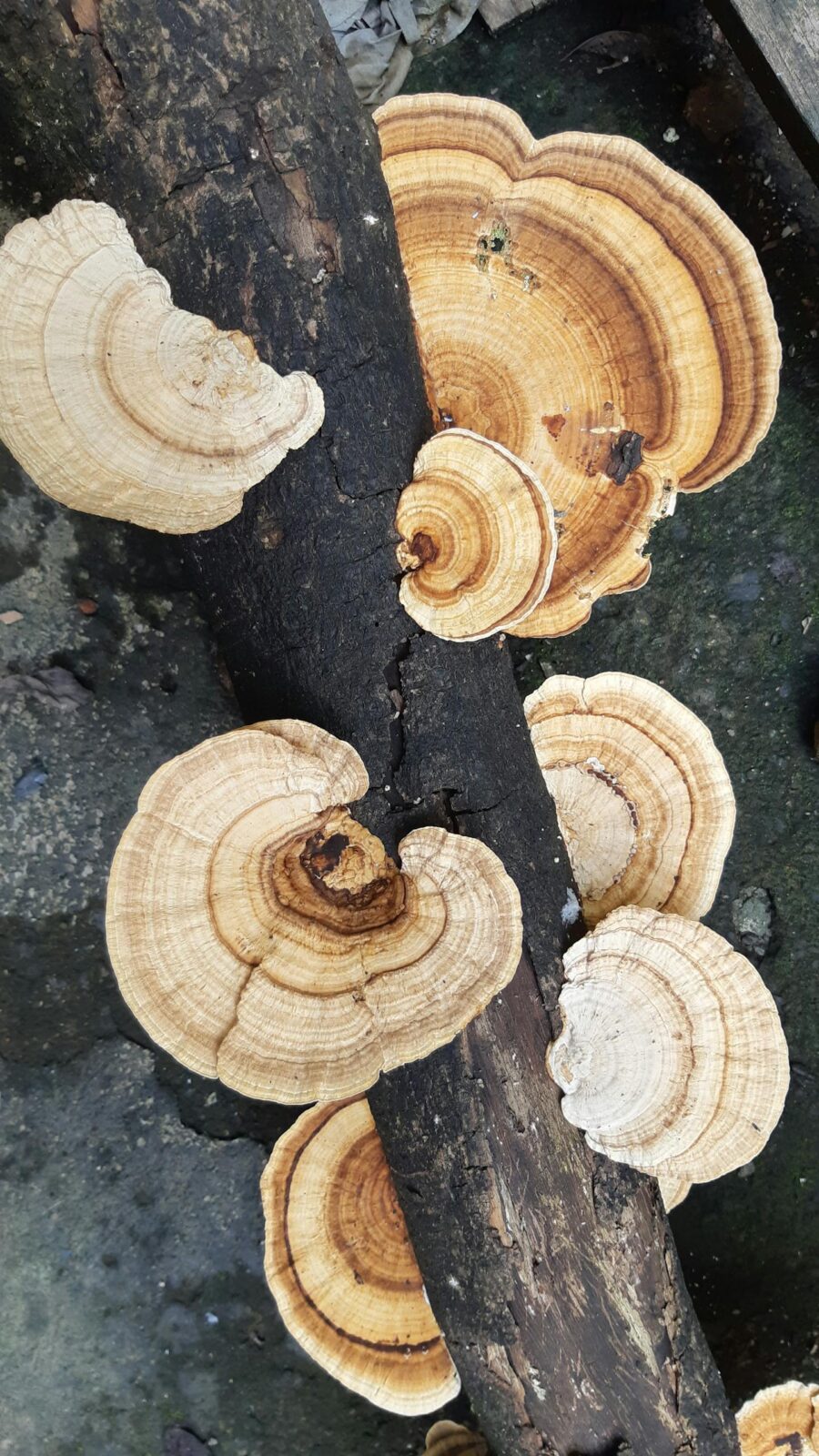
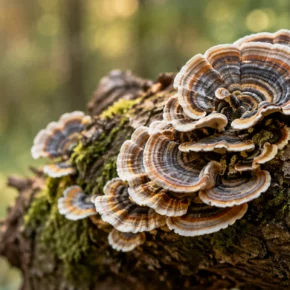
Turkey tail grows in thin, overlapping brackets with bands of color across the cap. Unlike a tender mushroom you’d sauté in butter, its flesh is tough and leathery. For tea, the pieces are simmered in water and strained out rather than eaten.
The scientific name is Trametes versicolor; older references may use Coriolus versicolor. The common name comes from its resemblance to a turkey’s fanned tail. A colorful bracket on a log is a starting point for identification, not a reason to put it in your mug.
What Do We Know About Turkey Tail Tea Benefits?
There is research worth reading, but the important distinction is which preparation was studied. The National Cancer Institute’s medicinal mushroom review discusses PSK, a prepared turkey tail extract used alongside standard cancer treatment in Japan, and other researched preparations. A pot of mushroom tea is not interchangeable with those products.
That research does not establish that this homemade tea prevents cancer, treats cancer, improves your gut health or “boosts” immunity. The FDA has not approved turkey tail or PSK as a cancer treatment in the United States. Don’t delay treatment or change medications to try a mushroom drink.
The practical benefit here is simply having a way to prepare a tough mushroom as a beverage if you enjoy it and it is appropriate for you. I wouldn’t promise a health result—or sell you a daily routine—based on the evidence for a different product.
How Do You Forage Turkey Tail Mushroom Safely?
Look at the underside, not just the pretty bands on top. Michael Kuo’s turkey tail identification key describes a finely hairy or velvety cap, thin leathery flesh and a pale underside with very small, visible pores. A hand lens can help you see those tiny openings.
False turkey tails in the Stereum group have a smooth underside rather than a true pore surface. Other Trametes species also have pores, so finding pores rules out some lookalikes but does not finish the identification.
Have the full specimen, substrate and local lookalikes checked by a qualified mushroom expert before drying or brewing a wild collection. Don’t assume every similar bracket is harmless. Avoid decaying, moldy or contaminated specimens. For anyone who doesn’t forage, a reputable supplier’s properly labeled dried turkey tail is an option; don’t substitute an unknown mushroom.
For a fuller comparison of the identifying features and lookalikes, read our turkey tail mushroom identification and harvesting guide.
Our foraging hub is the place to find the rest of our mushroom guides and seasonal resources.
How to Make Turkey Tail Tea at Home
The following is a brewing method, not a medical dose. Stick with dried pieces for this version so the ingredient and instructions stay consistent. If using a packaged product, follow its preparation directions.
- Combine 1 to 2 tablespoons of dried, crumbled turkey tail and 1 quart (4 cups) of water in a saucepan.
- Bring to a boil, then reduce to a gentle simmer.
- Simmer uncovered for 30 to 45 minutes. Keep an eye on the water level so the pan does not boil dry; the finished quantity depends on evaporation.
- Strain through a fine-mesh sieve. Discard the tough solids. Use a finer filter if small particles remain.
- Serve warm. Honey, lemon or ginger can soften the earthy flavor if you’d like.
It isn’t necessary to chase a very dark color or keep reusing the mushrooms to get “all the benefits.” Color doesn’t tell you the amount of any studied compound in your cup.
Turkey Tail Mushroom Tea
Ingredients
- 1 to 2 tablespoons dried turkey tail mushrooms clean and crumbled; correctly identified or from a reputable food supplier
- 4 cups water

Instructions
- Combine the dried mushroom pieces and water in a saucepan.
- Bring to a boil, then reduce the heat to a gentle simmer.
- Simmer uncovered for 30 to 45 minutes, watching the water level so the pan does not boil dry.
- Strain through a fine-mesh sieve and discard the tough solids. Use a finer filter if particles remain.
- Serve warm. Refrigerate leftovers promptly at 40°F or below and use within 3 to 4 days.
Notes
How to Store the Tea and Dried Mushrooms
Refrigerate leftover tea promptly in clean, covered containers at 40°F or below and use within 3 to 4 days. Don’t leave the pot on the counter all afternoon. The USDA’s leftover handling guidance explains prompt cooling and refrigeration. This is a refrigerated drink, not a shelf-stable canning recipe.
Keep fully dried mushrooms in a labeled, airtight container in a cool, dry place. Check for moisture or mold before use. Our foraged-food winter storage guide covers organizing and checking a dried pantry.
What About Other Turkey Tail Mushroom Uses?
You will see powders, capsules and tinctures sold alongside tea. Those products aren’t automatically equivalent to a home simmer, and a homemade alcohol extraction isn’t automatically shelf-stable or an established treatment.
If what you really want is a savory cooking broth, our wild mushroom broth recipe uses edible culinary mushrooms. Keep those ingredients distinct from a turkey tail preparation instead of treating every wild mushroom as interchangeable.
Who Should Check With a Healthcare Professional First?
Memorial Sloan Kettering’s turkey tail information advises talking with your healthcare team about mushroom products and notes that safety in pregnancy and breastfeeding is not established. Ask before using turkey tail if you’re pregnant, breastfeeding, taking medication, receiving cancer treatment or managing a medical condition. Don’t assume “natural” means appropriate for everyone.
Turkey Tail Tea FAQ
Does turkey tail mushroom tea taste good?
Expect an earthy, woodsy drink rather than something floral or naturally sweet. Lemon, ginger or a little honey may make it more appealing, but there’s no need to force yourself to drink something you dislike.
How much turkey tail tea should I drink per day?
There is no established therapeutic dose for homemade tea. This recipe is not a recommendation to drink it daily or to increase the amount over time. Ask your healthcare professional about your situation.
Can I substitute fresh turkey tail?
This method is written for dried, crumbled pieces. Fresh and dried mushrooms are not interchangeable by spoonful, so I haven’t given an untested fresh-to-dried conversion.
Does simmering make an unidentified mushroom safe?
No. Never brew an unidentified collection. Heat does not turn a poisonous or unsuitable mushroom into a safe tea.
Is turkey tail tea a cancer treatment?
No. Homemade tea is not the same preparation as the extracts discussed in clinical research and should not replace cancer care.