What to Forage in Winter in Pennsylvania
Winter foraging in Pennsylvania is quieter than the other seasons, but it is not empty. The leaves are down, the understory is open and things that disappear into summer greenery are suddenly easy to see. This is the season for chaga, pine needles, persistent fruits, cold-weather mushrooms and a great deal of scouting.
A realistic winter trip may not produce a full basket. That is perfectly normal. Some days the best thing you bring home is a better understanding of the woods and a list of places to revisit when spring arrives.
Is There Anything to Forage in Pennsylvania During Winter?
Yes, although the selection is smaller and conditions matter. Snow cover, ice and long stretches of hard freezes can limit what is accessible. A mild spell or thaw can reveal mushrooms on wood, evergreen needles and fruits that have persisted into winter.
Winter is also an excellent time to learn tree bark and branching patterns. Without leaves in the way, it is easier to study the shape of mature trees, spot old mushroom growth and mark locations for morels, ramps, berries or fall mushrooms later in the year.
Winter Foraging Safety
Cold weather adds hazards that are not part of a summer walk. Tell someone where you are going, watch the forecast, carry a charged phone and dress for conditions that may change quickly. Snow can hide holes, loose rocks, ice and fallen branches.
The identification rules do not change with the season. Never consume a plant or fungus based on one photograph. Confirm several identifying features with reliable references, know which lookalikes occur in your area and leave anything uncertain in the woods. Harvest only where you have permission and where collecting is legal.
Chaga
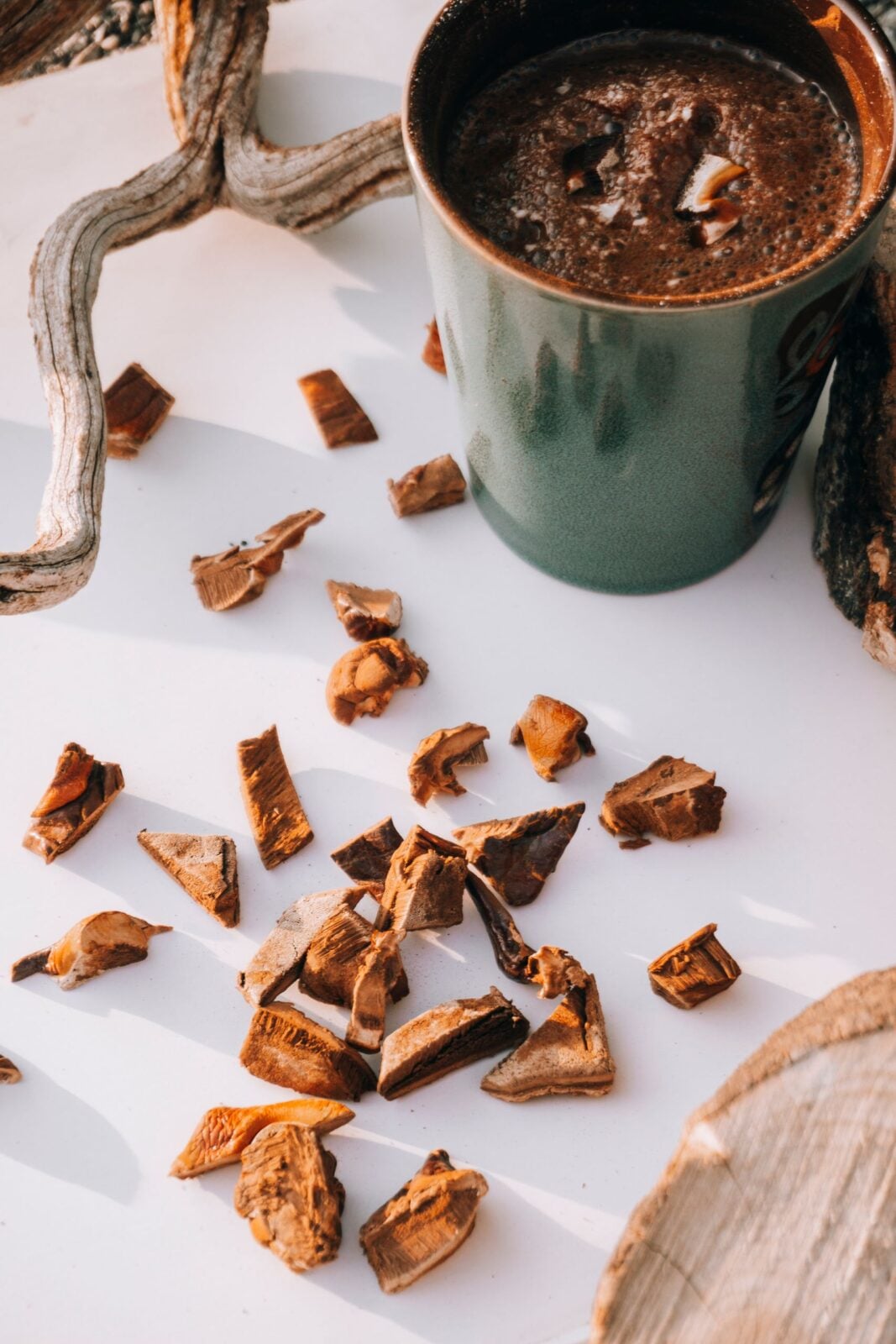
Chaga is easier to see after the leaves fall. It appears as a rough, blackened growth on living birch trees, but not every dark growth on a tree is chaga. Correctly identifying both the host tree and the chaga itself is essential.
Harvesting should be conservative. Removing every bit from a tree is unnecessary, and you should never damage the trunk while collecting it. Once you have a positively identified piece, my guide explains how to prepare chaga mushroom tea.
Pine Needles
Evergreen needles are available when most other plants have disappeared. Pine needles can be steeped for tea, but “evergreen” is not an identification. Some needle-bearing trees, including yew, are toxic. Learn the tree rather than assuming every green branch is suitable.
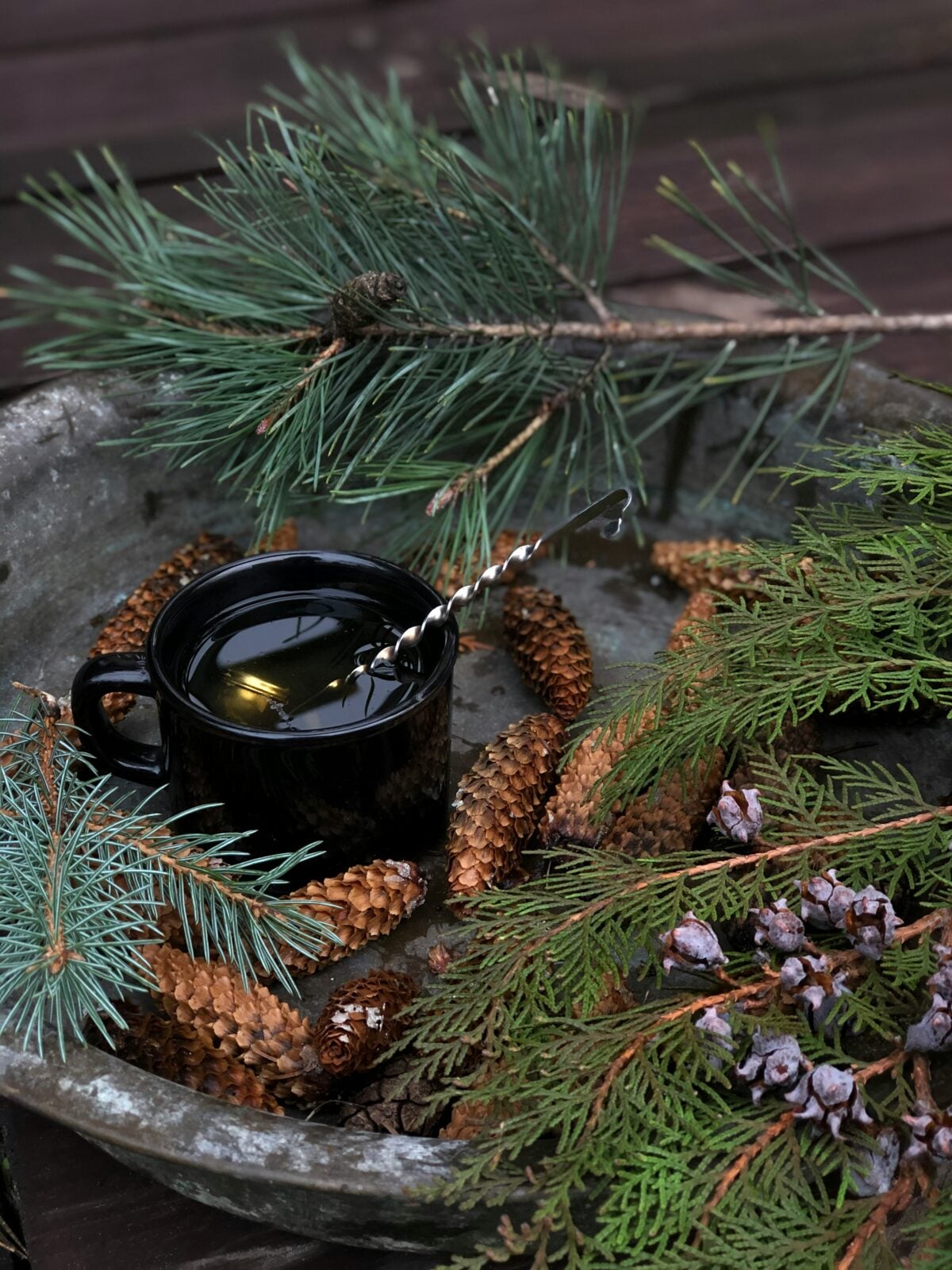
My article about pine needle tea and identification considerations is the best place to begin before gathering anything.
Cold-Weather Oyster Mushrooms
Oyster mushrooms may appear on dead or dying hardwood during mild winter periods, especially after rain or a thaw. They grow in overlapping clusters and do not have a typical central stem. Their color and size vary considerably.
Wild mushroom identification deserves more than a quick comparison to an image. Learn the host wood, gill attachment, growth pattern and possible lookalikes before considering them food. Older winter mushrooms can also be tough, waterlogged or well past their prime, so condition matters as much as identification.
Rose Hips and Other Persistent Fruit
Rose hips sometimes remain on wild rose canes after frost and into winter. Frost can soften them and concentrate their flavor, but quality varies. Avoid fruit growing beside heavily treated roadsides or in areas that may have been sprayed.
Other fruits occasionally persist, but a wrinkled berry in January is not automatically worth collecting. Check for mold, animal damage and deterioration. Winter is a good time to locate the plants; harvesting is worthwhile only when the fruit is both positively identified and in sound condition.
Wintergreen
Wintergreen remains low to the ground and keeps its leaves through winter, sometimes with red berries still attached. The leaves have a distinct minty scent when crushed. It is a plant to learn carefully because low evergreen groundcovers can look similar from a distance.
Use it sparingly and do not treat any wild plant as a substitute for medical care. The goal of a winter guide is to help you recognize seasonal foods, not turn the woods into a supplement cabinet.
Use Winter to Scout for Spring
Scouting may be the most productive kind of winter foraging. With the canopy open, you can study terrain and find features that are difficult to see in summer:
- Identify mature trees associated with spring and fall mushroom habitat.
- Look for old apple orchards, stream bottoms and disturbed ground worth revisiting.
- Mark healthy stands of berry canes and elderberry shrubs.
- Notice old maitake remains around large oaks.
- Record access points and property boundaries before the busy season.
- Photograph bark, buds and branching patterns to improve tree identification.
A location pin is useful, but so are notes about slope, sunlight, moisture and nearby trees. Those details make the record meaningful when the landscape looks completely different three months later.
Cook From the Pantry You Built Earlier
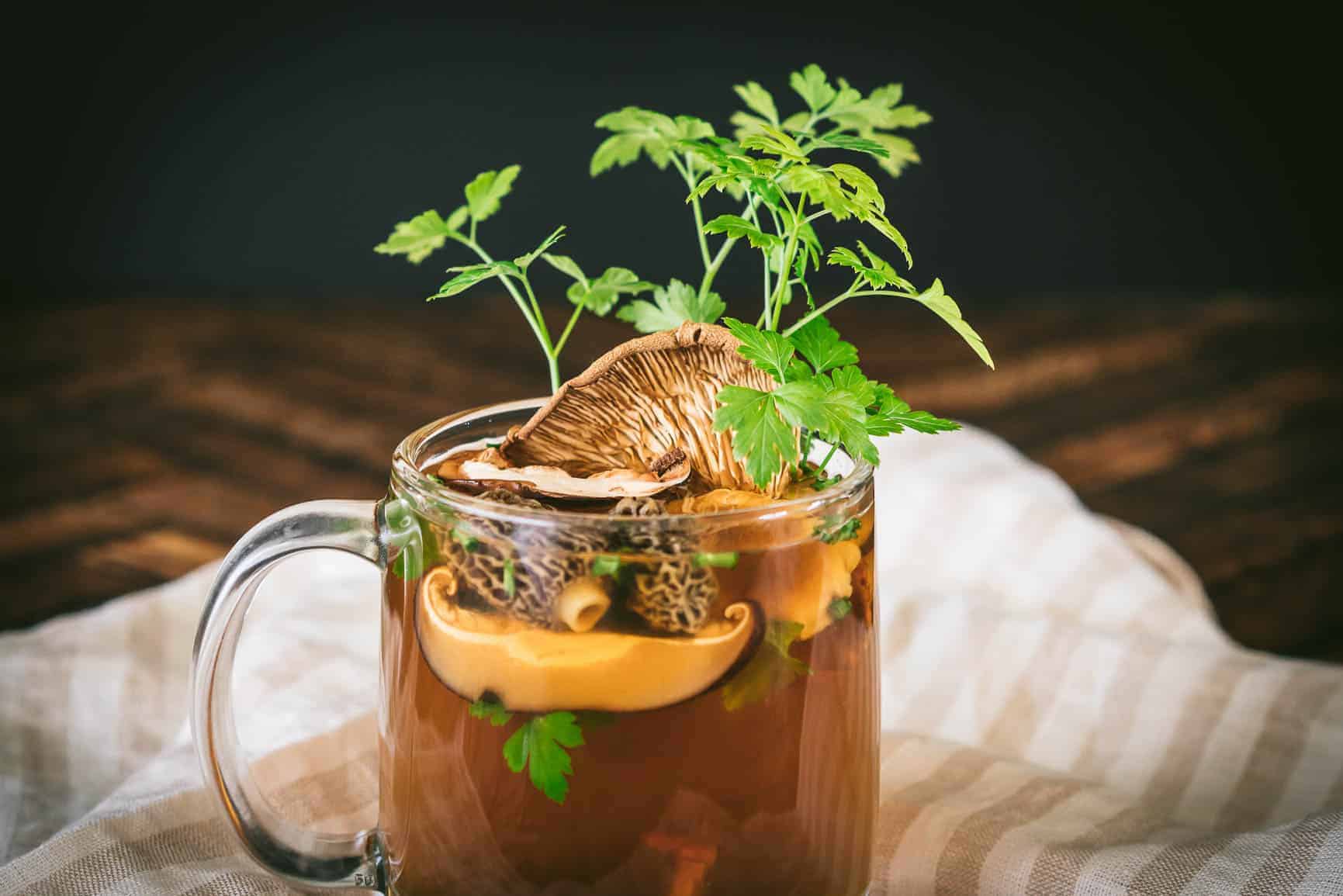
Winter is when the work of preserving wild foods pays off. Dried mushrooms can become wild mushroom broth or wild mushroom seasoned salt. Canned and pickled maitake, frozen berries, dried herbs and acorn flour keep the foraging season going even when snow covers the ground.
If you gather maitake in autumn, review my five ways to preserve maitake mushrooms before your next large harvest.
Continue Through the Seasons
When the first shoots appear, continue with the Pennsylvania spring foraging guide. Then move through the summer guide and fall guide. All four seasons, identification articles and wild-food recipes are organized in the Pennsylvania foraging hub.
Winter is also a good time to check what you preserved earlier in the year. Use my guide to storing dried mushrooms, herbs and berries to check for moisture, rotate older batches and choose suitable packaging.