Foraging Wild Hickory Nuts: Identification & Uses
Foraging wild hickory nuts is a good reason to slow down on an autumn walk. Shagbark and shellbark hickories produce sweet kernels worth the work of cracking, but start with a confirmed tree identification—not a taste test. Learn the leaves, bark, husks and nuts together, gather sound fallen nuts where harvesting is permitted, and check every kernel before it reaches the kitchen.
Important Foraging Safety Notice
Foraging mistakes can cause serious illness or death. This post shares educational information and personal experience. It does not identify your finds or confirm they are safe to eat.
You are responsible for what you harvest, prepare, eat, and serve. Have all wild foods identified and confirmed edible by a qualified local expert before consuming them. Never eat anything you cannot reliably identify.
Read the full Foraging Safety & Disclaimer before using this post.
Key takeaways:
- Confirm the tree and nut together; never identify a nut by tasting it.
- Focus on positively identified shagbark and shellbark hickories.
- Collect sound mature nuts promptly where harvesting is permitted.
- A float test is only a sorting aid, not a safety test.
- Remove husks, cure with airflow and inspect every kernel after cracking.
Identifying Shagbark Hickory Trees
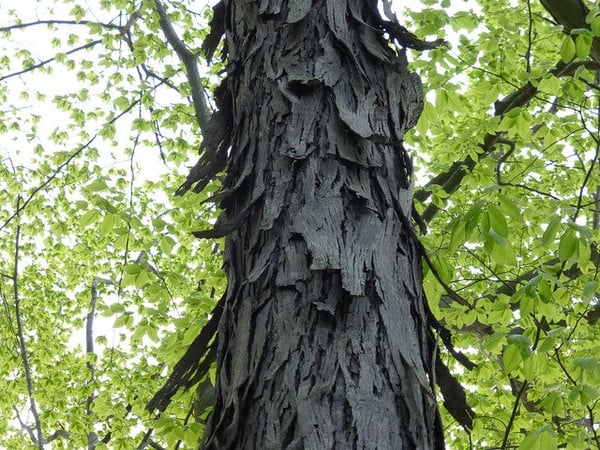
Mature shagbark hickory (Carya ovata) develops long plates of bark that curl away from the trunk. Young trees may not have that shaggy look. Its alternate compound leaves usually have five to seven finely toothed leaflets, with the terminal leaflet largest. The NC State shagbark hickory profile shows the combination of features to study. Bark alone is not an identification.
The tree grows across most of the eastern half of North America. If you are walking a forest with maples, oaks, and ash, scan any shaggy-barked tree you pass for nuts on the ground. Early fall is the season to start looking, before foraging wild hickory nuts turns into mostly empty husks and squirrel leftovers.
Identifying Hickory Nuts on the Ground
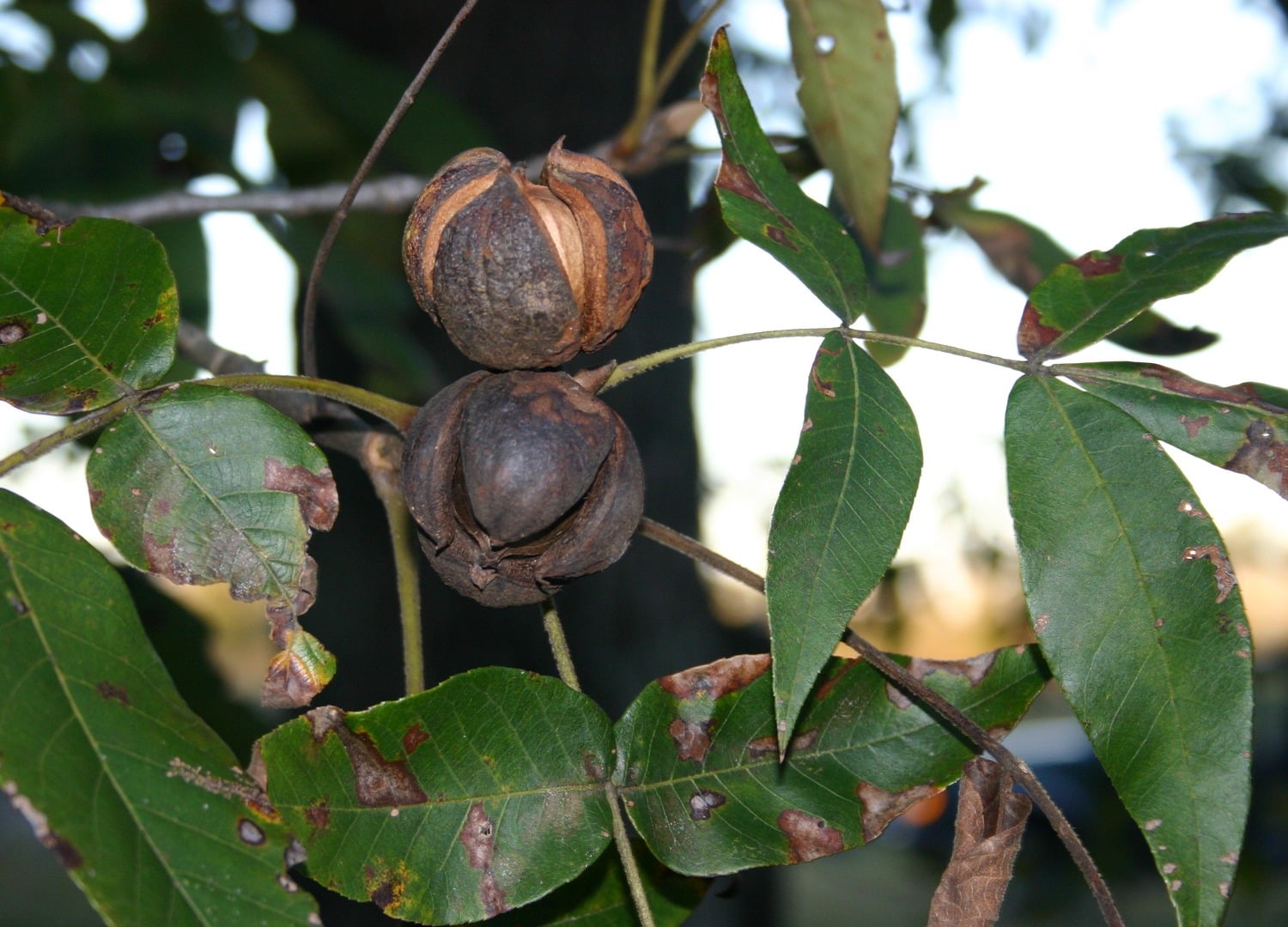
How to identify hickory nuts starts with the husk and how cleanly it splits. Shagbark nuts carry a thick, green, four-part husk early in the season. As the nut ripens, that husk darkens to brown or near-black and splits from tip to base into four pieces. Underneath sits a tan, elliptical shell with a sweet kernel, similar in taste to a walnut or pecan.
A mature shagbark husk splits into four sections, but that feature is not exclusive to one edible species. Compare the leaves, buds, bark, husk thickness and nut shape with a reliable regional tree guide. Shellbark (Carya laciniosa) is a separate species, described in NC State’s shellbark hickory profile. Do not identify a nut from how neatly its husk opens.
Use several matching features and identify the source tree. One split husk is not enough.
Shagbark, Shellbark and Bitter Hickories
Shagbark and shellbark hickory nuts are worth gathering. Pignut and bitternut rarely are. Round nuts with a thick, cleanly splitting husk point to shagbark or shellbark. Pear-shaped nuts with a thin husk point to pignut, which tastes somewhat bitter. Small nuts with a ridged, yellow-green husk point to bitternut, a species most foragers skip.
Shagbark and shellbark are the sweet species this guide focuses on. Other hickories may have bitter kernels and are not interchangeable targets for beginners. Do not taste an unidentified nut to sort sweet from bitter. Horse chestnuts and buckeyes are toxic; a brown nut found on the ground must not be assumed to be hickory.
Harvesting and Checking Wild Hickory Nuts
You harvest wild hickory nuts by gathering what has already fallen. Ripe ones drop on their own, so there is no need to pick them off the branch. The husk pulls away easily once nuts hit the ground. Windy days speed this along. A storm, or even chattering squirrels in the canopy, can be your first clue that nuts are ready.
Remove the husks and discard nuts with obvious holes, mold or other damage. A float test may help sort a batch, but neither sinking nor floating proves a nut is sound or safe. Crack the shells and inspect the kernels individually. Color of the outer husk and weight alone are not reliable quality checks.
Husk the nuts promptly, then spread them in a shallow layer in a dry, well-ventilated, animal-protected place to cure. Do not leave a damp harvest packed in a bucket. Drying time depends on the nuts and conditions; Missouri Botanical Garden’s nut-harvest guidance explains cleaning and curing before storage.
Skip any hickory nut with a soft, dark, or foul-smelling kernel once you crack it open.
Cooking With Hickory Nuts
Crack the hard shell carefully and pick out all fragments before cooking. A nut pick helps with the small crevices. Use only sound kernels from a confirmed edible species; discard moldy, rancid-smelling or otherwise spoiled nuts. If you have a tree-nut allergy, do not assume a wild hickory nut is a safe alternative to other nuts.
Roasting brings out the flavor before you use the nuts anywhere else.
- Spread shelled nuts in a single layer on a baking sheet.
- Roast at 350°F for 10 to 15 minutes, stirring once or twice, until fragrant.
- Let the nuts cool fully before chopping or storing them.
Chopped hickory kernels can add crunch to cookies, muffins, granola and salads. For another wild-nut baking idea, see my black walnut chocolate chip cookies; that is the original black walnut recipe, not a separately tested hickory version. Once kernels are dry, refrigerate or freeze them in well-sealed food containers to protect their quality. Let toasted kernels cool before packing them away.
For the rest of the season’s wild foods, start with my fall foraging guide and the complete foraging library. If acorns are part of your confirmed harvest, my acorn flour guide covers their different preparation needs. Do not apply an acorn process to an unidentified nut.
FAQ
How do you identify hickory nuts in the woods?
Identify the source tree using its leaves, buds, bark and fruit together. The husk and shell are useful clues, not a complete identification. Have unfamiliar finds confirmed by a qualified local expert before eating them.
What does a shagbark hickory nut look like?
A shagbark hickory nut is round, roughly 1 to 1.5 inches wide, with a thick green husk. The husk splits fully into four sections as it ripens. Inside is a tan, hard shell holding a kernel with a flavor close to a pecan.
Are all hickory nuts safe to eat?
Do not treat that as a safe-foraging rule. This guide focuses on correctly identified shagbark and shellbark hickories. Unknown nuts, toxic lookalikes, spoiled kernels and individual tree-nut allergies are reasons not to eat a find. Never taste a nut to identify it.
When should you harvest wild hickory nuts?
Harvest in fall after mature nuts drop naturally. Gather promptly, remove the husks and sort out damaged nuts rather than leaving the harvest on damp ground.
Can you eat hickory nuts raw?
Sound kernels of correctly identified edible hickories can be eaten raw, but correct identity and individual tolerance come first. Toasting is for flavor; it does not make an unknown, toxic or spoiled nut safe, and toasting shelled kernels does not loosen an intact shell.
This article is general foraging information, not medical advice. Confirm any wild nut’s identification with a qualified local expert before eating it, since misidentifying wild foods can cause illness.