When Do Pawpaws Ripen in Pennsylvania?
Every September I start checking our pawpaw trees the way other people watch tomatoes. One day the fruit is hard, green and completely uninteresting. Then almost overnight it softens, becomes fragrant and tastes like banana-mango custard.
The frustrating part is that pawpaw season is short and the fruit does not wait politely. Knowing the calendar helps, but learning the signs of ripeness matters much more.
The short version: In Pennsylvania, most pawpaws ripen from late August through September, with some fruit hanging into early October in cooler locations or later seasons. A ripe pawpaw has a little give, smells sweet and releases easily from the stem. Mature fruit picked slightly early can finish ripening indoors.
When Is Pawpaw Season in Pennsylvania?
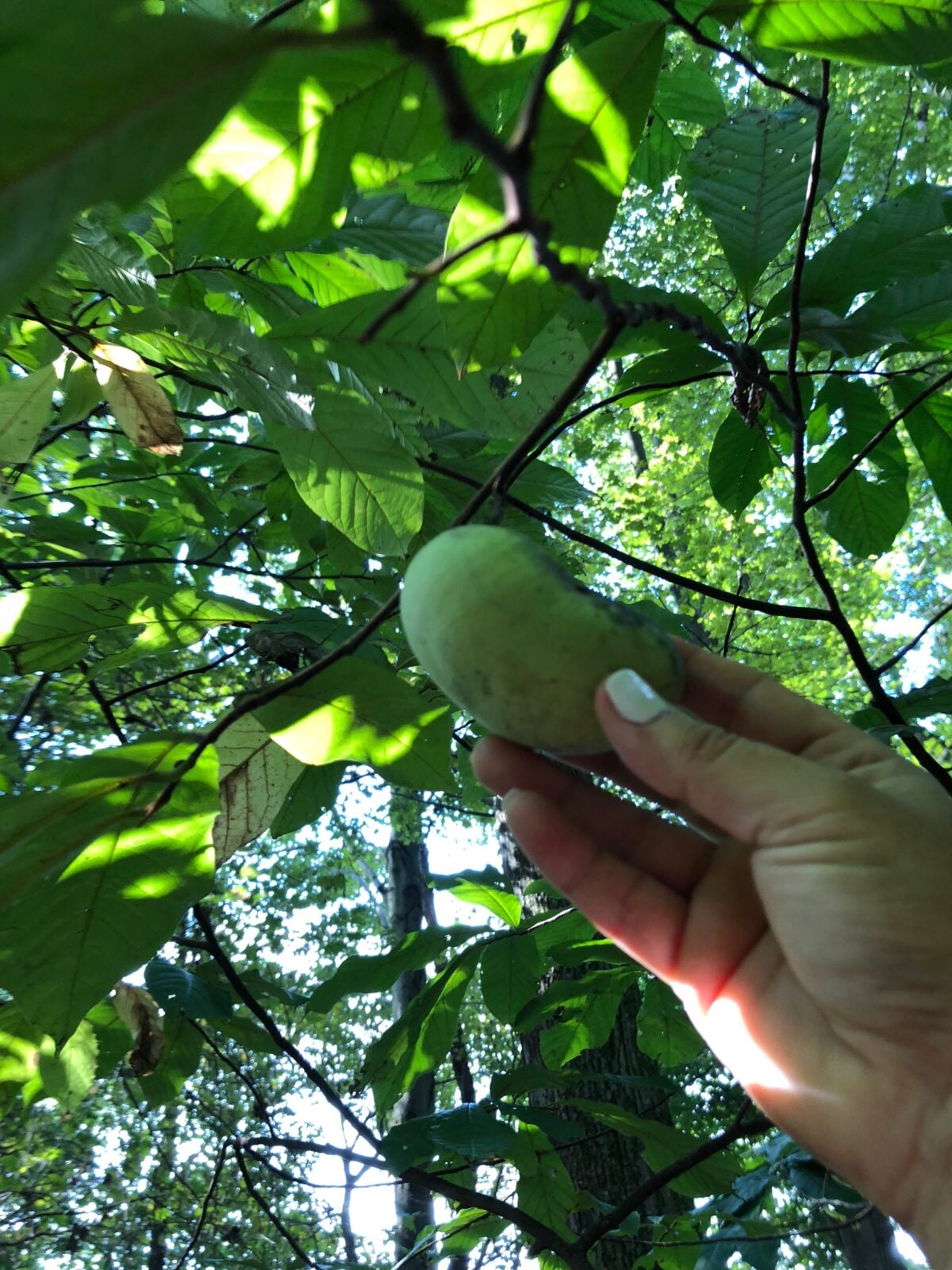
Pawpaw harvest usually begins in late August and runs through September here in Pennsylvania. A protected southern slope or an early variety may ripen first. Fruit in a shady hollow, at a higher elevation or after a cool summer may be later, sometimes stretching into early October.
That range is more useful than a single “pawpaw day.” Even fruit on the same tree may ripen over several weeks, so I start scouting before I expect the main crop and revisit the trees every few days.
Penn State Extension places the harvest from the end of August through September, while its kitchen guide notes that the fruit matures in September. Your trees, weather and exact location get the final vote.
Four Signs a Pawpaw Is Ripe
1. It has a little give
Touch is the best ripeness test. Press very gently with your thumb. A ripe pawpaw should give like a ripe peach or avocado, not feel rock-hard. Be careful—the thin skin bruises easily, and a thumbprint can quickly become a soft brown spot.
2. It releases easily
Lift the fruit and give it a gentle tug. If it is ripe, the stem should release without a fight. Do not twist hard or break the branch just to claim a fruit that needs more time.
3. It smells sweet
Ripe pawpaws have a noticeable tropical fragrance. On a warm day you may smell the patch before you spot the fruit beneath the leaves.
4. The color may change—but not always
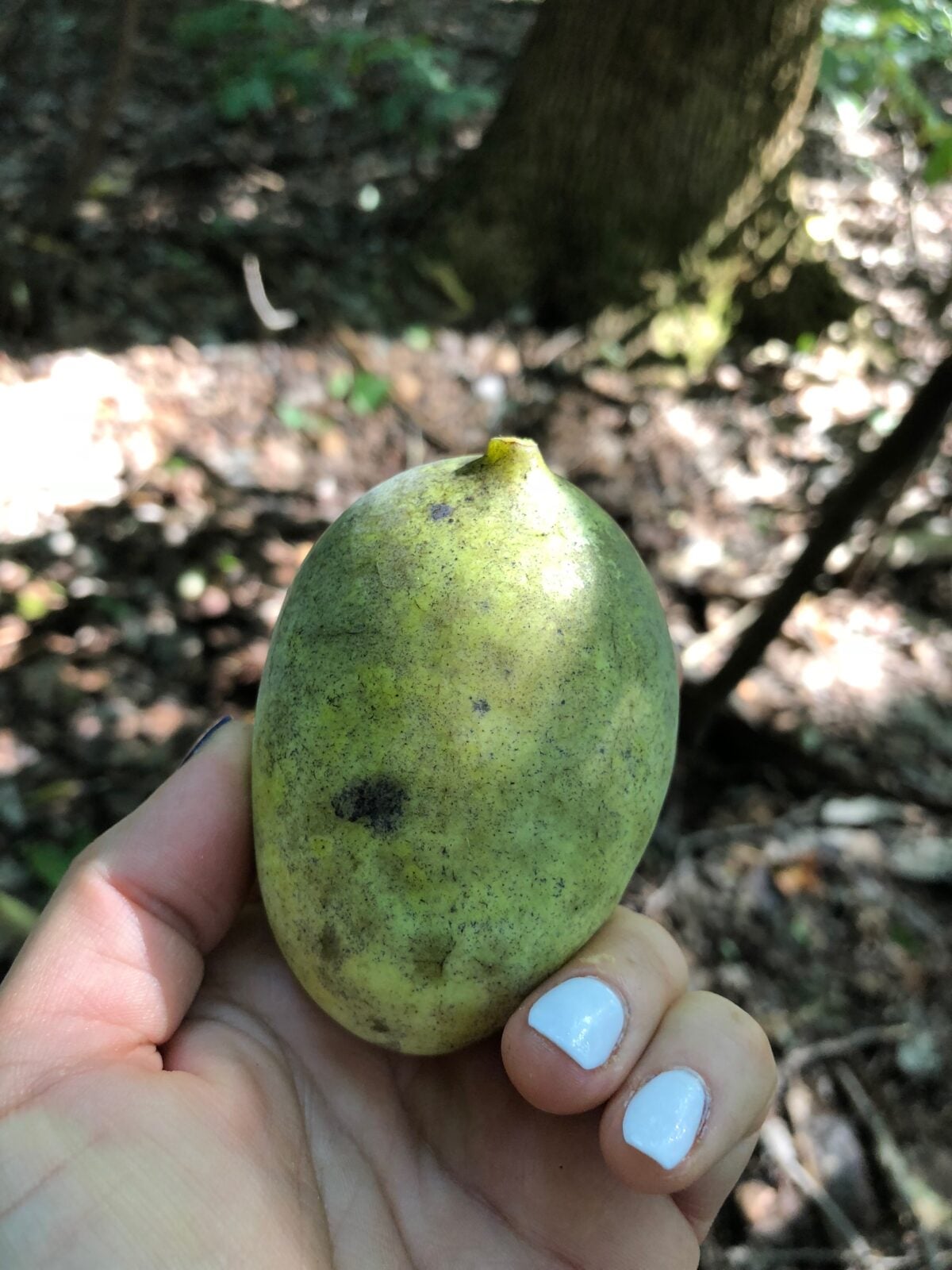
Some fruit becomes lighter green or yellow-green and develops brown or black blotches as it ripens. Other pawpaws stay surprisingly green. Treat color as a clue, not the deciding test. Softness, aroma and easy release are more dependable.
Can Pawpaws Ripen After Picking?
Yes—provided the fruit is mature and already close to ripening. This is where a lot of pawpaw advice gets muddled.
Near-ripe fruit can be picked before it is fully soft and arranged in a single layer indoors to finish ripening. Penn State Extension recommends laying picked fruit in a single layer and notes that unripe fruit can be refrigerated for up to about two weeks, then brought to room temperature to ripen.
Very immature fruit is another story. If it is hard, undersized and nowhere near its normal harvest window, leave it on the tree. It may soften after picking without ever developing the flavor and texture you want.
How to Harvest Pawpaws Without Bruising Them
- Use two hands for large fruit or heavy clusters.
- Place fruit in a shallow basket, tray or box instead of a deep bag.
- Add a clean towel between layers if you must stack them.
- Pick up freshly fallen fruit only when the skin is intact and the fruit still smells clean.
- Do not shake the entire tree. You will bruise ripe fruit and knock down fruit that needs more time.
If this is your first season identifying the tree, start with my complete pawpaw foraging and identification guide. It includes leaf, bark, habitat and preparation details.
How Long Do Ripe Pawpaws Last?
Fully ripe pawpaws are fragile. At room temperature, use them within a day or two. Refrigeration buys a few more days, but the flavor and texture are best while the pulp is fragrant and creamy.
Keep fruit in a single layer or nestle it gently in a towel so it does not roll and bruise. Check it daily. Darkening skin is not automatically spoilage, but discard fruit with leaking liquid, mold, a fermented odor or badly collapsed flesh.
The Best Way to Freeze Pawpaw Pulp
- Wash the outside of the ripe fruit.
- Cut it lengthwise and scoop the pulp away from the skin.
- Remove every seed. Do not blend the seeds into the pulp.
- Puree the pulp briefly, if you want a smooth texture.
- Freeze in measured portions in airtight containers or freezer bags.
One-cup portions are convenient for baking. Flattened freezer bags thaw quickly and stack neatly. For best quality, label the package with the amount and date and use the pulp within the next several months.
What to Make During Pawpaw Season
Fresh pawpaw is delicious by the spoonful, but a good harvest deserves at least one celebratory dessert. My pawpaw chiffon pie has a light, old-fashioned filling that lets the fruit come through without burying it under heavy spices.
When you are planning the rest of your September gathering, visit my fall foraging guide for Pennsylvania, browse the persimmon recipes, or start at the complete foraging hub.
Pawpaw Season FAQ
Do pawpaws fall when they are ripe?
Many do, but you do not have to wait for them to hit the ground. Fruit that is slightly soft, fragrant and easy to detach is ready to harvest. Check fallen fruit promptly because it bruises and attracts wildlife quickly.
Can I refrigerate pawpaws before they are fully ripe?
Yes. Mature, near-ripe fruit can be chilled to slow it down, then brought to room temperature to finish ripening. Check it often after removing it from the refrigerator.
Why are my pawpaws still green?
Some pawpaws remain green even when ripe. If the fruit has a little give, smells sweet and releases easily, it may be ready regardless of skin color.
How do I know if a pawpaw is overripe?
Overripe fruit may feel collapsed, leak, smell fermented or show mold. Brown or black patches alone do not always mean the fruit is bad; inspect the texture and aroma too.