How to Freeze Pawpaw Pulp: Uses & Storage Guide
Pawpaw season never lasts as long as I want it to. One week the fruit is still hard on the tree, and the next I have more soft, fragrant pawpaws than we can possibly eat fresh. Freezing the pulp is the easiest way to save that short harvest for pies, smoothies and baking later in the year.
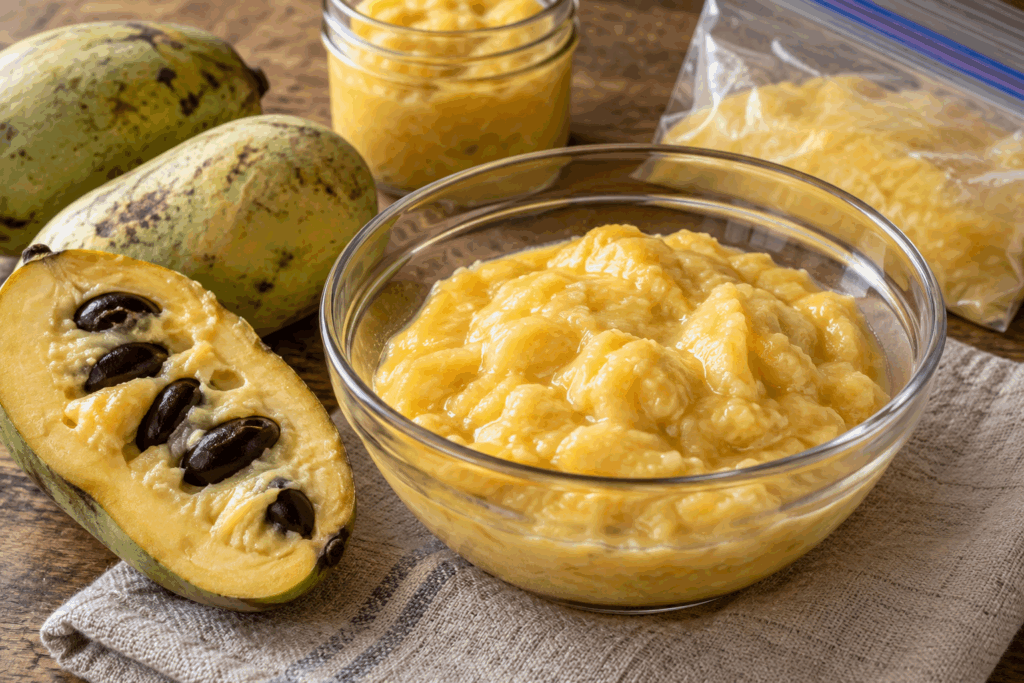
This guide walks you through separating the pulp from the skin and seeds, portioning it for the freezer, thawing it safely and choosing the best ways to use it. If you are starting with fruit still on the tree, read my pawpaw identification and foraging guide first, then use my Pennsylvania pawpaw season guide to judge ripeness.
The short version:
- Use only ripe, fragrant pawpaws that give slightly when pressed.
- Wash the fruit, remove every seed and discard the skin.
- Freeze the pulp in measured portions in freezer-safe bags or containers at 0°F or colder.
- For best quality, label each package and use it within 12 months.
- Thaw frozen pulp in the refrigerator and use it in pie, quick breads, oatmeal bars, smoothies or freezer jam.
What Is Pawpaw Pulp?
Pawpaw pulp is the soft, edible flesh inside the American pawpaw (Asimina triloba). It has a creamy, custard-like texture and a flavor that falls somewhere between banana, mango and vanilla. Every tree tastes a little different, which is part of the fun of harvesting them.
American pawpaw is North America’s largest native tree fruit and grows wild through much of the eastern United States. Here in Pennsylvania, the fruit usually ripens from late August through September, with a few late trees carrying into early October.
Ripe pawpaws are also extremely perishable. Once soft, they last only a few days at room temperature and roughly a week in the refrigerator. That is why I process whatever we will not eat fresh and get it into the freezer quickly.
How to Tell When a Pawpaw Is Ready to Process
A ripe pawpaw should give slightly under gentle pressure, smell sweet and release from the tree without a fight. Do not rely on color alone. Some fruit becomes yellow-green or develops dark blotches, while other perfectly ripe pawpaws stay mostly green.
Dark skin is not automatically a sign of spoilage. Cut the fruit open and look at the pulp. It should smell fruity and look creamy, not watery, moldy or fermented. Discard fruit that is leaking, badly collapsed, moldy or sour-smelling.
How to Remove Pawpaw Pulp
- Wash the outside. Rinse each fruit under cool running water before cutting it. This keeps dirt from the skin away from the edible pulp.
- Cut the fruit open. Slice it lengthwise or crosswise. Very ripe fruit can also be pulled apart gently with your hands.
- Scoop out the flesh. Use a spoon to lift the soft pulp away from the skin.
- Remove every seed. Pawpaw seeds are large and dark, but smaller fragments can hide in very soft pulp. Work through the bowl carefully before pureeing.
- Discard the skin and seeds. Purdue Extension recommends eating the pulp only; neither the skin nor seeds should be consumed.
For a small batch, a spoon is all you need. If I am working through a pile of fruit, I press the pulp gently through a coarse strainer or food mill. Do not put whole seeds through a blender or food processor. They are not edible and can damage the appliance.
Should You Puree Pawpaw Before Freezing?
You do not have to, but smooth pulp is easier to measure and use later. A few quick pulses in a food processor or blender are enough. Do not overwork it; you are simply evening out the texture.
If you know the pulp is headed for rustic muffins or oatmeal bars, leaving it a little chunky is perfectly fine. For pawpaw chiffon pie, smoothies and ice cream, I prefer a smooth puree.
How to Freeze Pawpaw Pulp
Penn State Extension recommends measuring pawpaw pulp into freezer-quality bags, removing as much air as possible, labeling the package and using it within one year. Purdue Extension gives the same 12-month freezer window.
- Measure useful portions. I like 1-cup packages for baking, plus a few 1/2-cup portions for smoothies and smaller recipes.
- Choose freezer-safe packaging. Use freezer bags, airtight freezer containers or silicone ice cube trays for small portions. Ordinary sandwich bags are too thin for long freezer storage.
- Remove excess air. Flatten freezer bags before sealing or leave only the recommended headspace in rigid containers. Less air means less freezer burn.
- Label the package. Write “pawpaw pulp,” the measured amount and the date. It is surprisingly easy to forget what a golden bag of puree is six months later.
- Freeze at 0°F or colder. Lay bags flat in a single layer until solid, then stack them upright or flat to save space.
Ice cube trays are useful for smoothie portions. Freeze the pulp until solid, transfer the cubes to a labeled freezer bag and return them to the freezer promptly.
How Long Does Frozen Pawpaw Pulp Last?
For best flavor and texture, use frozen pawpaw pulp within 12 months. It may remain safe longer if it stays continuously frozen at 0°F, but quality gradually declines. Freezer burn, color changes and stale flavors become more noticeable over time.
Frozen pawpaw usually darkens a little. That does not necessarily mean it has spoiled. Good packaging and quick freezing help preserve the color, flavor and aroma.
How to Thaw Pawpaw Pulp
Move the amount you need to the refrigerator and let it thaw overnight. A flat freezer bag thaws much faster than a deep container. Stir the pulp before measuring it into a recipe; a little liquid separation is normal.
Use thawed pawpaw within a day or two and keep it refrigerated. Do not repeatedly thaw and refreeze the same package, because the texture and flavor will suffer.
Ways to Use Pawpaw Pulp
Fresh and frozen pawpaw pulp can often stand in for mashed banana, pumpkin puree or applesauce. Its texture is naturally creamy and its flavor is sweet, so taste your batter before adding extra sugar.
- Pawpaw pie: My pawpaw chiffon pie is the special-occasion recipe I save pulp for first.
- Quick breads and muffins: Substitute pawpaw for mashed banana or pumpkin in a familiar recipe, keeping in mind that the sweetness and moisture will vary by fruit.
- Smoothies: Blend a few frozen cubes with milk or coconut milk, yogurt and a little cinnamon.
- Oatmeal and yogurt: Stir in thawed pulp for natural sweetness and a tropical flavor.
- Ice cream or sorbet: Smooth puree works especially well in frozen desserts.
- Freezer jam: Use a tested freezer-jam formula from a pectin manufacturer or Penn State Extension rather than improvising a shelf-stable canned version.
For more ideas tied to the harvest calendar, visit my fall foraging guide or browse the complete foraging library.
A Note About Pawpaw Safety
Eat only the soft pulp and discard the skin and every seed. Pawpaw contains naturally occurring annonaceous acetogenins, including annonacin. Laboratory research has identified annonacin in the pulp, but the health risk from occasional culinary use is not well defined. I treat pawpaw as a seasonal food rather than a supplement or something to consume in concentrated amounts every day.
Some people experience stomach upset after eating pawpaw. If it is new to you, start with a modest serving. Avoid teas, extracts and homemade medicinal preparations made from the leaves, bark, skin or seeds. If you are pregnant, nursing, managing a neurological condition or have questions about your individual risk, talk with a qualified healthcare professional.
Can You Can Pawpaw Pulp?
No research-based home-canning recipe exists for plain pawpaw pulp. Pawpaw is a low-acid fruit, so adding an arbitrary amount of lemon juice does not make an untested canning method safe. Do not water-bath or pressure-can pawpaw puree using a recipe that has not been laboratory tested.
Freezing is the simple, reliable option. Penn State Extension also allows pawpaw freezer jam made according to the directions on a box of powdered pectin. Keep that jam refrigerated or frozen; it is not a shelf-stable canned product.
Pawpaw Pulp FAQ
Can you freeze pawpaw pulp with the seeds in it?
No. Remove every seed before freezing. The seeds are not edible and are much easier to separate while the pulp is fresh.
Does pawpaw pulp need lemon juice before freezing?
No. Lemon juice is not required for safe freezing. A small amount may slow browning, but it also changes the flavor. Good freezer packaging and removing excess air matter more.
Can I freeze pawpaw pulp in glass jars?
Yes, as long as the jars are designed for freezing and you leave appropriate headspace for expansion. Straight-sided freezer jars are a better choice than narrow-shouldered canning jars.
Is pawpaw a keto fruit?
No. Pawpaw is a naturally sweet fruit with roughly 19 grams of carbohydrate per 100 grams, so it is not a low-carb or keto staple. You can use a small measured amount in a lower-carb recipe if it fits your personal carbohydrate target, but the fruit itself should not be described as keto.
How long will fresh pawpaw pulp keep in the refrigerator?
Use fresh pulp within a day or two for the best quality. If you will not use it that quickly, freeze it in measured portions.