Pawpaw Foraging: How to Identify and Harvest in Pennsylvania
Pawpaw season is one of those blink-and-you-miss-it moments in Pennsylvania. For most of the year, these small understory trees are easy to walk past. Then late summer arrives, the branches are suddenly holding clusters of green fruit, and the woods smell faintly tropical.
If you have never tasted a pawpaw, imagine banana custard with a little mango and vanilla mixed in. They are soft, fragrant and unlike anything else that grows wild here. This guide covers how I identify pawpaw trees, when and how I harvest the fruit, and the simple safety rules I follow before bringing it into my kitchen.
The short version: Look for a small understory tree with very large, drooping leaves and smooth gray-brown bark. Harvest fruit that has a little give and releases easily. Eat only the soft pulp, discard the skin and seeds, and try a small serving the first time.
What Is a Pawpaw?
The American pawpaw (Asimina triloba) is North America’s largest native tree fruit. It grows naturally through much of the eastern United States, including western and central Pennsylvania, usually in rich soil along creek bottoms, hillsides and woodland edges.
Pawpaws often grow in patches because the tree sends up root suckers. One tree may be part of a larger colony, although you generally need genetically different trees nearby for good fruit production.
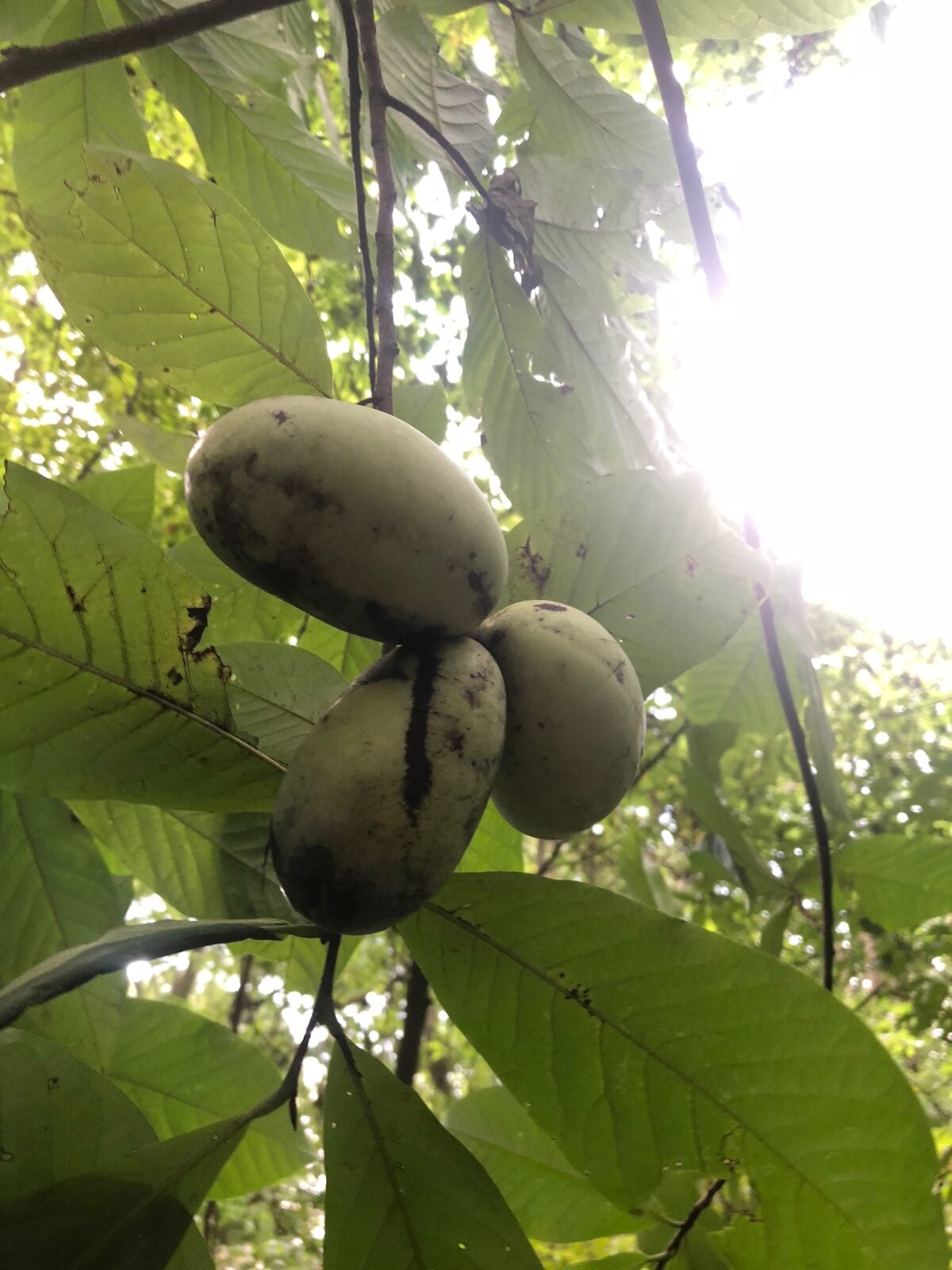
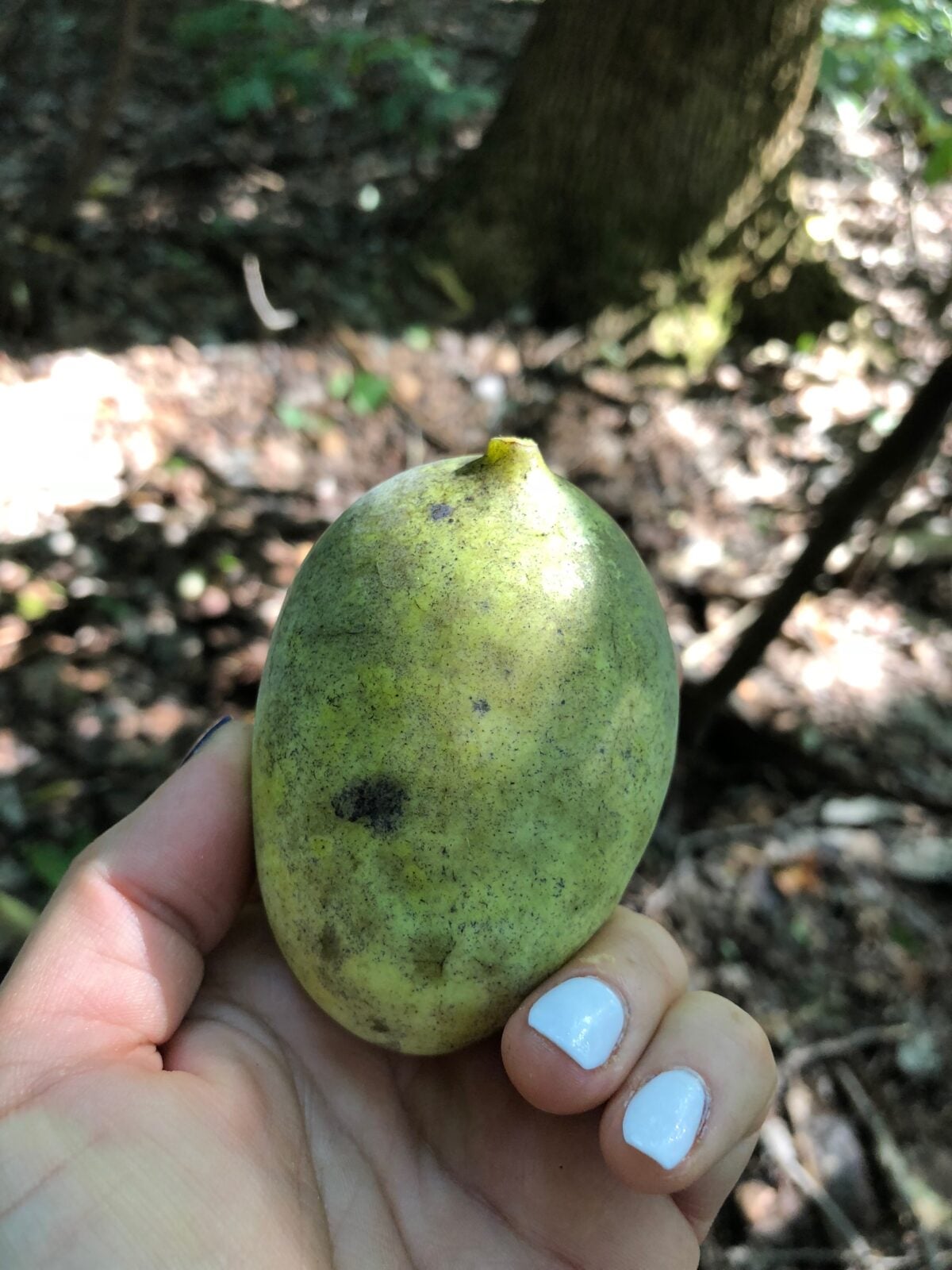
The fruit can be egg-shaped, rounded or slightly lopsided, with green skin that may develop dark blotches as it ripens. Inside is pale yellow to deep golden pulp surrounding several large, dark seeds. The flavor varies from tree to tree, which is half the fun of finding a good patch.
How to Identify a Pawpaw Tree
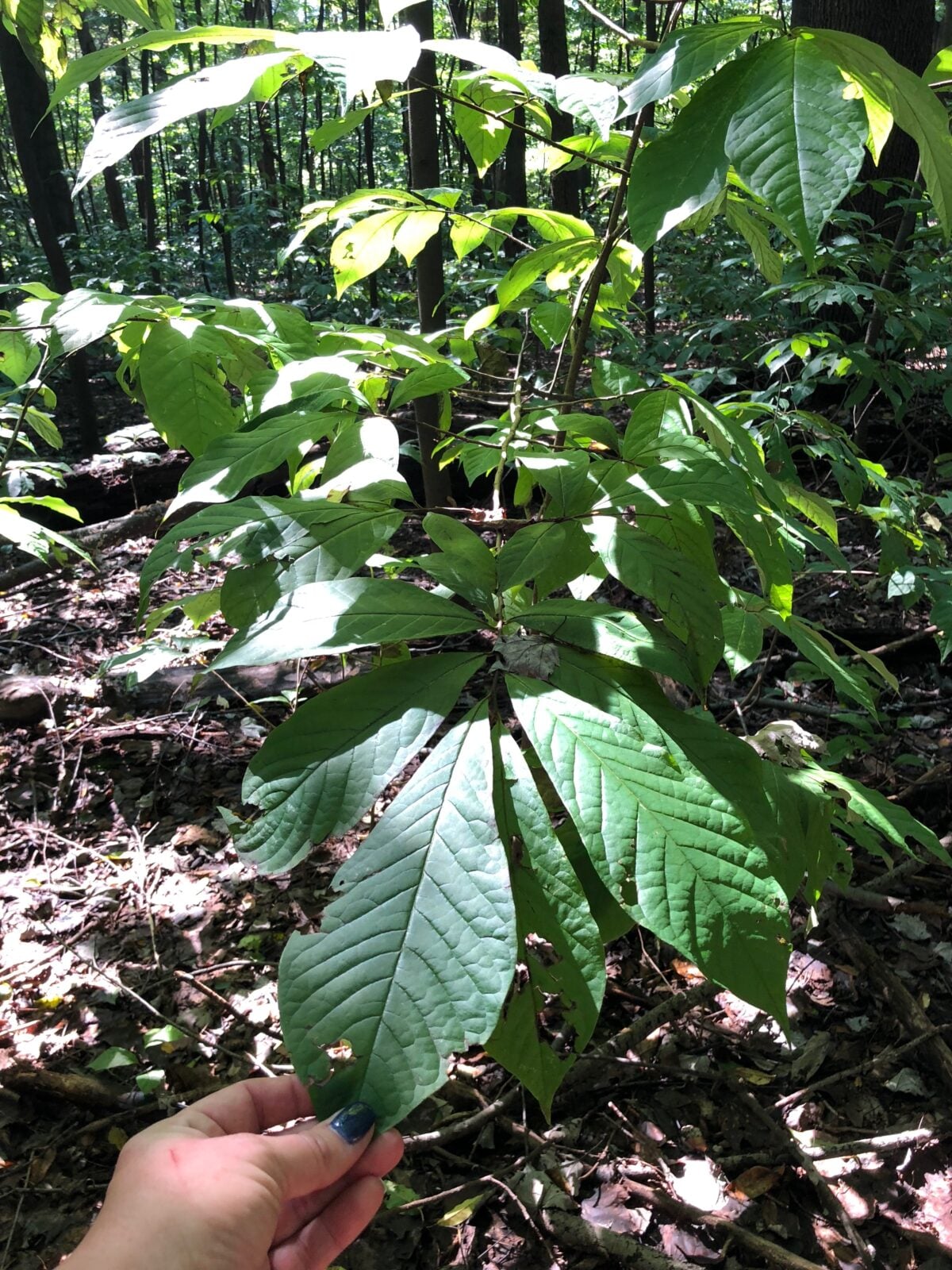
The leaves are my first clue. Pawpaw leaves are long—often 8 to 12 inches—smooth-edged, widest toward the tip and arranged alternately along the branch. They have a relaxed, almost tropical droop that looks out of place in a Pennsylvania woodland.
The bark is smooth and gray-brown on younger trees. Mature trees commonly reach 15 to 30 feet tall, but many fruiting trees are smaller. In early spring, look for small maroon flowers that hang beneath bare branches before the leaves fully open. By late summer, the fruit often hangs in clusters of two or more.
Use several features together—leaf shape, bark, flowers or fruit, growth habit and habitat. Never identify a wild edible from one photograph or one trait alone.
Where Pawpaws Grow in Pennsylvania
I look in moist, well-drained woods, especially near streams, rivers and the lower portions of wooded slopes. Pawpaws tolerate shade and often form part of the understory beneath taller hardwoods. A sunny edge can produce heavier crops than a deeply shaded patch.
Once you find a patch, make a note of it and return toward the end of summer. You can also watch the ground for fallen fruit and look up carefully for clusters tucked beneath the leaves.
When Are Pawpaws Ready to Pick?
In Pennsylvania, pawpaws generally ripen from late August through September, although a cool site or late season can push a few into early October. Calendar dates are only a starting point. The fruit itself will tell you when it is ready.
A ripe pawpaw has a little give when gently squeezed, develops a sweet fragrance and comes away from the stem with an easy tug. Some stay mostly green when ripe; others develop yellowing or dark blotches. Color alone is not a reliable test.
For a more detailed look at timing, ripeness and storage, read When Do Pawpaws Ripen in Pennsylvania?
How to Harvest Pawpaws Responsibly
- Ask permission. Do not assume a roadside, park or woodland is open to harvesting.
- Take only ripe fruit. Hard fruit needs more time. Near-ripe fruit can finish softening indoors, but very immature fruit will not become its best self.
- Handle it gently. Pawpaws bruise as easily as a ripe peach. Use a shallow basket or box instead of piling them into a deep bag.
- Leave plenty behind. Wildlife relies on the fruit, and other foragers may be visiting the same patch.
- Protect the tree. Do not break branches or aggressively shake the trunk. A gentle tug on an individual fruit is enough.
How to Prepare Pawpaw Fruit Safely
Wash the outside, slice the fruit lengthwise and scoop out the soft flesh. Remove every seed and discard the skin. The seeds are large enough to spot easily, but smaller fragments can hide in very soft pulp, so I run a spoon through it before using it in a recipe.
Pawpaw contains naturally occurring compounds called annonaceous acetogenins. A laboratory study found annonacin in the pulp and noted that more research is needed to understand the risk from long-term exposure. That is very different from saying an occasional pawpaw dessert is proven dangerous. I treat pawpaw as a seasonal food—not a supplement or something to consume in concentrated amounts every day.
Some people experience stomach upset after eating pawpaw. If it is new to you, start with a modest serving. Avoid the skin, seeds, teas, extracts and homemade medicinal preparations. If you are pregnant, nursing, managing a neurological condition or have questions about your individual risk, talk with a qualified healthcare professional.
For additional background, see the practical pawpaw guidance from Penn State Extension and the published annonacin study.
How to Store and Preserve Pawpaws
Ripe pawpaws are wonderfully soft and terribly perishable. Refrigerate them and plan to use them within a few days. If the fruit is mature but still a little firm, set it in a single layer at room temperature until it softens.
For longer storage, remove the skin and seeds, puree the pulp and freeze it in measured portions. I like one-cup portions because they are easy to thaw for baking, smoothies or dessert. Pressing plastic or parchment directly against the surface helps protect the color.
What to Make with Pawpaws
Fresh pulp is delicious spooned straight from the skin, stirred into yogurt or blended into a smoothie. It also makes a beautiful old-fashioned dessert. My pawpaw chiffon pie is light, creamy and perfect when you want the fruit to be the star.
If you are gathering other autumn fruit, browse my persimmon recipes, ground cherry recipes and the complete fall foraging guide for Pennsylvania. You can also start with the main foraging resource hub.
Pawpaw Foraging FAQ
Can pawpaws ripen after you pick them?
Yes. Mature, near-ripe pawpaws can finish softening at room temperature. Fruit picked very hard and immature may soften poorly and lack flavor.
Can you eat pawpaw skin or seeds?
No. Scoop out the pulp and discard the skin and every seed.
Are pawpaws safe to cook?
Pawpaw has a long history as a fresh fruit and recipe ingredient, and extension resources include baked pawpaw recipes. Cooking is not a reason to eat the skin or seeds, and it does not turn an immature fruit into a good one. Use ripe pulp and enjoy it as an occasional seasonal food.
What animals eat pawpaws?
Raccoons, opossums, squirrels and other wildlife enjoy ripe pawpaws. That is one reason a patch can seem full one day and picked clean the next.