How to Make Chaga Mushroom Tea
You might walk right past it in the woods. To the untrained eye, the chaga mushroom looks like a burnt knot of wood clinging to the side of a birch tree. It is not pretty, and it is hard as a rock. But learning how to make chaga mushroom tea transforms that unsightly lump into a deeply nourishing, earthy drink that fits perfectly into a low-carb, keto, or whole-foods lifestyle.
Important safety note: Confirm chaga with a qualified regional expert and harvest only where legal and ecologically appropriate; never remove an entire growth. Chaga is not a treatment for disease and may interact with medications or be unsuitable for some people, including during pregnancy. Discuss regular use with a qualified clinician.
Here on our six-acre Pennsylvania homestead, hunting for wild edibles is a regular part of life for my husband Ray, our dog Argos, and me. We love turning foraged finds into comforting recipes. Chaga is a perennial favorite for the colder months.
Key takeaways:
- Chaga is a caffeine-free fungus packed with antioxidants.
- You cannot digest raw chaga. It requires hot water extraction to draw out its nutrients.
- Steep your chaga chunks for at least 7 minutes to get the best flavor.
- Always consult a doctor before drinking chaga if you take diabetes medication.
What Is Chaga Mushroom Tea?
Chaga mushroom tea is a traditional beverage brewed from Inonotus obliquus. This fungus primarily grows on the bark of birch trees. Unlike the soft, spongy mushrooms you slice for dinner, chaga creates a dense, woody growth called a conk.
When brewed, chaga yields a dark liquid with a mild, earthy, and slightly woody flavor. It lacks the intense bitterness found in other medicinal mushrooms like reishi. Because it is naturally caffeine-free, it makes an excellent evening beverage. It also serves as a great base for other warming spices.
Top Chaga Tea Benefits for Your Body
The benefits of chaga tea are well-documented in traditional Russian and Siberian folk practices. The mushroom interior and its dark outer crust are rich in bioactive compounds, polysaccharides, and antioxidants.
Studies show that chaga can help support your immune system. Researchers have also found compounds in chaga extract that can potentially lower blood sugar. This makes it appealing for those of us on keto or low-carb diets who closely monitor glucose levels.
However, this blood-sugar-lowering effect means you must be careful if you take diabetes medication. You should also note that chaga is very high in oxalates. Oxalates bind to calcium during digestion, which can be an issue for people with kidney concerns.
The Basics of Foraging Chaga Responsibly
If you prefer to find your own food, foraging chaga is an incredibly rewarding winter activity. The lack of foliage on the trees makes the black, charcoal-like conks much easier to spot against the white bark of birch trees. When in doubt, you can always pruchase dried chaga supplements, drink mixes, etc. online.
Sustainable harvesting is vital. The rising popularity of commercial chaga products has put increased pressure on wild populations. Responsible foragers prioritize the health of the biological resources to ensure the fungus and the host trees are not permanently damaged.
If you are new to hunting wild edibles, you might want to start with something closer to the ground. Check out my Guide to Foraging Wild Chanterelle Mushrooms for a great entry point into the fungi world.
How to Prepare Chaga for Brewing
Since the mushroom is as hard as wood, human digestive systems cannot break it down. You have to know exactly how to prepare chaga to actually absorb its nutrients.
The best way to get the nutrients out of chaga is to extract it in hot water.
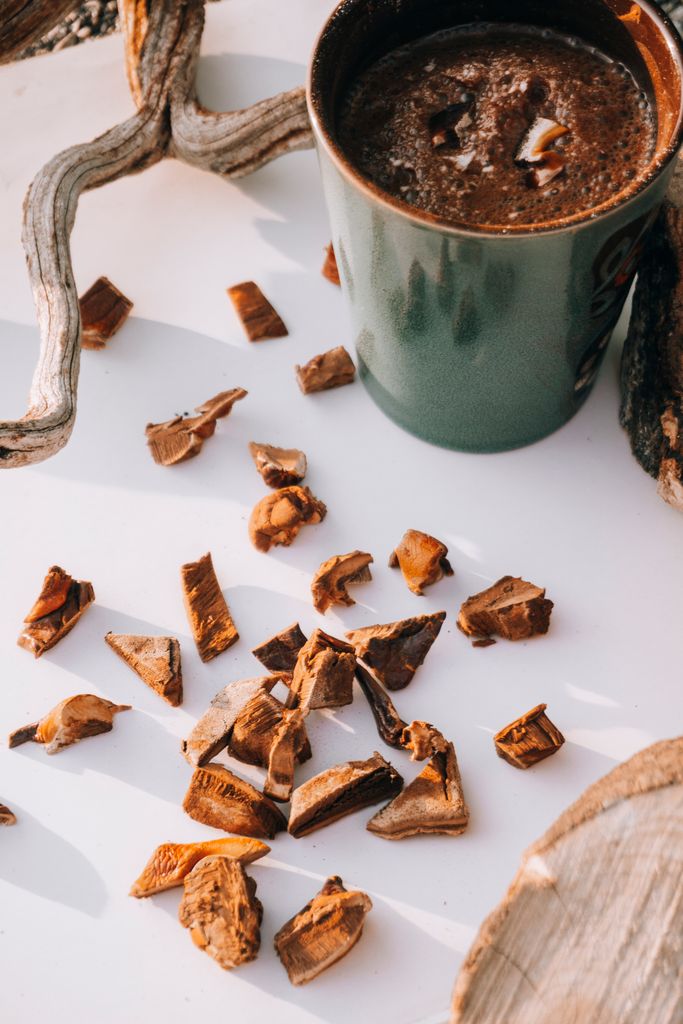
If you harvested the chaga yourself, you need to break the large conk into smaller chunks. Do this while it is still relatively fresh. Once it dries completely, you will need a heavy hammer or a saw to break it apart. Store the dried, golf-ball-sized chunks in an airtight glass jar in a cool, dark pantry.
(Image: A glass jar filled with dark, woody chaga mushroom chunks sitting next to a steaming mug of tea, alt: ‘dried chaga mushroom chunks ready for brewing tea’)
Step-by-Step Guide to Brewing Your Tea
Making the tea is quite simple. You just need heat, time, and water.
- Bring a pot of filtered water to a gentle simmer.
- Drop a golf-ball-sized chunk of dried chaga into the water.
- Let it steep. Like other herbal teas, letting the chaga steep longer will extract more nutrients. Aim for at least 7 to 10 minutes.
- Pour the dark, amber liquid through a strainer into your mug.
Keep in mind that prolonged high heat can destroy some medicinal compounds. You want a gentle simmer or a hot steep rather than a rolling, aggressive boil for hours on end.
Discard the chunk when the brewed liquid starts looking pale instead of rich and dark.
For a savory application, try tossing a piece of chaga into your slow cooker the next time you make my Instant Pot Wild Mushroom Broth Recipe. It adds incredible depth. Or, enjoy a warm mug of chaga alongside a decadent appetizer like my Chanterelle Mushroom Fondue.
FAQ
Does Chaga Mushroom Tea Contain Caffeine?
No. Chaga is naturally caffeine-free. However, some people report feeling a natural energy boost from the nutrients and adaptogenic properties, so you may want to test drinking it in the afternoon before committing to it as a bedtime tea.
Can I Eat the Chaga Mushroom Chunks After Brewing?
No. The physical material of the chaga conk is entirely too woody and fibrous for the human stomach to digest. Always discard or compost the chunks once they no longer produce a dark brew.
What Does Chaga Tea Taste Like?
It has a very mild, earthy, and slightly woody flavor. It is not distinctly mushroomy or savory like a culinary mushroom broth, making it a great base for adding cinnamon, ginger, or a splash of heavy cream.