What to Forage in Spring in Pennsylvania
Spring foraging in Pennsylvania does not begin on a tidy date. It starts when the ground softens, the trees wake up and the first green shoots push through last year’s leaves. A warm spell can move everything along quickly; a cold week can put the woods right back on pause.
This is the season I associate most with ramps and morel mushrooms, but they are not the only wild foods worth watching for. Dandelions, stinging nettles and wild garlic arrive early, often before the forest canopy fills in. Use this guide as a seasonal overview, then follow the links for the detailed identification and recipe information already here on the site.
Before You Forage in Spring
Positive identification comes first. Never eat a plant or mushroom because it looks close enough to a photograph. Learn its identifying features, compare more than one reputable source and leave it behind when you are uncertain. Make sure you have permission to harvest, know the rules for the land you are visiting and avoid areas that may have been sprayed or contaminated.
Spring plants are tender, but that does not make every green shoot edible. Mushrooms require even more care. Morels have lookalikes, and wild garlic should smell distinctly like garlic when a leaf is crushed. When trying any correctly identified wild food for the first time, cook it when appropriate and begin with a small serving.
What to Forage in March in Pennsylvania
March is more about watching than filling a basket. The timing changes considerably from one part of Pennsylvania to another and from one year to the next. On mild days, dandelion greens and wild garlic may be among the first useful finds. Stinging nettles also begin emerging while the shoots are still young and tender.
Wild Garlic
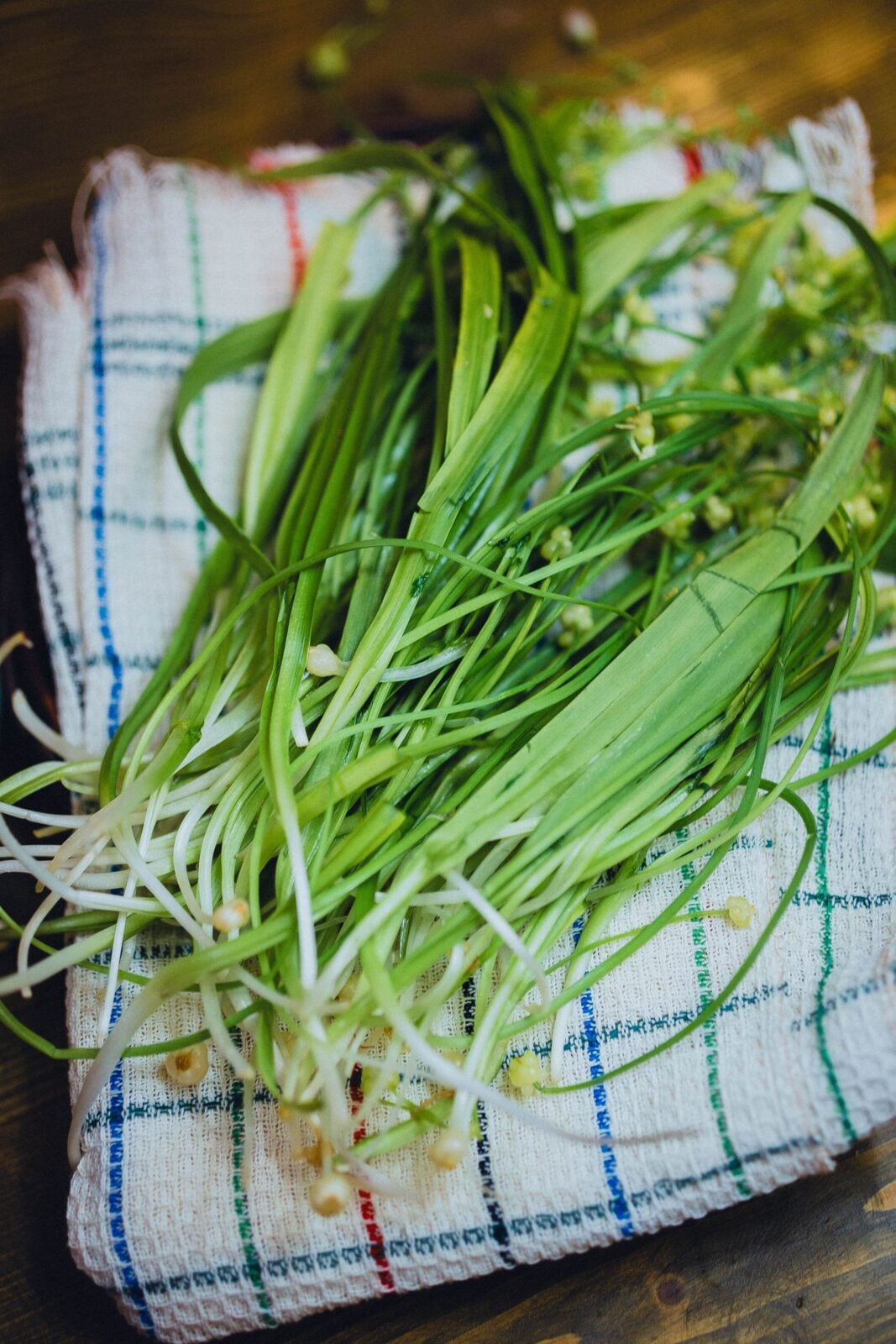
Wild garlic is easy to notice once you learn to recognize its narrow leaves and unmistakable garlic scent. It is useful anywhere you would normally reach for garlic or chives. My guide to foraging wild garlic in spring covers identification and harvesting in more detail.
Stinging Nettles
Young nettles are one of spring’s best greens, but they earn their name. Wear gloves while harvesting and handling them. Cooking removes the sting and leaves you with a flavorful green that works especially well in soup. See my stinging nettle soup recipe for a practical way to use them.
Dandelions
Dandelions are familiar, abundant and useful from root to flower. The young leaves are generally less bitter than mature greens, making early spring a good time to gather them from a clean, unsprayed area. Start with my guide to dandelions and other wild edible plants, then try these cooked dandelion greens or dandelion tea.
What to Forage in April in Pennsylvania
April is when spring foraging becomes exciting. Ramps begin carpeting familiar hillsides, and morel hunters start watching soil temperatures, tree species and weather. Both seasons are short enough that waiting until next weekend can mean missing the best of them.
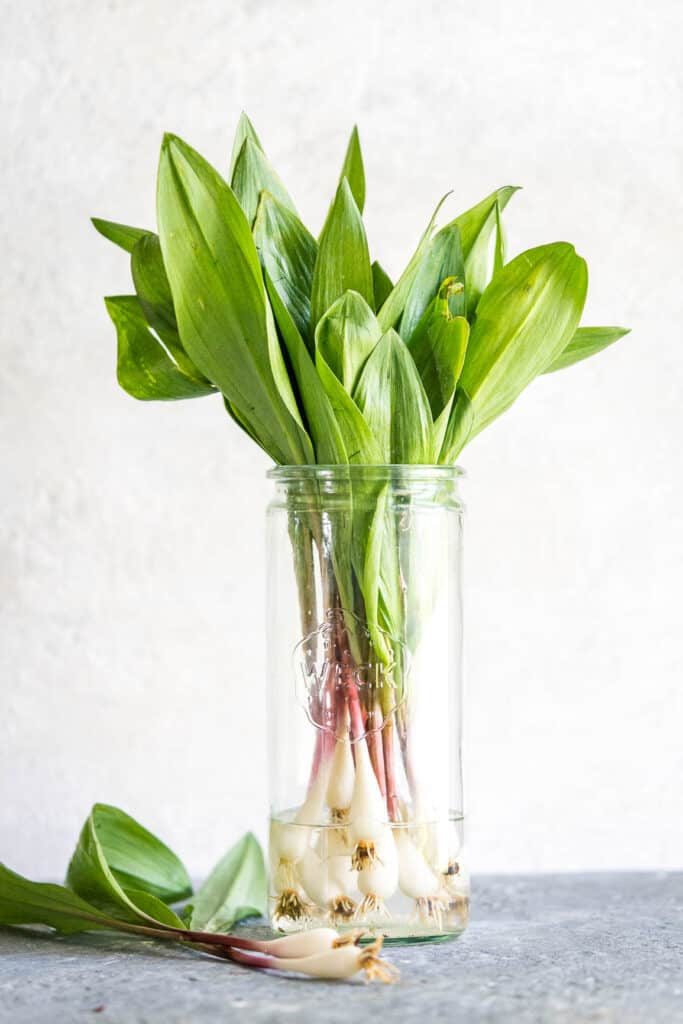
Ramps
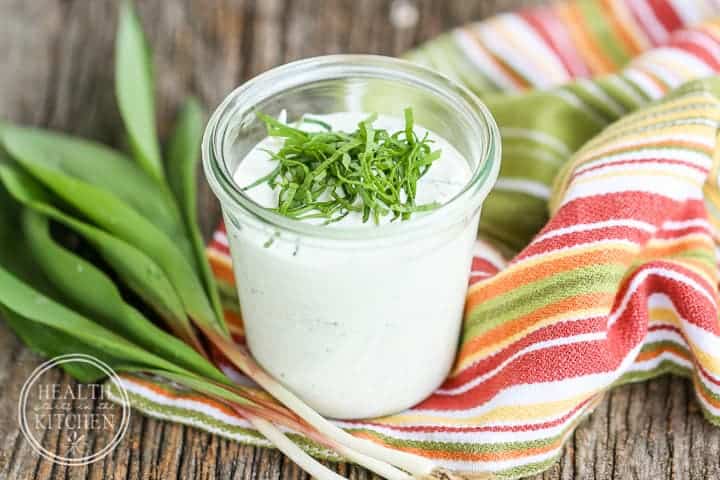
Ramps, also called wild leeks, have broad green leaves and a strong onion-garlic aroma. Where they grow abundantly, they can cover an impressive stretch of woodland. Harvesting practices matter because ramp patches can be damaged by careless collecting. Take only what the patch can support and follow any local restrictions.
Once they reach the kitchen, the entire plant is useful. The leaves can become sauces, dressings, soups and spreads, while the bulbs can be treated much like a small onion. Browse my collection of more than 20 ramp recipes for ideas that go well beyond the usual pesto.
Morel Mushrooms
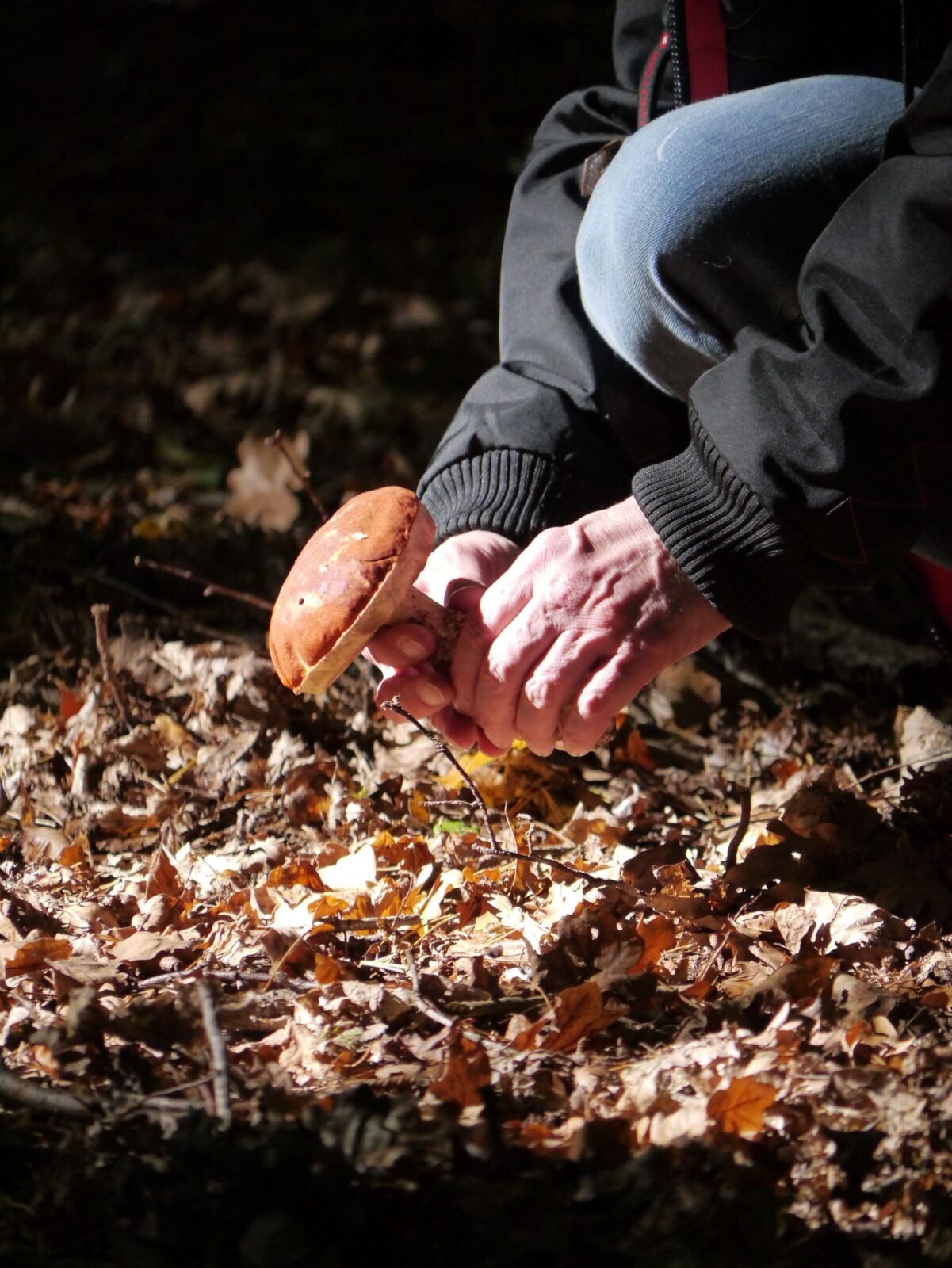
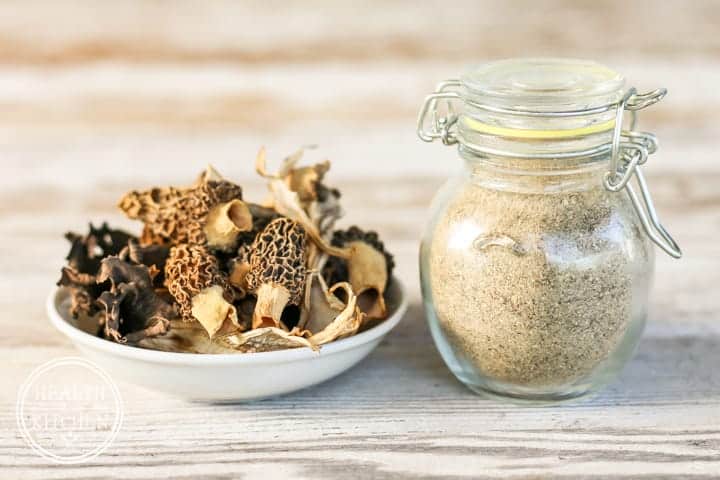
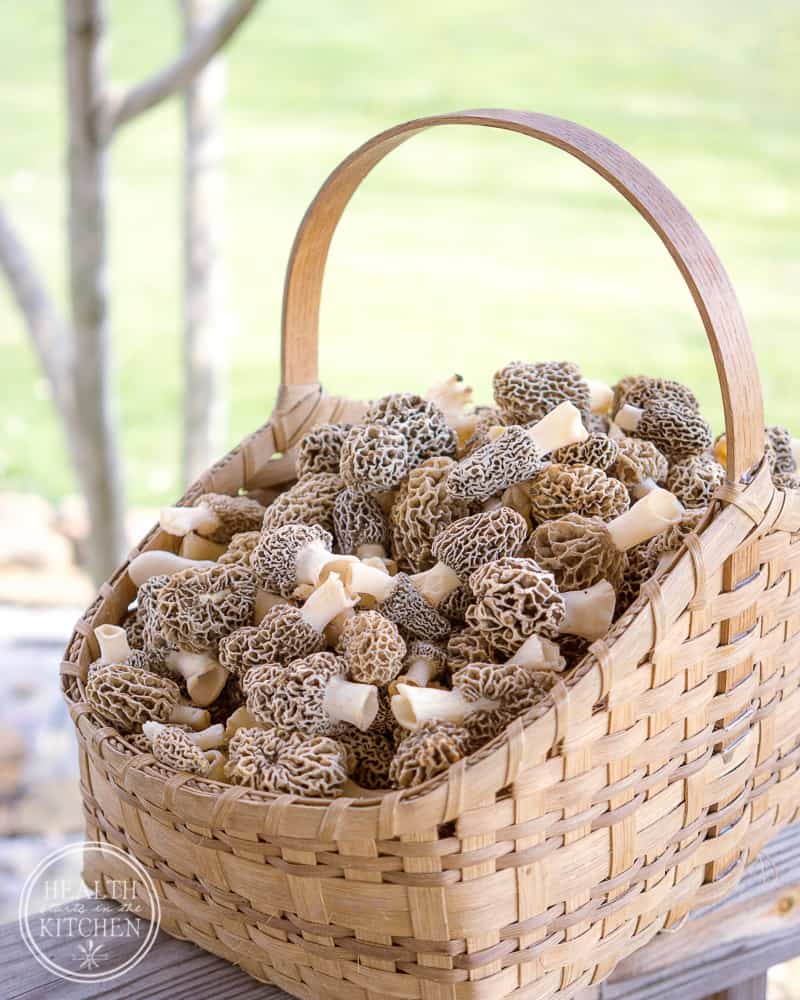
Morels are the prize of Pennsylvania spring mushroom season. Their deeply pitted caps are distinctive, but proper identification still matters. The exact timing depends on weather and elevation; the season can begin in March and continue into May, with April often providing the best window in our area.
Read my focused guide to foraging morel mushrooms and ramps in April. After a successful hunt, use my instructions for cleaning and storing morel mushrooms, then decide between fried morels, morel asparagus quiche or one of the other morel recipes collected on the foraging hub.
What to Forage in May in Pennsylvania
May is the bridge between spring and summer. Ramps and morels may continue in cooler, higher locations after they have finished elsewhere. Nettles grow taller, dandelions are in full bloom and the first warm-weather plants begin developing.
This is also a valuable scouting month. Notice where berry brambles flower, mark healthy elderberry shrubs and pay attention to the trees around productive mushroom areas. A little observation in May can make summer and fall trips much more productive.
A Simple Spring Foraging Checklist
- Carry a basket or breathable bag, a knife, gloves and a field guide.
- Confirm the land is open to harvesting and obtain permission when needed.
- Photograph unfamiliar finds from several angles without harvesting them.
- Record the date, weather and location of productive areas for next year.
- Keep different species separated until each one is positively identified.
- Harvest conservatively and leave damaged or questionable specimens behind.
Continue Foraging Through the Year
Spring is only the beginning. Continue with my Pennsylvania summer foraging guide for chanterelles, Chicken of the Woods, black trumpets, berries and sumac. As temperatures cool, move on to the Pennsylvania fall foraging guide for maitake, puffballs, Lion’s Mane, wild nuts and persimmons. You can also browse the complete Pennsylvania foraging hub at any time.
If asparagus season is on your mind, don’t miss my complete guide to foraging wild asparagus, including identification, lookalikes, harvesting and the best ways to use it.