Banana Pepper Recipes: Easy Ways to Cook & Preserve
Banana peppers are one of those garden vegetables that can go from “I wish I had more” to a countertop full of peppers almost overnight. Their mild heat and bright, slightly sweet flavor make them easy to use fresh, cooked, pickled, or frozen.
Quick guide:
- Use fresh banana peppers in pasta sauce, stuffed peppers, eggs, pizza, sandwiches, and quick sautés.
- Refrigerator pickles are fast, but they are not shelf-stable.
- For pantry storage, use a current research-tested canning recipe and follow its vinegar strength, jar size, headspace, and altitude-adjusted processing time exactly.
- Freeze sliced peppers when you want the easiest preservation option for future cooked dishes.
What Are Banana Peppers?
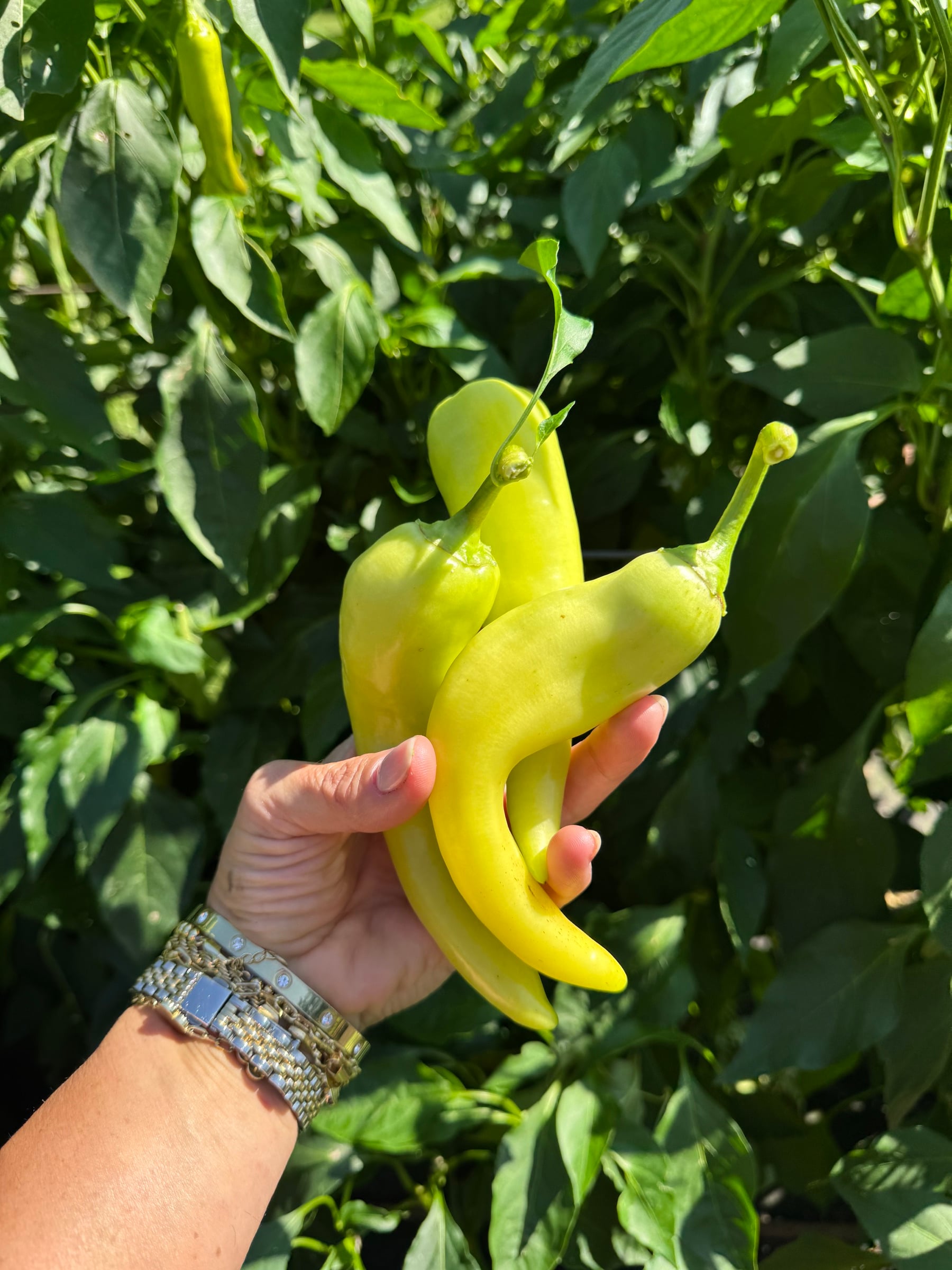
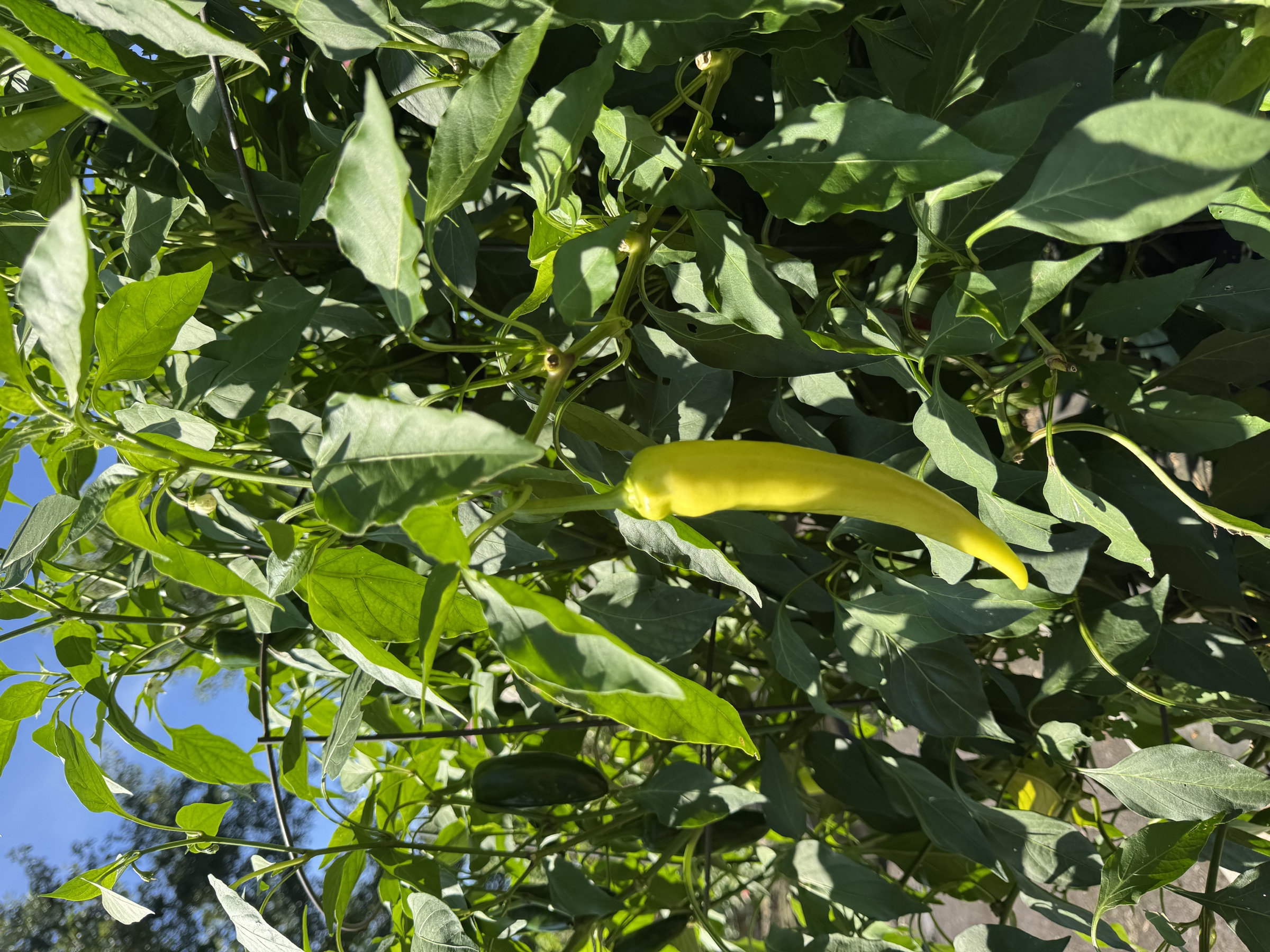
Banana peppers are mild chili peppers that look exactly as their name suggests: long, slightly curved, and yellow or red when mature. They share a distant relationship to jalapeños in the heat department but land much closer to bell peppers in how approachable they are. You get a gentle warmth without the overwhelming spice, which means they work for most palates without requiring a water chaser.
Like other peppers, banana peppers provide vitamin C and small amounts of several other nutrients. I grow and cook with them because they are productive, versatile, and genuinely delicious—not because a single pepper is going to transform anyone’s health.
The real draw for homesteaders and gardeners is productivity: banana pepper plants are prolific, often producing far more fruit than you can use fresh in a week. That’s where learning how to preserve banana peppers becomes essential, and fortunately, several methods work beautifully.
Fresh Banana Pepper Recipes and Ideas
The easiest place to start is with the food you already make. Slice banana peppers into omelets, scatter them over pizza, tuck them into sandwiches, or sauté them with onions for burgers and sausages.
Stuffed banana peppers: Halve the peppers, remove the stems and seeds, and fill them with sausage, beef, cheese, or a combination. If the filling contains raw ground meat, cook until the center reaches 160°F for ground beef or pork and 165°F for poultry rather than relying on a fixed baking time.
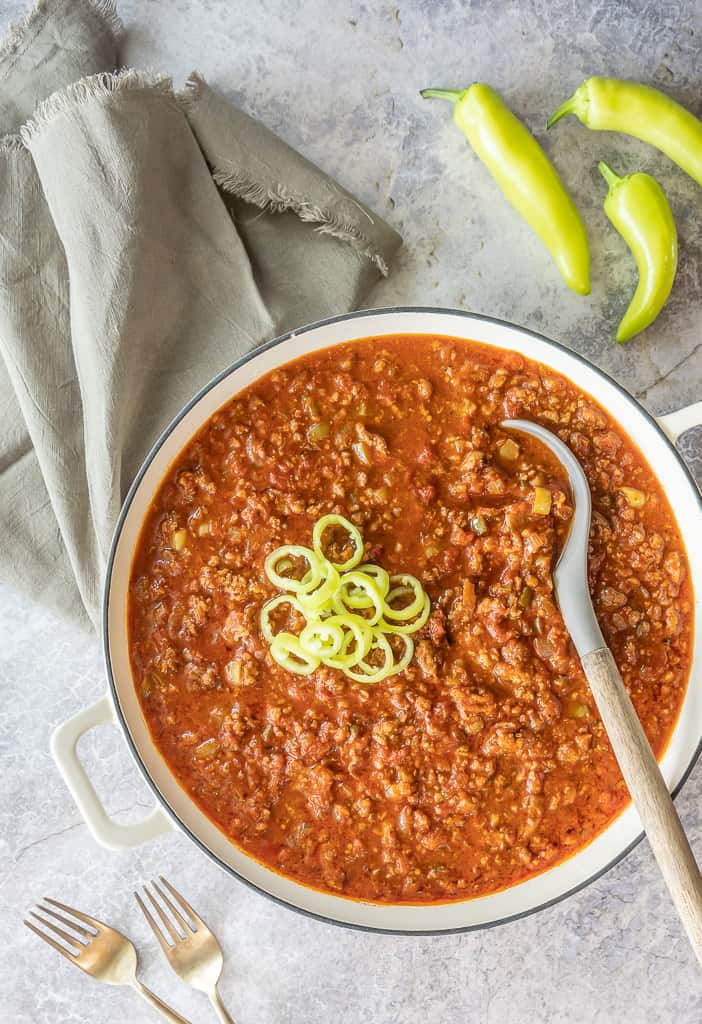
Banana pepper pasta sauce: My hot Italian sausage and banana pepper pasta sauce combines ripe tomatoes, garlic, sausage, and just enough pepper heat.
Poppers and baked peppers: Split whole peppers lengthwise and fill them with seasoned cream cheese, mozzarella, or another cooked filling. Bake until the pepper is tender and the filling is hot.
If you like jalapeño-popper flavor but want less heat, chopped banana peppers are an easy swap in my jalapeño popper chicken soup or jalapeño avocado ranch dressing. Start with the same amount, then taste and adjust because banana peppers are usually milder and a little sweeter.
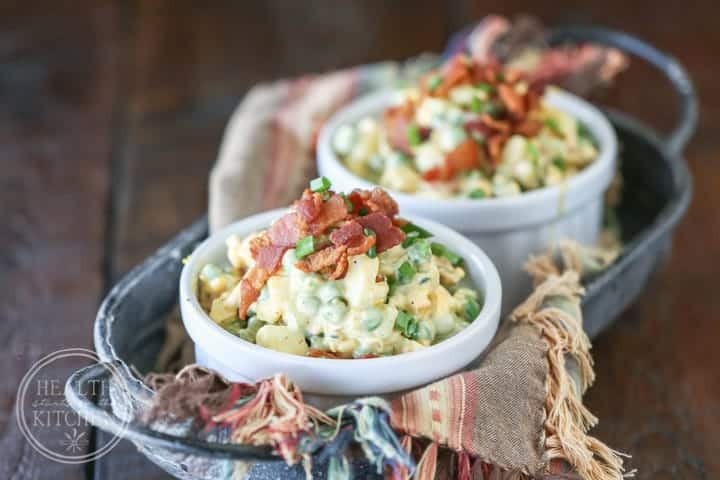
Relish, salad, and sandwich additions: Chopped fresh or pickled rings add acidity and crunch to egg salad, tuna salad, potato salad, and my easy ham salad. They are also one of my favorite optional add-ins for salami and cream cheese pinwheels.
Pickled Banana Peppers: Refrigerator or Canned
There are two different methods, and the storage rules are not interchangeable.
Refrigerator pickles are covered with a vinegar brine and kept refrigerated. They are never pantry-stable. Use a tested refrigerator-pickle recipe, label the jar, keep it at 40°F or colder, and follow the recipe’s storage time.
For a milder version of my refrigerator pickled jalapeños, use sliced banana peppers with the same refrigerator method. Expect a sweeter, gentler pickle. This substitution is for refrigerator pickles only; do not use it as permission to change a shelf-stable canning formula.
Canned pickled peppers require a research-tested formula and an altitude-adjusted processing time. The National Center for Home Food Preservation’s pickled hot pepper recipe specifically includes banana peppers. Do not change the vinegar-to-water ratio, increase the amount of peppers, change the jar size, or skip processing.
For another preservation idea already on the site, see my hot and spicy pickled cauliflower or browse the food-preservation collection.
Common Mistakes When Cooking & Preserving Banana Peppers
Most problems arise from rushing or skipping steps that feel small but change everything.
Over-salting the brine is the first culprit. A good pickle brine is tangy and flavorful, not briny-tasting. Measure your salt carefully; too much overwhelms the subtle sweetness of the pepper itself.
Handling hot peppers carelessly can leave capsaicin on your hands even when a pepper tastes mild. Wear gloves when working with a large batch, and avoid touching your eyes or face.
Using underripe or overripe peppers matters more than you’d think. Underripe peppers (still greenish) are firm but can taste grassy; fully mature red or yellow peppers are sweeter and more flavorful. Pick when the pepper is fully colored but still firm.
Using an untested canning shortcut can make a low-acid vegetable unsafe. Follow a research-tested recipe exactly, including the stated vinegar strength, headspace, jar size, processing method, and altitude adjustment.
Judging safety by the “pop” alone is another mistake. A sealed lid does not make an untested recipe safe. Follow the recipe’s cooling and seal-check instructions, then refrigerate any jar that did not seal.
Where I Would Start
If dinner is the goal, make the banana pepper pasta sauce or stuff a few of the largest peppers. If the harvest is getting ahead of you, freeze sliced peppers and choose either a tested refrigerator-pickle recipe or the NCHFP canned pepper recipe. Write down the variety and harvest stage because heat and sweetness change as peppers ripen.
FAQ
Can You Freeze Banana Peppers Instead of Canning Them?
Yes. Slice, seed, and lay them on a baking sheet to freeze individually, then transfer to freezer bags. Frozen peppers work best in cooked dishes (soups, sauces, stuffed recipes) rather than fresh applications, as they lose their firm texture when thawed. They keep for 6-8 months.
How Long Do Homemade Pickled Banana Peppers Last?
Follow the storage time provided with the tested recipe. Refrigerator pickles are not shelf-stable and should remain at 40°F or colder. Properly processed canned pickles are best used within the quality window given by the recipe; refrigerate after opening.
What’s the Difference Between Banana Peppers and Pepperoncini?
Pepperoncini are smaller and spicier cousins of banana peppers, often jarred in vinegar as an Italian condiment. Banana peppers are milder and larger. You can use banana pepper recipes in place of pepperoncini if you prefer less heat, though the flavor profile shifts slightly.
Are Banana Peppers Keto-Friendly?
Plain banana peppers are naturally low in carbohydrate. Check the label or recipe for pickled products because added sugar varies.