How to Forage American Persimmons in Pennsylvania
Every fall, our American persimmon tree turns into one of the sweetest stops on our homestead. The fruit looks almost too bright to be wild—but if you taste one too early, you will remember that mouth-puckering mistake for a long time. Fully ripe American persimmons are a completely different experience: soft, rich, honey-sweet and perfect for baking or spooning straight from the skin.
Important Foraging Safety Notice
Foraging mistakes can cause serious illness or death. This post shares educational information and personal experience. It does not identify your finds or confirm they are safe to eat.
You are responsible for what you harvest, prepare, eat, and serve. Have all wild foods identified and confirmed edible by a qualified local expert before consuming them. Never eat anything you cannot reliably identify.
Read the full Foraging Safety & Disclaimer before using this post.
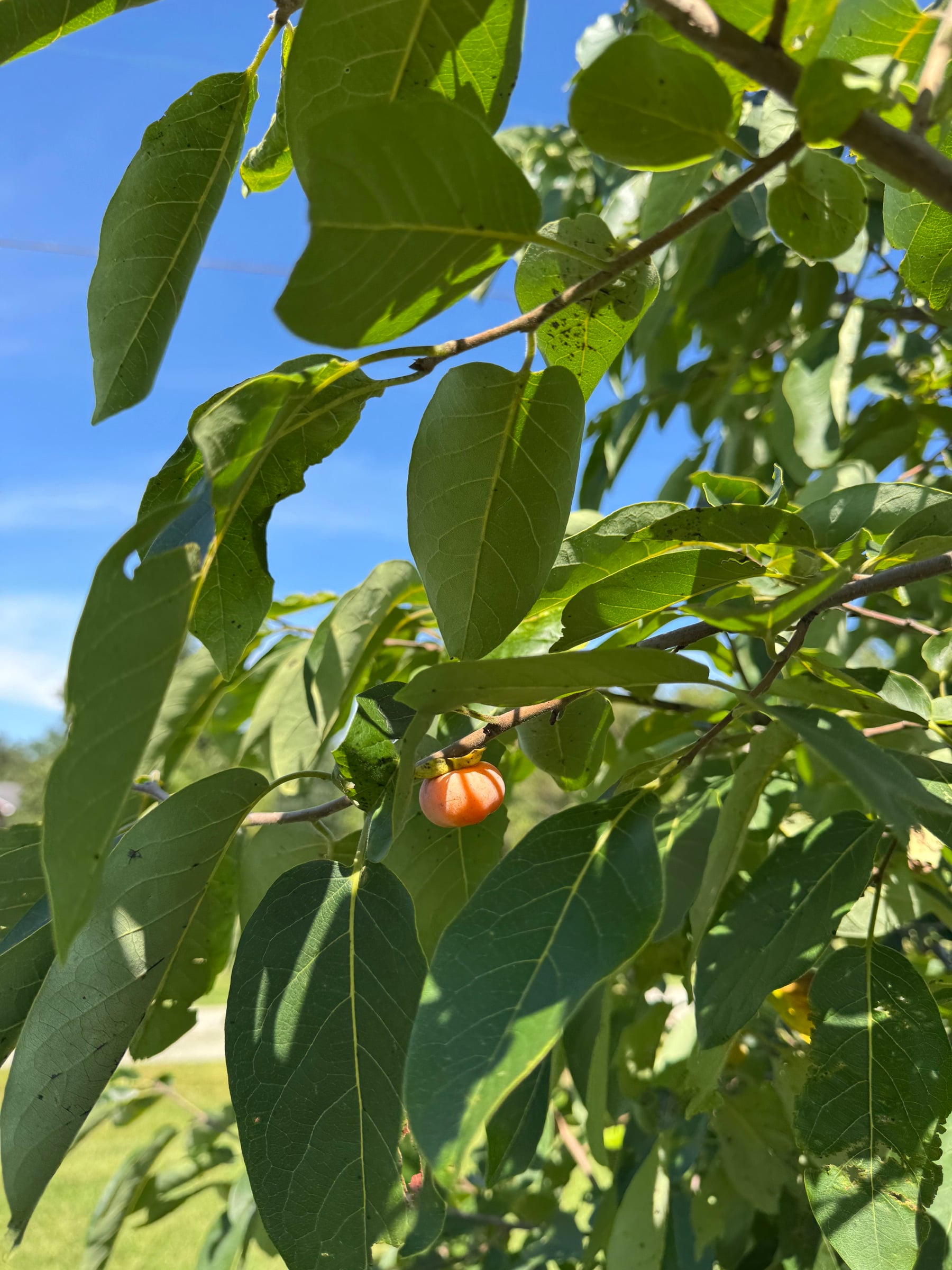
The short version: Learn the whole tree—not just the fruit. Confirm the blocky bark, alternate leaves, fruit and persistent four-part calyx. Harvest only fruit that is fully colored and very soft. American persimmons can finish ripening off the tree, and frost is not required.
Meet the American persimmon
American persimmon (Diospyros virginiana) is native to much of the eastern and central United States. The fruit is smaller than the Fuyu and Hachiya persimmons commonly sold at grocery stores, but its flavor becomes wonderfully concentrated when fully ripe.
Here in Pennsylvania, persimmons are primarily a fall harvest. I include them in my fall foraging guide, along with maitake mushrooms, puffballs, wild nuts and other foods that come into season as the weather cools.
How to identify an American persimmon tree
Never identify a wild food from one photograph or one characteristic. Use several features together and, when you are learning, confirm your identification with a trusted regional field guide or experienced local forager.
- Bark: Mature trees develop dark, deeply furrowed bark divided into blocky plates that are often described as looking like alligator skin.
- Leaves: The leaves are simple, alternate and generally oval with smooth, unlobed edges. They are glossy green in summer and can turn yellow to reddish-purple in fall.
- Fruit: The rounded fruit ripens from green to yellow-orange or deep orange. A persistent four-part leafy calyx sits at the stem end.
- Tree form: Persimmons can grow into medium-size trees, although young trees and trees along field edges may be much smaller.
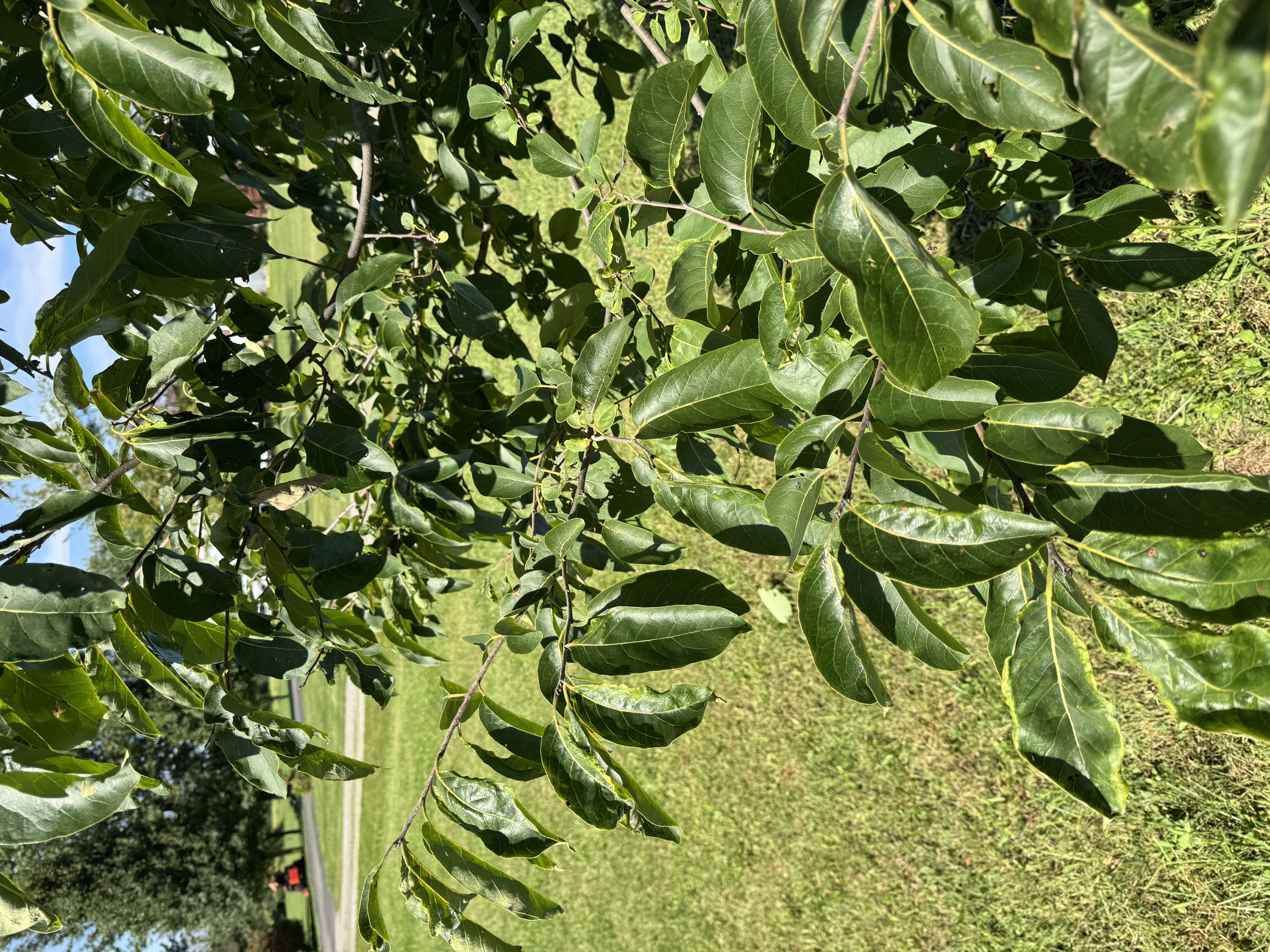
American persimmons have separate male and female trees, so only female trees produce fruit. A tree without fruit may still be a persimmon, but it is much harder for a beginner to confirm. Start with a fruiting tree and learn its bark, leaves and overall shape through the seasons.
When are wild persimmons ripe?
Color alone is not enough. A ripe American persimmon should be deeply colored and extremely soft—closer to a water balloon than a crisp apple. Depending on your location and the individual tree, fruit may ripen from September into November.
You may have heard that persimmons require a frost before they become edible. They do not. Cool fall weather often overlaps with ripening, but softness and loss of astringency are the tests that matter. Persimmons can also ripen on or off the tree. Gather sound fruit as it softens or falls naturally, then let firmer fruit finish ripening at room temperature.
An underripe persimmon is not “poisonous”; it is simply intensely astringent because of its soluble tannins. That dry, fuzzy sensation is your signal to stop and give the fruit more time. Cooking an underripe American persimmon does not reliably erase that unpleasant astringency.
How I harvest persimmons
- Confirm the tree using multiple characteristics.
- Choose deeply colored fruit that is very soft or has recently fallen onto clean ground.
- Leave damaged, moldy or fermented fruit behind.
- Carry the harvest in a shallow container so the delicate fruit is not crushed.
- Leave plenty for wildlife and never harvest where you do not have permission.
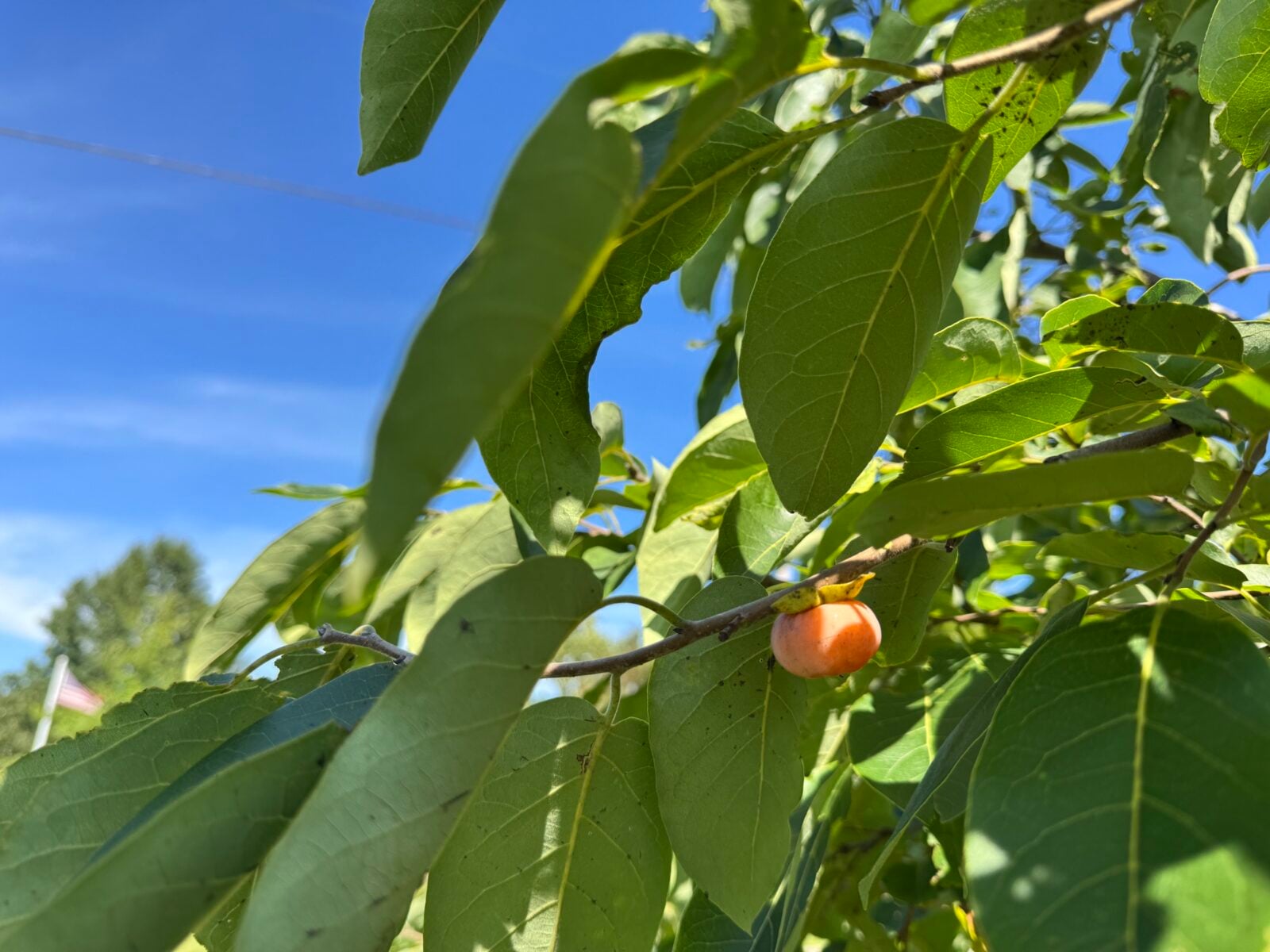
For more identification and ethical-harvesting reminders, begin with my Pennsylvania foraging guide and wild-food library.
Cleaning and preparing the fruit
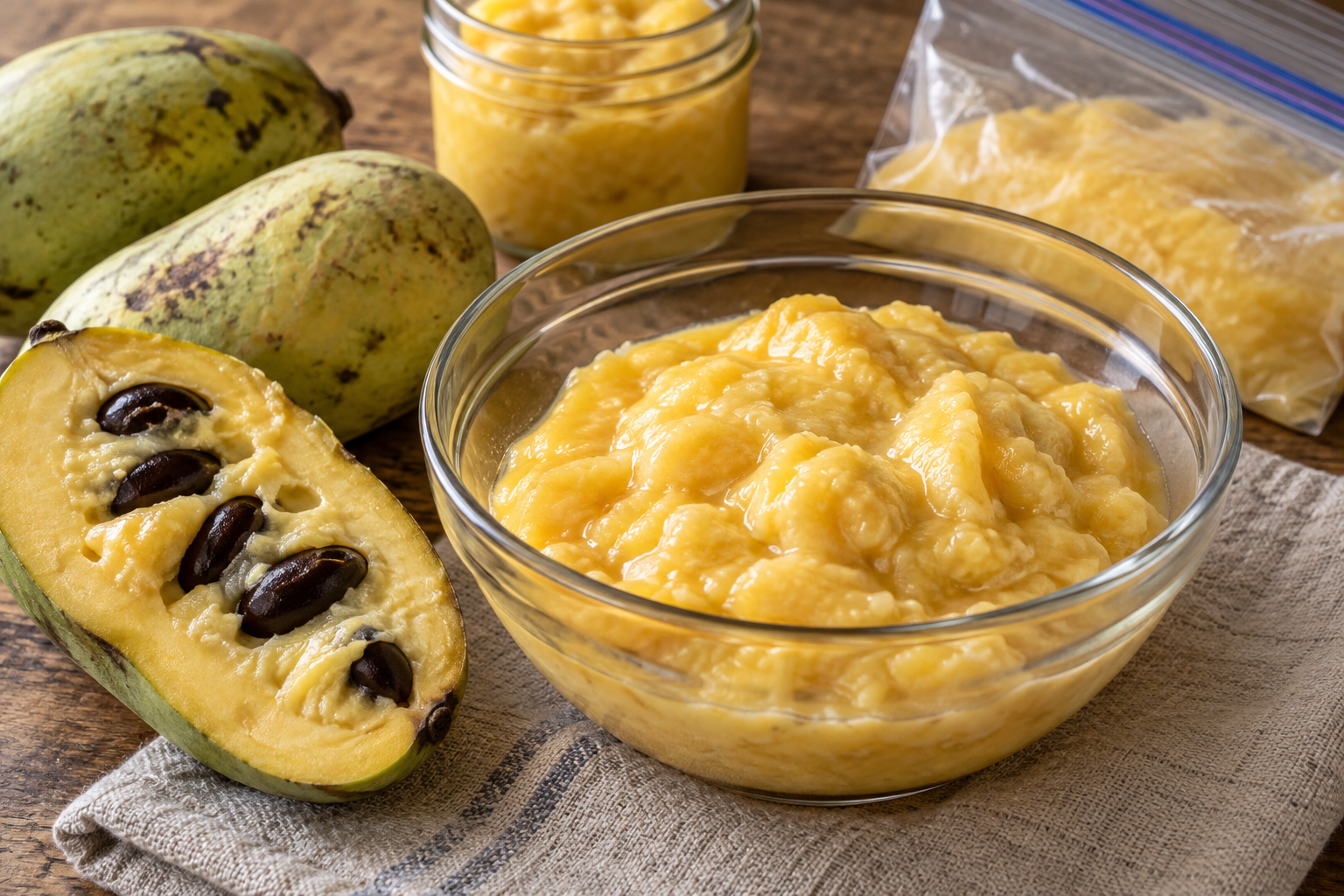
Gently rinse the fruit just before using it and remove the leafy calyx. The skin and seeds are not considered poisonous, but I remove the seeds and usually separate the pulp from the skin for a smoother texture in breads, puddings and sauces.
A food mill makes quick work of a larger harvest. For a small batch, press the very soft fruit through a sturdy sieve. Measure the pulp into recipe-size portions before freezing so you do not have to thaw more than you need.
Safe ways to preserve wild persimmons
Freezing is my first choice. Pack the pulp into freezer-safe containers, leave a little headspace and label it with the amount and date. For best quality, plan to use frozen pulp within about a year.
You can also dry peeled slices or make fruit leather using tested dehydrating directions. Store thoroughly dried fruit in airtight containers and check it for any sign of moisture or mold.
Do not improvise a shelf-stable canned persimmon jam or purée. Penn State Extension notes that there are no research-based home-canning recipes for persimmons. If you make persimmon jam, treat it as refrigerator or freezer jam and follow the directions supplied with the pectin. This is one of those places where “my grandmother always did it” is not a substitute for a tested process.
My guide to storing foraged and dried foods will help you organize the rest of your seasonal harvest.
How to use persimmon pulp
Ripe American persimmon pulp is lovely in quick breads, steamed puddings, muffins, cakes, sauces and smoothies. It can also be folded into yogurt or oatmeal. My companion persimmon recipes guide explains how American, Fuyu and Hachiya persimmons behave differently in the kitchen and gives you plenty of ways to use them.
Frequently asked questions
Do persimmons need a frost to ripen?
No. Many ripen around the time frost arrives, but frost is not what removes the astringency. Wait for the fruit to become deeply colored and very soft.
Can persimmons ripen after picking?
Yes. Sound fruit can finish ripening off the tree at room temperature. Check it daily because it changes quickly once it begins to soften.
Can I eat persimmon seeds and skin?
They are not considered poisonous, but the seeds are hard and the skin can make purée less smooth. I remove both when I want silky pulp.
Are persimmon bezoars something to worry about?
Persimmon-related bezoars are rare and are most often discussed in connection with heavy consumption and people who already have digestive risk factors. If you have had gastric surgery or have a condition that affects stomach emptying, ask your medical professional what is appropriate for you.
What should I do when I am not completely certain?
Leave the fruit in place. A blog post can help you learn what to notice, but it cannot confirm the identity of a specimen in your hand.